




Illegal fishing scandal: 400 cases exposed in marine protected areas
A landmark study has uncovered over 400 cases of illegal fishing in Europe’s marine protected areas, threatening fragile ecosystems and fisheries’ sustainability.
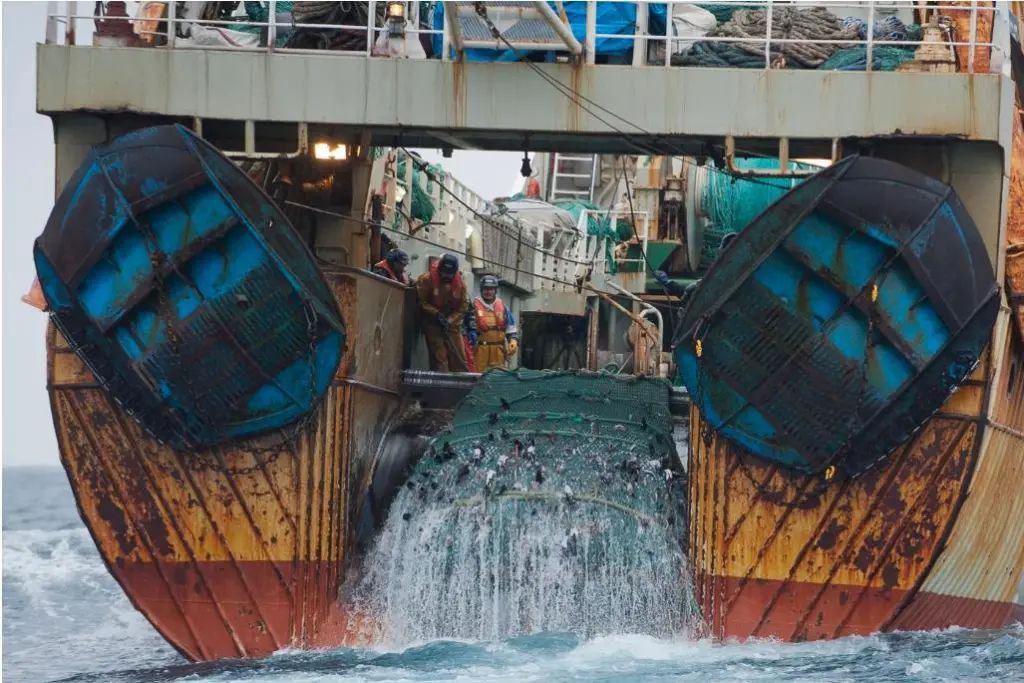
Research by BLOOM, the Deep Sea Conservation Coalition (DSCC) and the Marine Conservation Institute, published in Science Advances, revealed breaches by vessels from Spain, Portugal and France.
Despite bans on bottom trawling beyond 800 metres and in 87 protected zones, satellite data showed 3,500 hours of fishing within restricted areas and 19,200 hours beyond the legal depth limit in the last two years.
“Frequent incursions into protected zones and depths clearly indicate industry awareness of regulations but a deliberate choice to flout them,” said Frédéric Le Manach, BLOOM’s scientific director.
“The biodiversity loss and damage to climate-regulating ecosystems are catastrophic.”
’Super fraudsters’
The study highlights 59 “super fraudsters,” including industrial trawlers responsible for the majority of violations.
On the French side, some of the biggest trawlers, such as the JEAN-CLAUDE COULON II (46m long) belonging to the fleet of Intermarché’s Scapêche group, fished for more than 58 hours beyond a depth of 800 metres.
Intermarché has been the main opponent of the deep-sea fishing ban for years, and has waged a relentless anti-ecological lobbying campaign in both Brussels and Paris.
Other fleets, from Brittany and the Basque Country, such as the Breton company La Houle, whose seven trawlers accumulated more than 254 hours of fishing beyond 800 metres, or the Bigouden company, which, for a single vessel, reached more than 284 hours in the same zones.
BLOOM’s findings come as the United Nations Ocean Conference approaches, calling for stricter enforcement, expanded marine protected areas and better monitoring.
“Regulations work only if enforced,” said Natasha Mallet, co-author of the study. “EU countries must end compromises with industrial fleets and ensure accountability.”
On the back of the findings, BLOOM is now lodging a complaint with the European Commission against France, Spain and Portugal for failing to control their fishing fleets.
Related Articles
 FISHERIES
 FISHERIES
 FISHERIES