


Fish-free feed breakthrough
Dartmouth College scientists have discovered that marine microalgae can completely replace the wild fish oil currently used to feed tilapia.
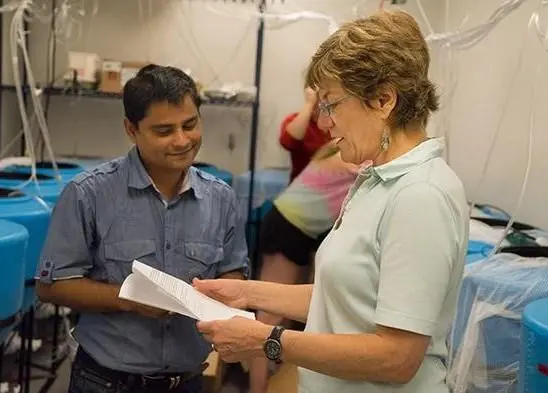
The findings, which appeared in PLOS ONE, are a major breakthrough in the quest to develop sustainable, fish-free feeds for aquaculture. The Dartmouth study is the first report of a marine microalgae species being successfully used as a complete replacement of fish oil in feed for Nile tilapia, which thrived on the new diet and bulked up, despite eating less.
Scientists have reported success in partially or totally replacing fish oil with vegetable oil in many farmed-fish species, but studies show that vegetable oil reduces the nutritional quality of the fish flesh. In contrast to vegetable oil, microalgae are much higher in essential omega-3 fatty acids, which are important for maintaining fish health and imparting neurological, cardiovascular and anti-cancer benefits to humans.
In their new study, the Dartmouth researchers looked at juvenile Nile tilapia, a species naturally evolved to eat microalgae as part of its diet. The team conducted a feeding experiment with dried Schizochytrium, a species of marine microalgae rich in health-promoting omega-3 fatty acids. Their goal was to determine the optimum level of fish-oil substitution (partial or complete) for good growth of tilapia.
When the researchers fully replaced fish oil with the microalgae, they found significantly higher weight gain and better food conversion compared to a control diet containing fish oil, and no significant change in survival and growth rates among all diets. The fish-oil-free microalgae diet also had the highest content of omega-3 fatty acids in tilapia fillets.
“Our study shows that Schizochytrium is a high quality candidate for complete substitution of fish oil in juvenile Nile tilapia feeds, providing an innovative means to formulate and optimise the composition of feed while simultaneously raising feed efficiency of tilapia aquaculture,” says Pallab Sarker, a research assistant professor in Dartmouth’s Environmental Studies Program.
The Dartmouth researchers are conducting similar studies in rainbow trout, which they are using as a model species for salmon farming.
Related Articles
 SEAFOOD
 AQUACULTURE
 SEAFOOD