



Pump and mixer manufacturer Landia says that demand is up for an ensiling process – which uses formic acid to produce fish silage - as producers seek to create more value from by-products.
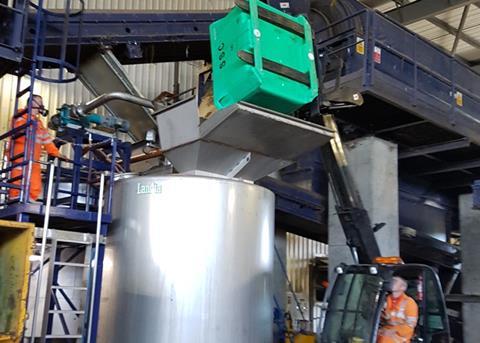
Jesper Borch Svendsen from Landia said that today’s breeders are far more likely to install an ensiling unit (buffer tank), which will then make it possible for the end-product to be used, for example, as a key health-boosting ingredient for pet food.
“In some cases, a pasteurization stage (tank) can be added so that fish waste can also be used as a fertiliser or fuel for a biogas plant,” he said.
“The technology isn’t complicated but based on the large volume of new enquiries and orders we’ve already received this year, back-up is priceless.”
Biogas
Mr Svendsen highlighted a recent installation by Landia on one of the islands in Scotland’s Outer Hebrides, where large volumes of waste salmon can now be used for biogas after being pasteurised for an hour at 70 degrees C to meet UK regulations.
Landia also recently delivered a new ensiling unit to P/F Luna in the Faroe Islands.
To withstand the acidic environment, all pump parts that are in direct contact with the salmon waste were produced in acid-proof stainless steel.
The unit was also supplied with a system to control the acid application rate to ensure the correct balance in the tank.