






Bigeye tuna on the move
Northwestern Atlantic Ocean bigeye tuna movements are wide-ranging, with pronounced north-south movements from Georges Bank to the Brazilian Shelf, according to a new, first-of-its-kind study.
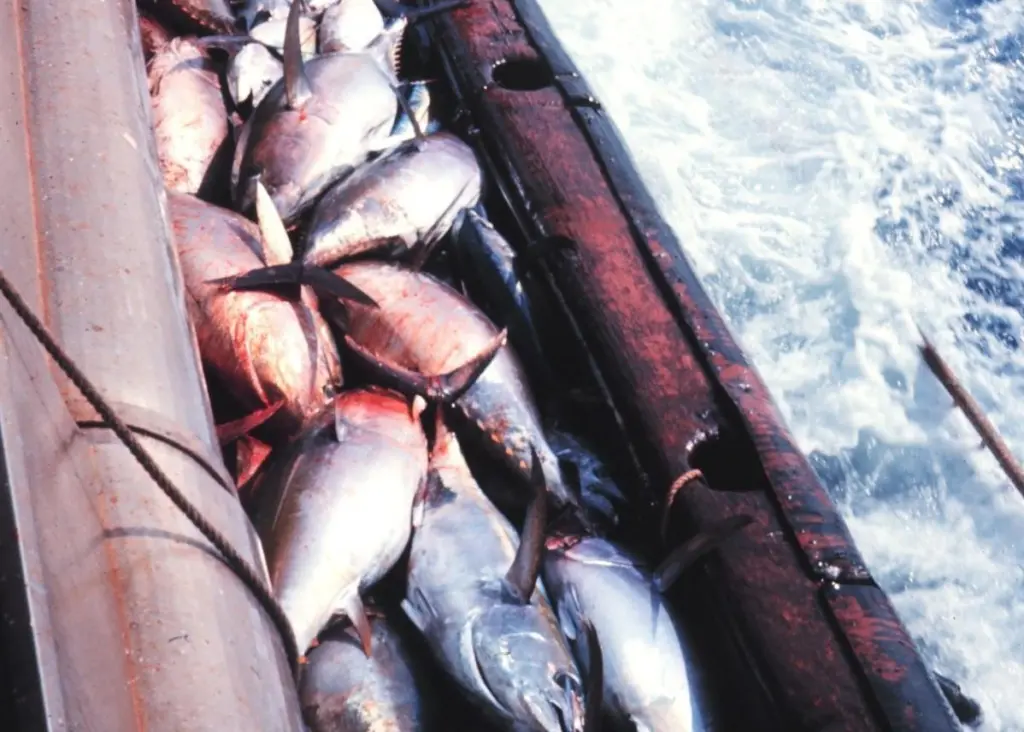
Funded by the NOAA and led by Molly Lutcavage, director of the Large Pelagics Research Centre at the University of Massachusetts Amherst, the research provides the longest available fishery-independent record of bigeye tuna movements to date.
“Although Atlantic bigeye tuna are delivering high prices to the US commercial fleet and are highly sought by recreational fishermen and fishing tournaments, there’s been a surprising lack of scientific research on this species,” said Ms Lutcavage.
“In contrast to the Pacific, where tuna fisheries programmes have deployed over 400,000 tags over 25 years, the Atlantic lacks the fisheries infrastructure that would increase the odds of recovering tags. We have to rely on pop-up satellite tags that are fishery independent to make sure we get information back from the tuna,” she added.
The team deployed 21 pop-up satellite archival tags (PSAT) on adult bigeye tuna between 2008 and 2010 in the northwest Atlantic. The tags were programmed to record relative light level, temperature and pressure (depth) every two minutes for eight to 12 months.
According to the research, the species favours a high-use area off Cape Hatteras southwest of Bermuda for foraging. It also revealed lunar influences on swimming depth, horizontal movements, plus vertical activity and factors influencing it such as temperature.
“Bigeye tuna dive deeply, like clockwork, at dusk and dawn, making it hard to use light-based geolocation methods to estimate their daily locations,” explained Tim Lam, who worked on the study. “Here, we showcase a new positioning technique to get around the problem of low light levels at depth by using temperature and the bigeyes’ spatial ecology ad movements in the western Atlantic. But there’s much more to learn.”
Data recorded should help researchers to further characterise habitat use and assess the need for more monitoring in high-catch areas. It is hopes the results will also inform the International Commission for the Conservation of Atlantic Tuna’s (ICCAT) upcoming tagging effort and assist ICCAT scientists as they plan new research to better understand the population.
Related Articles
 FISHERIES
 FISHERIES
 WORLD FISHING EVENTS