




Ukrainian aquaculture – one year on
One year ago, Russian troops crossed the Ukrainian border, triggering the bloodiest conflict the European continent has seen since the Second World War. Since then, Ukrainian fish farmers have sustained tremendous losses, and since the hostilities show no signs of letting up, it’s possible the worst is still yet to come.
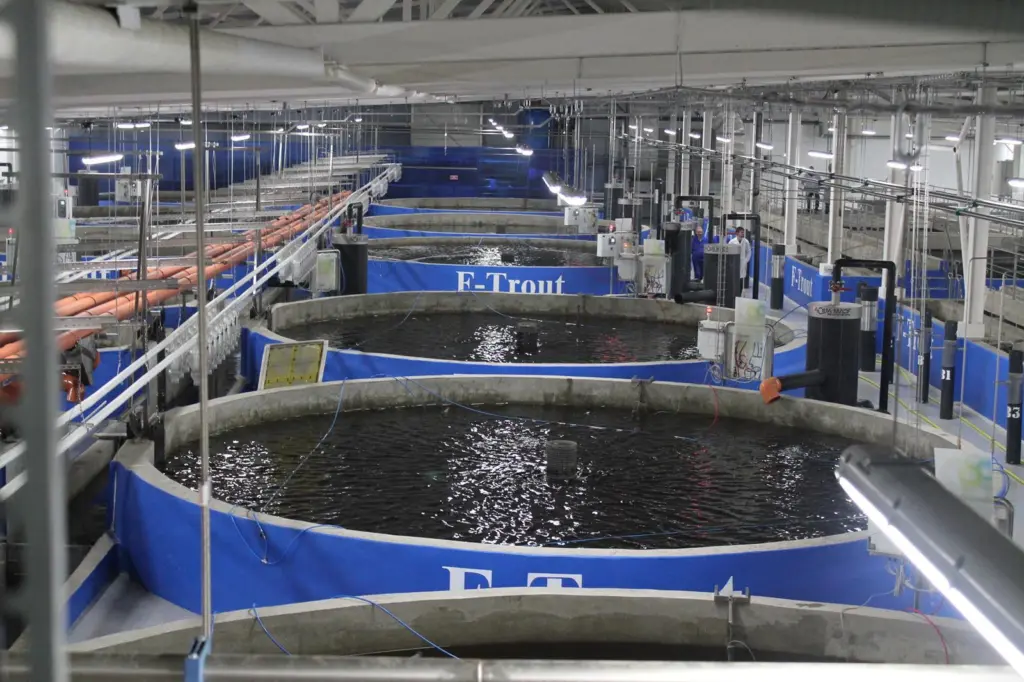
Heavy fighting against the Russian troops, martial law, regular shelling, power outages, mass immigration and mobilisation put immense pressure on Ukrainian fish farming businesses in 2022. According to research released by the Food and Agriculture Organisation of the United Nations (FAO) in January 2023, the combined damages and losses that the aquaculture sector suffered last year stood at $21.6 million, equal to 63% of its annual gross value of sales.
FAO analysts have surveyed farmers to gather first-hand information about the challenges they face. These dialogues confirmed the heavy destruction of fish farms, storage and processing infrastructure like electricity facilities and productive assets, including pumps, refrigerators, boats and fishponds. The destruction has been far more common in the frontline regions, where most of the fighting has been taking place.
There have been several confirmed casualties in Ukraine’s fish farming industry. Donetsk fish factory, one of the country’s largest fish farming companies, reported the loss of 80% of its production capacities due to hostilities in the region, while the Kharkiv-based Pecheneg fish farm, another industrial fish farm used to breed catfish and carp, has been completely destroyed. The list is long.
Furthermore, almost all those surveyed anticipate the financial performance of their operations will steadily deteriorate in the months ahead. Virtually all fish farmers looked at by the FAO indicated the need to receive outside support and assistance to continue with their aquaculture and fishery operations and to avoid the risk of their businesses collapsing.
At a national level, 11% of those aquaculture companies interviewed reported losses related to their production. Again, these were primarily located in the frontline territories, with 37% of the farms reporting effects to production.
Last year’s production was mainly affected by the complete or partial loss of reared fish, reported by 5% of farms at a national level and 21% in the frontline regions. Smaller and similar shares of farms reported losses of fry and broodstock.
On the other side
At the time of writing, nearly 20% of the Ukrainian territory was in the hands of Russia. Currently, it’s unknown how many fish farms ended up in the regions that Russia in September 2022 proclaimed its own. What is clear is that some farmers fled, abandoning their production assets, but others chose to stay and continue their operations where possible.
Farmers in the territories occupied by Russians face multiple challenges, Andriy Dykun, head of the Ukrainian Agri Council, the largest Ukrainian agricultural association told WF.
“Farmers in the occupied territories cannot work properly,” Dykun said, referring to the lack of spare parts of equipment and inputs, as the logistics chain is broken. “There are checkpoints on the roads, constant searches, and threats. The occupiers are constantly putting pressure on farmers to register their farms under Russian law, and recently, they have been demanding that they [the farmers] obtain Russian citizenship.
“The conditions in which Ukrainian farmers are now living are terrible. It is important for us to tell the international audience about this, record the conditions of their stay under occupation and support them with information because they are left face to face with the invader and do not know what tomorrow will be like,” Dykun added.
There are multiple reasons why farmers choose to stay and keep working in such conditions. The Ukrainian Agri Council cites Oleksandr Tkach, a farmer from the Chernihiv region, who disclosed that he continued operations to save people in his local community. “No one could come to us, and in local stores quickly ran out of food. People were saved by my farm,” Tkach said, recalling that he was giving up his products for free.
One of the critical problems fish farmers in the occupied territories have to deal with, however, is chaotic logistics. Currently, there’s almost no way to transport anything via the frontline – meaning that farms operate in partial isolation, without access to aquafeed, broodstock and technologies.
In addition, farmers in the territories controlled by Russia experience problems associated with a labour shortage, Ukrainian Agri Council said.
A deadly threat
Ukraine aquaculture is also threatened by problems with the reservoir of the Kakhovka hydroelectrical power plant. Since early November 2022, water has been gushing out of the Kakhovka Reservoir, currently controlled by Russian forces. Satellite data shows that the water level at the reservoir has plummeted to its lowest point in three decades, endangering the region with floods and jeopardizing even the Zaporozhe nuclear plant.
“Even though the decreased water level does not pose an immediate threat to nuclear safety and security, it may become a source of concern if it is allowed to continue,” IAEA Director General Rafael Grossi said in a statement.
Mikhail Yatsyuk, director of the Institute of Water Problems of the Ukrainian National Academy of Sciences, explained that the Kakhovka reservoir is interconnected with six reservoirs alongside the Dnipro River. Established in the 1950s, this system provides drinking water for roughly 70% of the Ukrainian population, ensuring the operation of hundreds of fish farms in the southern and central parts of Ukraine.
It is not entirely clear why the Kakhovka Reservoir is being drained. In its statement, the Zaporizhzhia Regional Military Administration suggested the purpose may be in part to flood the area south of the dam in an effort to prevent Ukrainian Forces from crossing the Dnipro River to commence a counter-offensive.
The Ukraine hydropower plant operator Ukrhydroenergo expressed a similar opinion, claiming that Russia wants to prevent Ukrainian soldiers from advancing. These claims have been denied by Russian authorities.
Whatever the reason, a further fall in the water level in the Kakhovka Reservoir could lead to an ecological disaster, Yatsyuk said.
“There is another context – international. Because of the consequences of water discharge from the Kakhovka reservoir, they will be negative for the entire Black Sea basin for all countries. Here, our neighbours may suffer because the toxins will appear after aquaculture dies in these reservoirs, and it has already begun to die. Pollution transfer processes will occur, and they will threaten neighbouring countries,” Yatsyuk explained.
In the past, Ukrainian scientists raised an alarm that the fights in the Black Sea could threaten fishing and fish farming there.
“All these explosions at sea, flooded ships, oil spills, all this negatively affects bio-productivity. No one can go there and check what really happens, for example, in the place where the [Russian] cruiser Moskva sank,” said Sergey Bushuev, Senior Researcher at the Institute of Marine Biology of the National Academy of Sciences of Ukraine.
Eyeing post-war recovery
Although the end of the fighting is nowhere in sight, the Ukrainian fishery agency recently disclosed that it has started drafting a roadmap for the fish industry’s recovery. Authorities plan to focus not only on rebuilding the lost capacities and infrastructure but also on sorting out long-standing issues.
It is believed that a large share of the Ukrainian fish farms remained in the shadows, by not being officially registered. And there are calls for new legislation to put an end to this practice.
In mid-2022, Ukrainian government officials declared plans to use reparations they plan to get from Russia once the war is over to compensate for all the damages. Under some scenarios, nearly $300 billion of the Russian Central Bank’s reservices are planned to be used to fund Ukraine’s reconstruction programme.
In the meantime, FAO wants to see Ukrainian fish farmers protected, especially in the frontline regions, while there is something to be saved.
“Considering the importance of the sectors to the national supply of animal protein and food security, as well as income generating activities, it is imperative to continue taking stock of the impact of the war and related damages and losses on the sectors while the war continues to evolve in the coming months. Preventive and recovery measures must be undertaken to avoid business failure and the collapse of the aquaculture and fishery sectors, leading to an aggravation of the economic situation and food insecurity across the country, especially for those relying directly and indirectly on the sectors,” FAO said.
Opinion polls indicate that Ukraine is confident the war will end in its decisive victory, involving the liberation of the country’s entire territory within its internationally-recognised borders. But with some forecasts suggesting the conflict could last for several more years, and given that every day comes with great pain for the fish farming sector, it’s hard to imagine in what conditions its aquaculture will be when the fighting is finally over.
Related Articles
 AQUACULTURE
 SEAFOOD
 SEAFOOD