



Shrimp farmers in southern Vietnam are adopting a groundbreaking method of raising shrimp within mangrove forests to both protect their livelihoods and help combat climate change.
Mangroves, vital to Vietnam’s Mekong Delta, shield coastal communities from storms, provide rich biodiversity and absorb atmospheric carbon. But decades of unsustainable shrimp farming have led to mangrove deforestation, water pollution and unstable incomes.
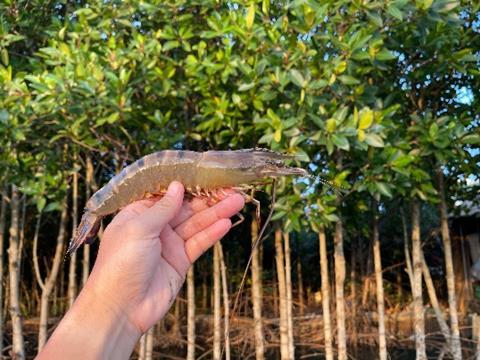
Now, with support from WWF-Vietnam, farmers are shifting to a sustainable model that integrates shrimp ponds within mangrove ecosystems.
“Shrimp farming is not just a livelihood for people in the Mekong Delta, it’s a way of life,” said Nguyen Phuong Duy, WWF-Vietnam’s Food Production project manager.
“By helping to increase incomes, we’re empowering communities to protect the ecosystems they depend on.”
Le Van Dieu, a shrimp farmer in Ca Mau, began trialling the model in 2022 by converting one-third of his 13-hectare farm. “Not long ago, I had a vague idea of the connection between forests and shrimp farming,” he said.
“Now, I know just how important mangrove forests are for environmental protection and boosting shrimp production.” In his first year, yields rose by 30% and Le Van Dieu is now converting the entire farm.
The shift also positions farmers to benefit from Vietnam’s upcoming carbon credit framework, set to launch in 2027, which could generate additional income through forest conservation.