




Scottish Sea Farms ‘green’ eggs incubation first
Scottish Sea Farms has taken delivery of the first batch of ‘green’ eggs at its new £2 million incubation unit at Barcaldine Hatchery.
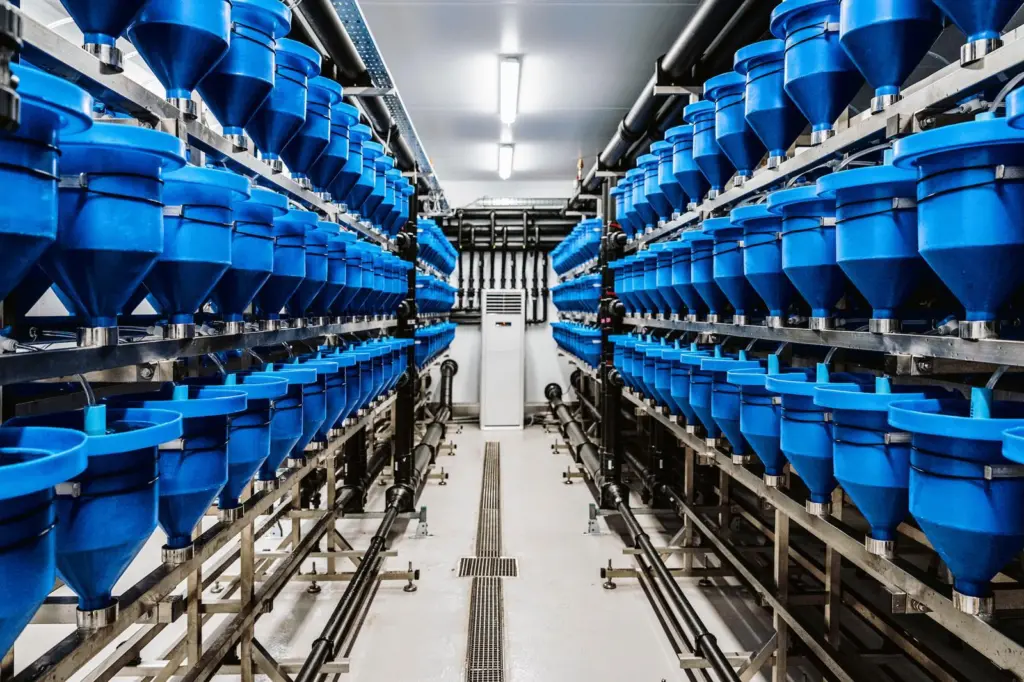
The eggs, which were fertilised on-site in a first for the company, are doing well so far, said Rory Conn, head of freshwater, Scottish Sea Farms.
”The incubation unit is designed to receive eggs immediately post-stripping, giving us greater control in the earliest days of the production cycle,” he said.
“From the results to date, we know already that the quality of water in the green egg unit has mitigated a number of the issues we had been seeing with our intakes of eyed ova.”
Better outlook
The company trialled two smaller test batches in Q4 2023 ahead of receiving its first full intake of around three million green eggs at Christmas.
These new eggs were fertilised on arrival at the new unit and a series of assessments, from evaluating the success of the fertilisation process within the first 24 hours, to checking embryonic development around the 60-day stage, were conducted.
When the eggs reach the eyed ova stage, they will go through a further quality check to ensure only the viable ones are transferred to incubation trays in the hatcheries.
The eggs stay in the incubation unit, which is adjacent to the main Barcaldine Hatchery, for six weeks to five months, depending on requirements, before being moved to one of Scottish Sea Farms’ three hatcheries: Barcaldine itself, Knock on the Isle of Mull, or Girlsta in Shetland.
The new facility enables the eggs to be incubated for longer, at lower temperatures, during the most fragile stages of development.
”We have taken the temperature down to below 2°C which, research suggests, results in better outcomes for fish health later on, particularly cardiac health,” said Mr Conn.
”And by incubating the eggs over a longer period, we can meet our year-round demand for eyed ova, ensuring security of supply.”
From this initial batch alone, the company hopes to be able to put close to 600,000 smolts into one of its marine farms at the required time – around late August next year.
The bespoke unit benefits from the same purity of water and state-of-the-art RAS (recirculating aquaculture system) technology as the company’s neighbouring Barcaldine Hatchery.
Water is drawn from the nearby Gleann Dubh reservoir and filtered to remove anything over 0.1 microns, keeping bacteria and viruses out.
The unit has a total capacity of seven million ova at any one time and, with an input of up to three batches a year, it could potentially hold 20 million eggs annually.
Related Articles
 AQUACULTURE
 AQUACULTURE
 AQUACULTURE