




Promoting sustainable aquaculture in Uzbekistan
The European Union and United Nations Development Programme have provided equipment to support sustainable fish farming practices in Uzbekistan.
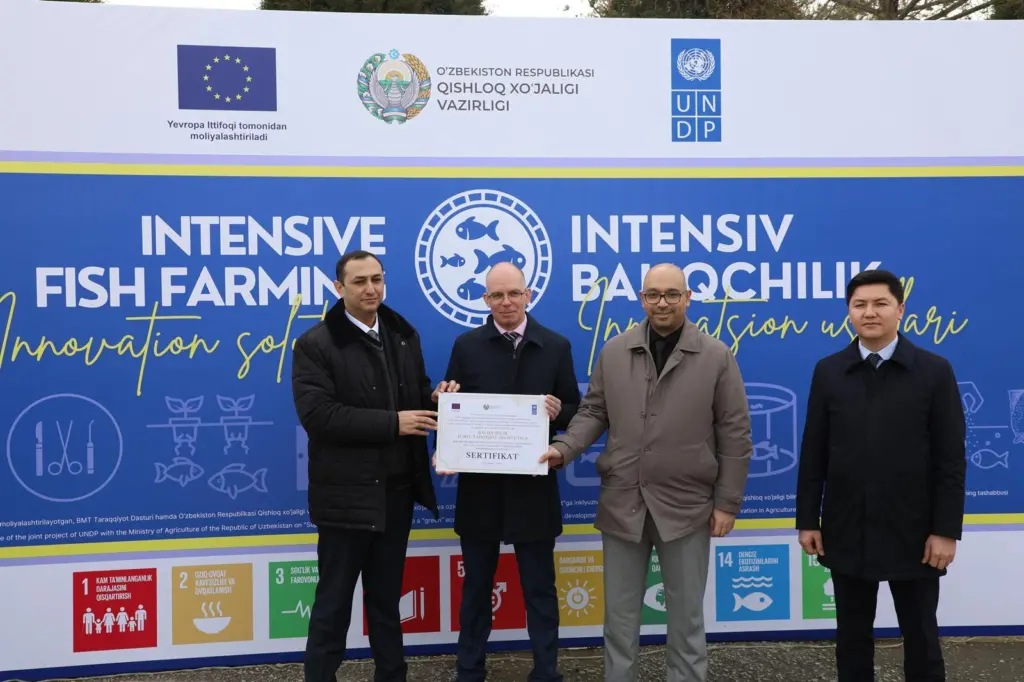
The equipment – provided under the aegis of the EU-AGRIN project – will help reduce water consumption, improve water quality and energy efficiency in farms, and safeguard fish welfare.
Aquaculture is a key element of food production in Uzbekistan, ensuring food security and creating jobs in rural areas. However, the country’s consumption of fish remains low at 4 kg per person per year, far below the World Health Organization’s recommended 16 kg.
To address this, Uzbekistan has adopted measures to boost the aquaculture industry through efficient land and water use and the adoption of intensive farming techniques.
Relatively simple equipment will help the country in its endeavours: Purification and disinfection filters will help improve water quality as well as protect the environment from pollutants. Similarly, the use of solar water heaters will hasten fish growth in early phases whilst reducing energy consumption.
Financed by the EU and implemented by the UNDP, the EU-AGRIN project features an innovation group led by the Research Institute of Fisheries, which will manage the use of and monitor the efficacy of the equipment.
Related Articles
 SEAFOOD
 SEAFOOD
 AQUACULTURE