



A study has found that farming multiple species in one system can increase yield from seasonal capture fisheries and be a useful aid in tilapia production.

Scientists from the University of Stirling’s Institute of Aquaculture and WorldFish said that this finding demonstrates how aquatic foods can improve food security and nutrition by consuming fish from more diverse sources.
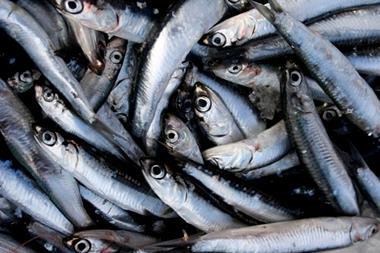
“While ponds provide an important supply of fish – polyculture ponds provide a good source of diverse, micronutrient-rich small fish species,” said Alexander Kaminski, lead author from the University of Stirling.
“Ultimately, any improvements to aquaculture should not be done in isolation without considering the more important role of capture fisheries in providing cheap, micronutrient-rich small fish for vulnerable people.”
Food innovation
Dr Shakuntala Haraksingh Thilsted, co-author and global lead for nutrition and public health, WorldFish, has examined the nutritional composition of indigenous small fish species, commonly found and consumed in Bangladesh and Cambodia.
Her research demonstrated that these affordable and locally available aquatic foods offer life-changing benefits for children’s cognitive development in the early stages of their life and the nutrition and health of their mothers.
She went on to develop nutrition-sensitive approaches and innovations to food production, distribution and consumption that won her the World Food Prize in 2021.
WorldFish scientists took these lessons to Zambia by working with smallholder homesteads to stock various micronutrient-rich small fish species. Indigenous small fish species are commonly found in wetlands, rivers and streams that farmers use to stock their ponds.
Most of the small-scale pond systems in Zambia naturally attract large quantities of indigenous small fish species as they swim in and out of the pond inlets and outlets. This presents an opportunity for fish to be “trapped” or for farmers to actively stock them from the wild if they thrive well in ponds. However, small-scale farmers in Zambia are often encouraged to cultivate tilapia in monoculture systems, removing indigenous small fish species from their ponds.
The authors aim to rethink tilapia pond systems in Zambia as multi-species systems (polyculture) rather than single-species systems (monoculture), rather than just farming tilapia strictly for markets. They also identified that aquaculture, especially polyculture systems with indigenous small fish species, has the potential to improve the nutrient intake of households during closed fishing seasons.
The study has been published in an open access paper called ”The role of aquaculture and capture fisheries in meeting food and nutrition security: Testing a nutrition-sensitive pond polyculture intervention in rural Zambia” in the scientific journal, Foods.