

Oceana: UK MPAs subjected to 33,000 hours of suspected bottom trawling in 2023
With new analysis of satellite data from non-profit Global Fishing Watch (GFW) finding that over 100,000 hours of apparent industrial fishing took place within the United Kingdom’s offshore marine protected areas (MPAs) in 2023, oceans campaign group Oceana UK is calling for “decisive political action on destructive fishing”.

Ahead of this year’s UK general election, Oceana is urging all political parties to commit to a complete ban on bottom trawling across all MPAs, advising that according to a poll that it conducted, more than three-quarters of the UK public support such a ban.
This spring, UK government will begin a consultation on proposed measures for the majority of England’s remaining offshore MPAs, and Oceana said it will continue to push for stronger measures that protect these areas in their entirety.
Already, the UK has committed to restricting bottom trawling in offshore MPAs and has been introducing byelaws to protect certain features – such as reefs – within MPAs on a site-by-site basis, with the latest of these due to come into force on 22 March 2024.
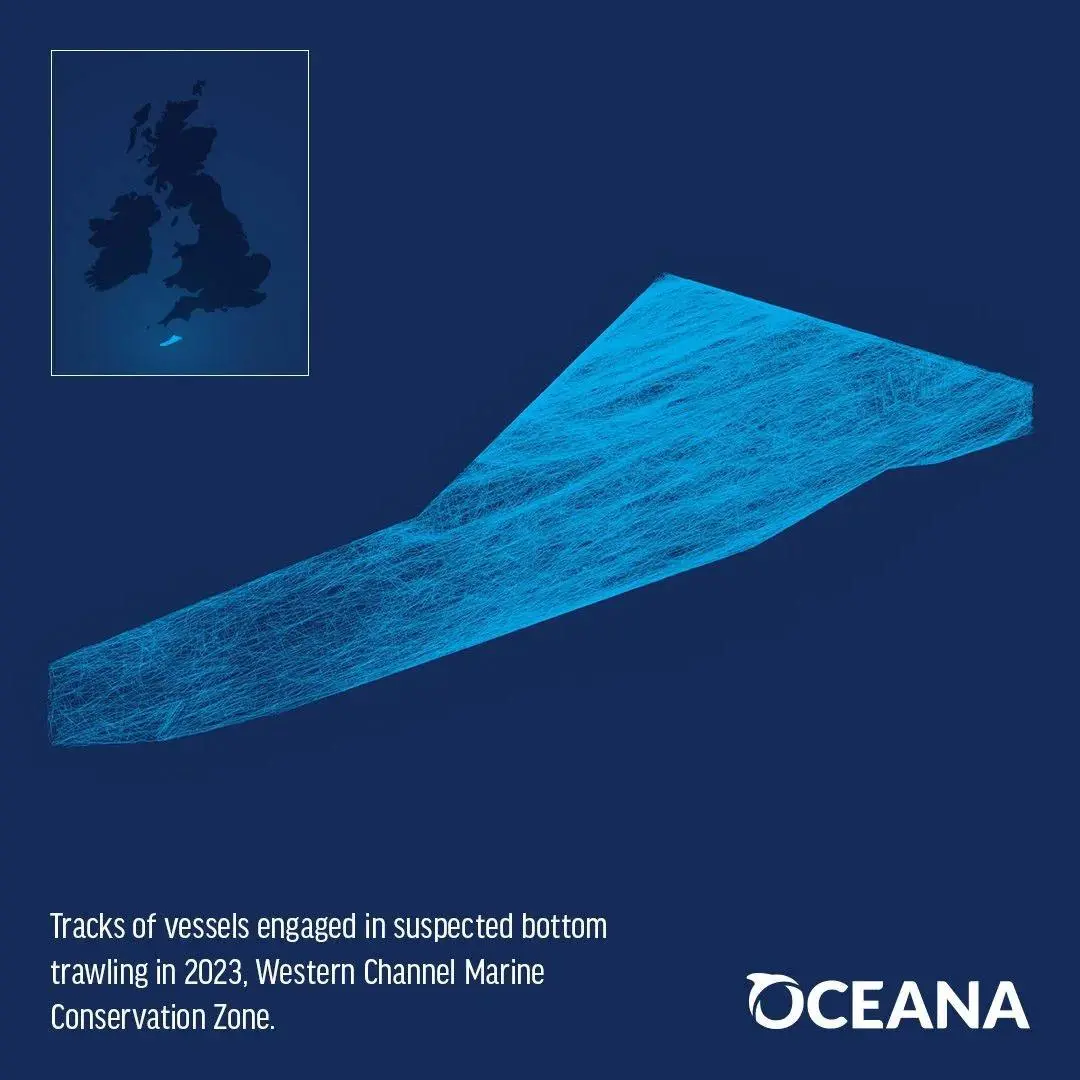
According to Oceana, the introduction of these byelaws is an important step, but said this “limited restriction” still leaves the vast majority of the UK’s protected areas open to this harmful practice. Its latest analysis found that of the estimated 100,000 hours of industrial fishing in the MPAs, some 33,000 hours were from vessels carrying bottom-towed gear, such as bottom trawls and dredges. Furthermore, just 10 fishing vessels – all 20-metres-plus in length – were responsible for 27% of the suspected bottom trawling identified by the analysis.
This, Oceana said, demonstrates the intense nature of this damaging practice.
The organisation also highlighted that none of the 10 vessels were from the UK, while just 6% of the total 33,000-plus hours of suspected bottom trawling in these MPAs was carried out by UK vessels.
While it cannot disclose the names of these vessels, a spokesperson highlighted to WF that these vessels are fishing completely legally with the permission of the UK government, stating that “it is the lack of regulation that is causing this severe damage to marine environments, rather than wrongdoing by the fishers”.
Bounce back benefits
According to Oceana UK Executive Director Hugo Tagholm the MPAs are “crisscrossed with the scars of this highly destructive form of fishing” and may take decades to heal.
“These areas are vital havens for ocean wildlife and protect us against the climate crisis. Everything from sharks to starfish are hoovered up by bottom trawling, which can destroy whole ecosystems and empty our seas of life. This also threatens communities seeking to make a sustainable living from our seas. The government must act now to ban this destructive practice from all our marine protected areas. Anything less is a complete betrayal of our ocean wildlife, which urgently need sanctuaries that are safe from this wholesale destruction,” he said.
Adding further weight to the argument, Martin Attrill, Professor of Marine Ecology at Plymouth University noted that over a century of industrial bottom trawling and dredging has degraded the UK seabed and still threatens some of the most important remaining sensitive marine habitats.
This is further impacting the biodiversity and resilience of these seas, he said.
“It is therefore frankly astounding that these harmful practices are still permitted in marine protected areas, designated to protect the seabed and allow nature to recover.
“When this particular destructive pressure is removed, our research in places like Lyme Bay shows that these marine ecosystems can bounce back, bringing wide ranging benefits. As seabed species and habitats recover, they can build up ‘blue’ carbon that helps to mitigate the climate crisis, they boost marine biodiversity and the abundance of commercial species inside and outside MPAs, with benefits to the UK fishing industry and other marine sectors, and by giving some space to nature they help restore the overall health of our seas.”
Cornish exploitation
Oceana’s analysis focused on the UK’s 63 offshore benthic MPAs. These sites are located beyond 12 nautical miles from the country’s coast, designated specifically for the importance of their seabed features.
It found the two most exploited UK MPA sites were both located off the coast of Cornwall. The Western Channel MPA is made up of underwater sand dunes that are home to wildlife ranging from the small-spotted cat shark to the angler fish, while the Southwest Deeps (East) boasts cuckoo rays as well as the fan mussel, one of Britain’s largest and most threatened molluscs.
To ascertain its findings, Oceana identified satellite tracks within MPAs that indicated industrial fishing (based on GFW algorithms, machine learning, and a random manual inspection of the data by its own analyst team) and then narrowed the dataset down to vessels that were registered as carrying bottom trawl or dredging gear as at least one of their gear types. This matching process is external to GFW, since the information from the organisation does not currently distinguish between “bottom” and “mid-water” trawlers.
GFW uses data about a vessel’s identity, type, location, speed, direction and more that is broadcast using the automatic identification system (AIS) and collected via satellites and terrestrial receivers. GFW analyses AIS data collected from vessels that Oceana’s research has identified as known or possible commercial fishing vessels, and applies a fishing presence algorithm to determine “apparent fishing activity” based on changes in vessel speed and direction. The algorithm classifies each AIS broadcast data point for these vessels as either apparently fishing or not fishing and shows the former on the GFW fishing activity heat map.
Oceana advises that GFW’s fishing presence algorithm is a best effort to mathematically identify “apparent fishing activity”. As a result, it is possible that some fishing activity is not identified as such by GFW, and/or GFW may show apparent fishing activity where fishing is not actually taking place. For these reasons, GFW qualifies designations of vessel fishing activity, including synonyms of the term “fishing activity”, such as “fishing” or “fishing effort,” as “apparent,” rather than certain.