





Ahead of the curve in traceability
With regular news of contaminated food products and widespread recalls, consumers and advocate groups are growing increasingly vocal about the need for greater oversight and protection in the food industry. One critical component in implementing stronger food safety measures lies in traceability.
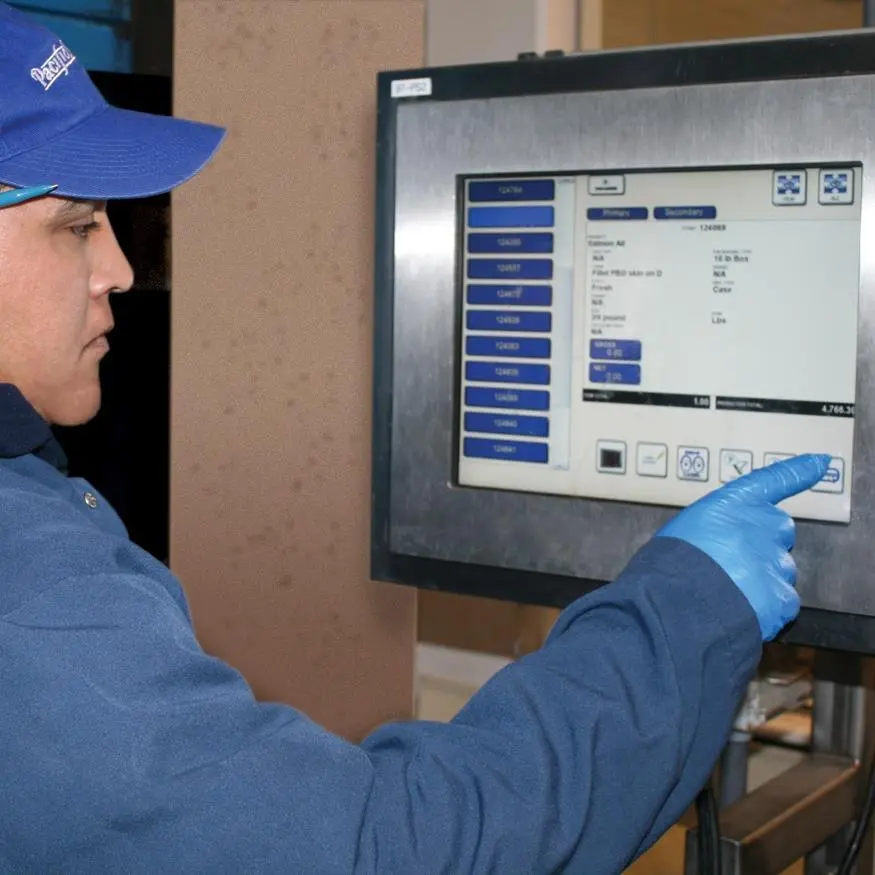
Ahead of the trend, Pacific Seafood, an Oregon-based seafood distributor developed and implemented a proprietary tracking system in 2002 to address food sourcing questions head on. Known as Automated Production Control© (APC), the innovative system complements the company’s stringent quality control measures by tracing the seafood that passes through its facilities.
In the event that a problem arises with a particular batch of fish, Pacific Seafood can quickly isolate affected product, accelerating a recall process and protecting consumers. The fish is tracked the moment it is unloaded from a fishing vessel and weighed for processing. It is then tracked through processing, packaging and delivery. The company stores a range of information under unique identification numbers clearly marked on the final product.
A product’s identification number provides the key to critical information: data within a moment’s reach includes which boat the product originated from, when and where it was unloaded, the equipment and people in contact with the product, when it went into production, and where it was shipped. Along with assistance in potential product recalls, the system provides additional quality control, highlighting areas in which the processor can improve operations or quality assessment.
In developing its tracking system, Pacific Seafood took a holistic approach, incorporating company priorities and industry regulations, both current and anticipated, into the design. With control built in at every point, the system is critical to efficiently meeting food safety regulations. Consistent with the company’s culture of embracing change, the system can be adapted to accommodate new regulations as they are introduced to benefit consumers, the environment and the resource.
Related Articles
 FISHING TECHNOLOGY
 FISHING TECHNOLOGY
 NEW VESSELS