


A deadly combination
Just abuse or semi-slavery – news such as this coming from South Africa on the abuse of Vietnamese and Indonesian crews onboard oceanic fishing vessels and previous ones of the labour conditions onboard Scottish and Irish fishing vessels on one hand, and those on the persisting reality of illegal, unreported and unregulated (IUU) fishing, on the other, indicate an emergence of a deadly combination.
In the April 2008 issue, I wrote: “… recurring reports on endangered fish workers and on fishing boats which could well be slave galleys, fishermen forced to work long hours with very short rest periods, absence of adequate protective clothes and safety equipment to cope with often extreme weather conditions, bunks for sleeping that are too short for grown men, beatings, abuse, and humiliation, not to speak that apart from being underpaid, some fishermen have been simply not paid at all, paid partly or only after delays and external intervention”.
And, now, according to the fishing inspector for the International Transport Workers’ Federation (ITF) in Cape Town, complaints of abuse and poor nutrition are on the rise. The character of the complaints by mainly SE Asian crew members hasn’t changed. When some, contracted for three years by rather shady companies, reported abuse upon docking in a harbour after up to one-and-a-half years later, their bosses told them that by complaining they were breaking their contract.
Abuse of Vietnamese workers aboard Taiwanese fishing boats fishing the waters off South Africa has been going for long time. Vietnamese crews from at least four vessels reported having been forced to work non-stop for 16-18 hours with only 3-4 hour rests. The conditions were somewhat better onboard one South Korean vessel with 12 hrs on and five off.
In Europe
In the June 2005 issue, I reported about the dearth of young fishermen in the Scottish fishing fleet (see: Cheap Labour). Recently the ITF produced a rather strong report on mishandling and even abuse of Asian crews onboard Scottish, Northern Irish and Irish fishing vessels. There is a long record of complaints by foreign crews in the Scottish and Irish bottom fishing industry involving elements akin to forced or compulsory labour, such as: refusals by boat owners to repatriate migrant fishermen and abandoning them in a foreign port; excessively onerous working hours without overtime payment and withholding wages; food shortages and inadequate sanitary requirements; leaving foreign workers without means to return home, regardless of whether they are sick or injured or have family problems back home, etc. Foreign fishermen are paid a fraction, sometimes as little as a fifth, of the UK minimum wage.
Alan McCulla, who’s the CE of ANIFPO (local association of Killkill fishing boat owners), while refuting the existence of slavery in the Northern Ireland fishing industry, told me that Filipino fishermen are employed throughout the British fisheries due to shortage of local crew and that without them a large part of the fleet would be tied up, with dire consequences for the processing sector. He stopped short of explaining (some industry spokesmen did) that the many low cost migrant workers from the Philippines were needed, because many nationals had become so dependent on drugs and alcohol and were unemployable. But McCulla sort of admits that, for various reasons, local trawler owners haven’t been looking adequately after the welfare of the foreign crew members forced to stay onboard because UK Visa requirements dictate that they cannot live or work on shore. This is why various ideas aimed at alleviation of their harsh conditions are now being discussed between the industry and the authorities. The hard question is, of course, how long would the discussions continue, and what’s being done in the meantime?
South Africa, UK and Ireland are at least places where abused and maltreated fishermen can complain. There’re only too many parts and ports throughout the world where no ears are free, available, or willing to listen to and act upon grievances. And much, if not most, crew abuse seems to occur onboard IUU fishing vessels.
IUU fisheries
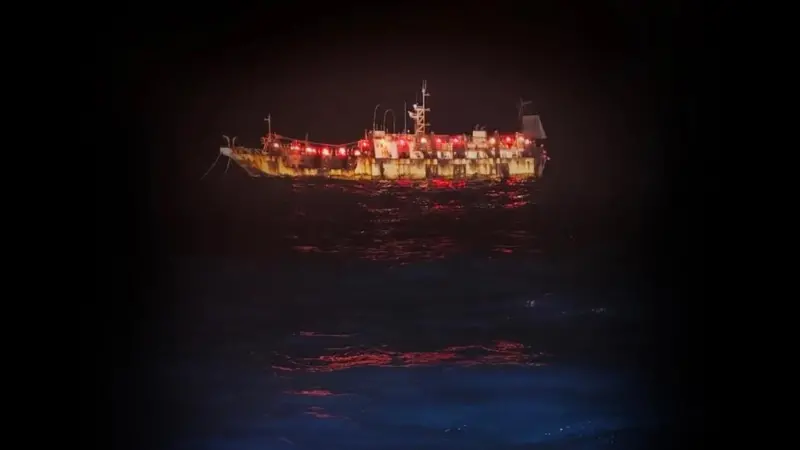
According to some reports, many hundreds of large fishing vessels have been fishing for years illegally off Africa, while the High Seas Task Force (HSTF), which is a group composed of fisheries ministers of the main maritime countries and some NGOs established to develop an action plan against IUU, reported on over 800 IUU fishing vessels in Somali waters at one time in 2005. This exploitation of the country, in which lawlessness is extended also over its national waters, EEZ and its long coasts, has been the pretext for some and for others the main cause for the emergence and expansion of Somali piracy.
Complaints from the Indian and Pacific coastal countries and small island states cite IUU fishing as one of the most serious problems facing the management of their marine fish stocks. Developing countries have become the victims of illegal fishing activities that affected local business, State revenue, and social conditions in fishing communities. But ITF has more to say: it condemns the gross violations of human and labour rights so frequent onboard IUU fishing vessels.
It appears that labour laws and human rights abuse, ranging from systematic cheating by owners and agents of fisher’s wages to extreme physical violence against crew members, are frequently associated with IUU, as shown by several recent reports. Combating IUU fishing should mean not only protecting fish stocks, but also a persevering struggle to eliminate slave and semi-slave labour conditions and to enforce the standards prescribed by the ILO Convention on Work in Fisheries.
One way to fight both IUU and such abuses is for local, national and international authorities to prevent vessels with sub-standard working and human conditions to fish and to land and tranship catches. Political will in marine countries making skippers and owners legally answerable for such abuses, wherever they occur, could also help.