




Deepsea fishing threatening tuna, warn scientists
A new international study warns that proposed commercial fishing in the deep ocean could have serious consequences for bigeye tuna, one of the world’s most valuable and widely consumed fish, by stripping away a critical food source.
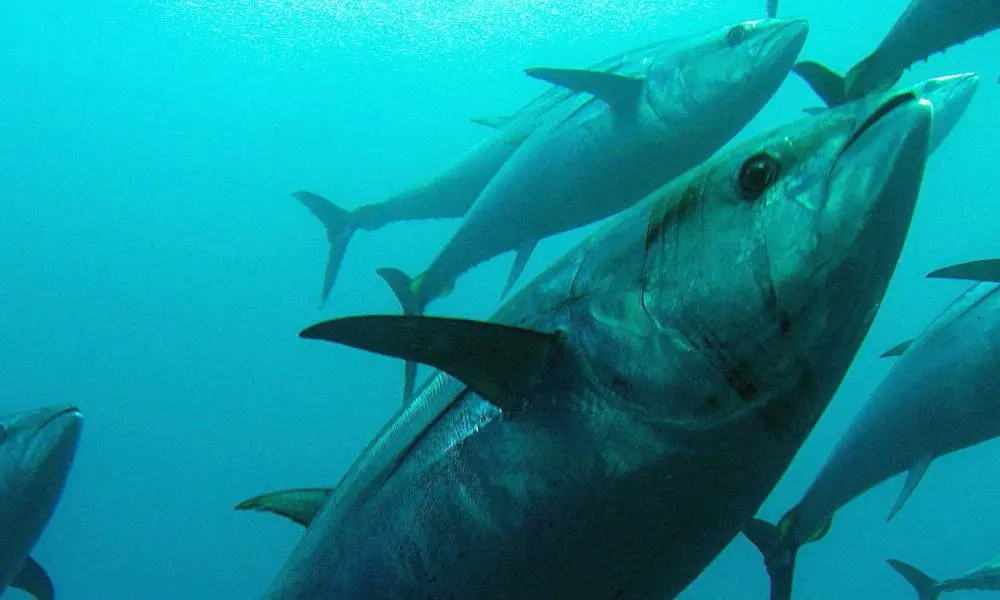
Led by scientists at the Woods Hole Oceanographic Institution (WHOI) and published in Fisheries Management and Ecology, the research finds that large-scale harvesting of mesopelagic fish could significantly reduce prey availability for bigeye tuna, ultimately damaging tuna populations and the fisheries that depend on them.
Mesopelagic species such as lanternfish and bristlemouths live hundreds of metres below the surface and form one of the largest animal biomasses on Earth, making them an increasingly attractive target for fishmeal and fish oil production.
“Bigeye tuna rely heavily on mesopelagic fish for food, at a higher level and with greater consistency than previously assumed,” said lead author Ciara Willis, who conducted the research during her PhD at WHOI.
She warned that unchecked exploitation could have far-reaching impacts. “If we remove too much of this critical food source via large-scale mesopelagic fisheries, we risk undermining existing tuna fisheries that support livelihoods around the world,” said Willis. “Bigeye tuna won’t be the only species impacted. Numerous large marine predators, from fish to whales to seabirds, depend on the mesopelagic.”
The mesopelagic, or ocean twilight zone, spans depths of 200 to 1,000 metres and plays a vital role in supporting marine food webs and regulating climate by transporting carbon to the deep ocean. Recent studies suggest its fish biomass may be ten times greater than previously estimated.
READ MORE: Catching fish at 200 metres depth could have climatic consequences
Study co-author Di Jin said integrating ecological and economic analysis was key. “Combining food-web science with economic modelling gave us a full picture of how coupled natural and human systems could respond to mesopelagic fishing,” he said.
With interest in deep-sea fishing growing and regulation limited, co-author Melina Kourantidou stressed the need for caution. “If harvesting deepsea forage fish undermines high-value fisheries like tuna, the total costs could far outweigh the benefits,” she said.
The study concludes that ecosystem-based management is essential before any large-scale mesopelagic fisheries are developed.
Related Articles
 SUSTAINABILITY
 FISHERIES
 FISHERIES