




Report: Catching fish at 200-metre depths could have climatic consequences
Fishing the ocean’s mesopelagic zone – located between 200 and 1,000 metres deep and extending from the Arctic to the Antarctic – could have serious consequences, warns a new scientific report.
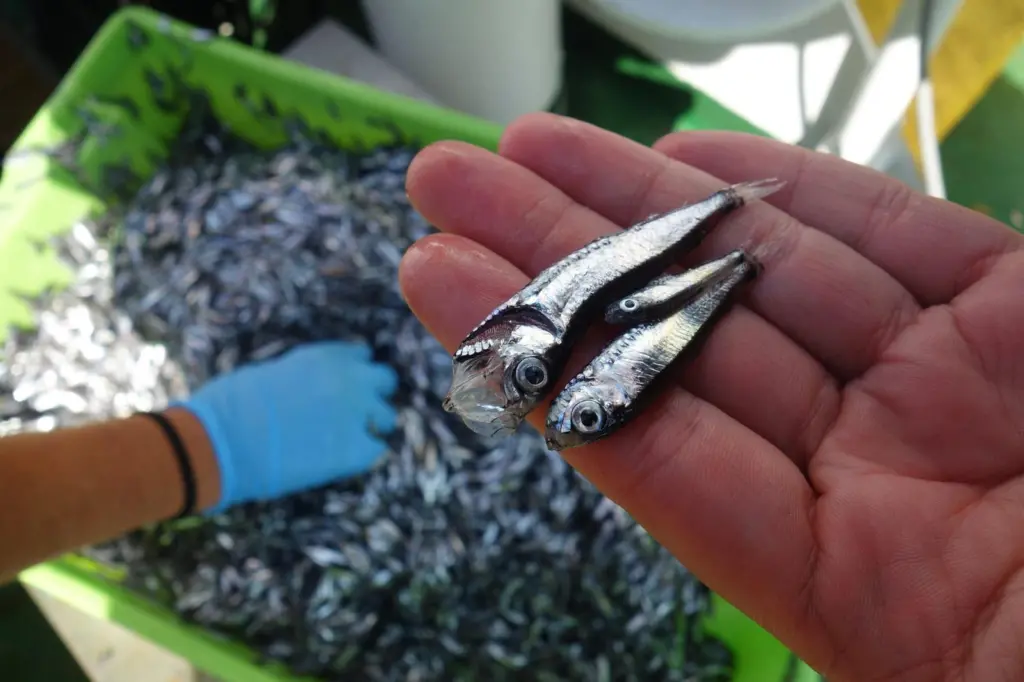
Carried out as part of the European SUMMER project, an international research team’s five-year resource assessment of the mesopelagic zone developed different performance protocols to estimate the total biomass of the region, establish its role and importance in the food chain, and to analyse its role in carbon transfer and sequestration.
It found that mesopelagic fish have a diurnal-night migratory behaviour, rising to surface waters at night to feed, and descending to safer depths during the day to avoid predators. This migration is fundamental not only for their survival, but also for the functioning of the ecosystem, as it contributes to the transfer of carbon and nutrients to the lower layers of the ocean.
“Our main conclusion is that, at present, it is more beneficial to protect this area than to exploit it. It provides essential nutrient and climate regulation services, and supports numerous fish populations of commercial interest,” said Raúl Prellezo, AZTI expert in fisheries economics and project coordinator.
The research, led by the AZTI technology centre, has estimated an abundant biomass in this area: 1.3 billion tonnes, which represents 87% of the total pelagic biomass and is 15 times higher than the entire oceanic fishery in 2022 (81 million tonnes).
“Despite this large biomass, the commercial viability of exploiting this area for fisheries is limited. First, because of the wide and dispersed distribution of the fish. Second, because of their small size, which requires processing into fishmeal and fish oil. Third, because of their slow metabolism and low productivity. All this makes them very vulnerable to overfishing,” Prellezo said.
The study also observed how the extreme conditions at these depths have driven the evolution of microbial communities with unique biochemical traits and promising sources of novel molecules.
Additionally, the SUMMER project has evaluated the antimicrobial activity of some 700 microbial extracts against a variety of human and fish pathogens, as well as human cancer cells, with results highlighting the potential of mesopelagic organisms for pharmaceutical applications.
Bacteria that produce omega-3 fatty acids, which are important for the nutraceutical industry and aquaculture, have also been found in fish viscera.
“Profitability issues in obtaining fish oil require careful evaluation to determine if it is commercially viable. However, the targeted search for organisms in the mesopelagic zone offers a promising and sustainable avenue to harness microbial and chemical diversity for potential pharmaceutical and nutraceutical advances,” Prellezo added.
Environmental importance
The research results highlighted the fundamental ecological role of mesopelagic organisms in carbon sequestration and food webs, underscoring the significant societal risks of overfishing.
The nocturnal movement of mesopelagic organisms, including fish and zooplankton, into surface waters for feeding is the largest daily migration by biomass on the planet. According to the study, 44% of the biomass in this area performs these vertical migrations. This active flux, as the report highlights, represents 1.5 times all CO2 emissions from automobiles worldwide.
To support the management of the exploitation of mesopelagic organisms, the project has developed a virtual tool that allows stakeholders to interactively experience the impacts of diurnal vertical migrations on the biological carbon pump.
The research team has also quantified the dependence of predators on specific mesopelagic resources and found that all top predators depend to a greater or lesser extent on these resources, making food webs particularly sensitive to the capture of mesopelagic fish.
The SUMMER initiative, funded by the European Union’s Horizon 2020 programme, brings together a consortium of 22 institutions led by the AZTI technology centre.
AZTI is a member of the Basque Research and Technology Alliance (BRTA), an initiative that brings together four collaborative research and 12 technology centres, seeking to promote collaboration among them; strengthen the conditions to generate and transfer knowledge to companies, contributing to their competitiveness; and to spread the Basque scientific and technological capacity.
Related Articles
 FISHERIES
 FISHERIES
 FISHERIES