






New study reveals temperature effects on salmon growth, health and performance
A new study from the Norwegian Institute of Food, Fisheries and Aquaculture Research (Nofima) has shed light on how rearing temperatures influence the health and development of Atlantic salmon from early life through to harvest, revealing that higher freshwater temperatures can drive stronger growth without immediately compromising seawater survival or performance – though some subtle welfare effects were observed.
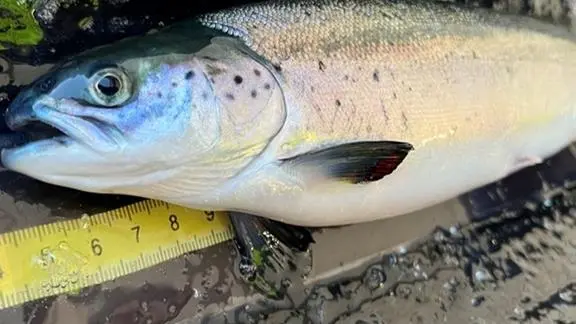
The trial, conducted at Nofima’s Sunndalsøra research station and funded by the Norwegian Seafood Research Fund (FHF), followed salmon from 10 grams to smolt stage (200 grams) at three freshwater temperatures — 8°C, 12°C, and 14°C — before transferring them to seawater at Gildeskål in northern Norway. Both flow-through and recirculating aquaculture systems (RAS) were tested to reflect commercial conditions.
“All fish developed good seawater tolerance and survival remained high across all temperature groups,” Nofima Scientist Anja Striberny said. “Fish reared at 14°C were larger at sea transfer – around 140 grams versus 70 grams in the 8°C group – and continued to outgrow their counterparts through the seawater phase, which was unexpected.”
While growth and survival outcomes were positive, the researchers cautioned that some health indicators showed mild differences linked to higher rearing temperatures. Fish from warmer groups displayed a tendency for smaller heart size and mild cataracts at the end of the seawater phase, findings also noted among RAS-reared fish.
“Growth isn’t everything,” Striberny said. “We are still analysing molecular and tissue samples to better understand any invisible effects of temperature on long-term fish welfare.”
According to Sven Martin Jørgensen, Head of Research at FHF, the results will be incorporated into broader research under the fund’s “Robust Fish” programme, which aims to optimise early-life conditions for salmon health and performance.
“When several of these projects report their findings, it will be important to consolidate results so the aquaculture sector can refine production conditions that yield the healthiest, most robust fish,” Jørgensen said.
Interestingly, salmon reared at 12°C and 14°C also showed a higher proportion of superior-quality fish with more intense fillet colour — an indicator of potential product quality benefits.
The research team concluded that temperatures up to 14°C during early rearing are generally safe and may improve long-term growth potential — but warned that such conditions should not be combined with suboptimal density or water quality.
“We only manipulated temperature in this trial,” Striberny added. “If other parameters like density or oxygen had been outside recommended levels, the outcomes might have been very different.”
The study, titled “Temp-Int”, was conducted in collaboration with the Arctic University of Norway (UiT), the University of Bergen (UiB), the Norwegian University of Science and Technology (NTNU), and salmon producers Mowi, Grieg Seafood and Cermaq.
Related Articles
 BUSINESS & FINANCE
 AQUACULTURE
 ICELANDIC FISHERIES EXHIBITION