


Eurostat: EU aquaculture production static at 1.1m tonnes
Aquaculture production in the European Union stood at almost 1.1 million tonnes in 2023, valued at €4.8 billion, according to new figures published by Eurostat, the statistical office of the EU.
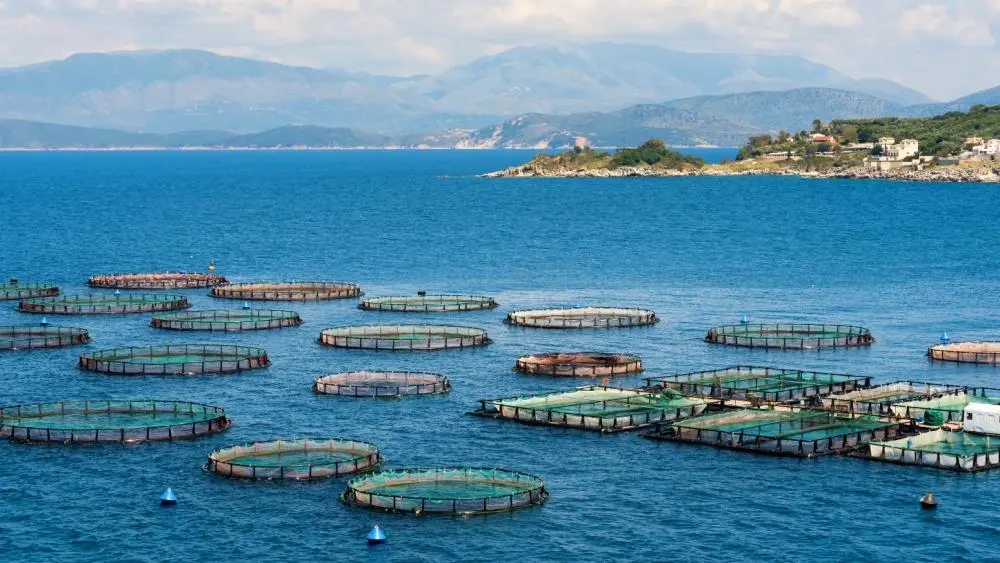
Production in the EU is primarily focused on finfish such as trout, seabream, seabass, carp, tuna and salmon, as well as molluscs, including mussels, oysters and clams. Combined, these accounted for most of the aquaculture production by weight in 2023.
Specifically, slightly more than a third of the EU’s total aquaculture production in live weight were mussels (34.5%), followed by trout (15.8%) and gilthead seabream (10%). Trout was the most valuable species produced in 2023 (17.7% of all aquaculture value), followed by seabass (13.3%) and gilthead seabream (12%).
The three largest EU producers of farmed aquatic foods were Spain (242,754 tonnes; 23.1% of the EU total), France (186,561 tonnes; 17.8%) and Greece (140,908 tonnes; 13.4%). France had the highest value of aquaculture output in 2023 (an estimated €906 million), representing 18.8% of the EU total. The value of output was next highest in Spain (€802 million), then in Greece (€684 million) and Italy (€618 million).
Eurostat’s figures confirm that between 2008 and 2023, the volume of EU aquaculture production remained relatively stable at around 1.1 million tonnes. This reflected contrasting developments in key producer countries; aquaculture production in Greece grew relatively steadily, in Spain it declined sharply compared with 2018, and it remained relatively stable in France after 2018.
The estimated 1.1 million tonnes of production corresponded to around one-quarter of the output of European fisheries as a whole. This share, Eurostat said, was well below the global average in 2020 of about 49%.
In terms of output, the EU’s aquaculture sector was the 13th largest worldwide, a little more than Thailand, with a 0.9% share of the volume of global output in 2022. The value represented just over two-fifths of the total value of the EU’s total production of fishery products (landings and aquaculture).
To put the EU’s aquaculture industry into perspective, Eurostat highlighted that the value of aquaculture output in Norway exceeded that of the whole of the EU; Norway produced 1.6 million tonnes of aquatic food (mostly salmon), worth €10 billion in 2023. It was the world’s sixth largest producer in aquaculture fish production in 2022, with a 2.7% global share. It was also the world’s second largest exporter of aquatic organisms after China.
With regards to EU products, Spain produced about 7 in every 10 tonnes of the bloc’s farmed Mediterranean mussels (Mytilus galloprovincialis) in 2023, largely due to its rafts in the estuaries of northern Spain using the “off bottom” method. Blue mussels (Mytilus edulis) were farmed in the Atlantic, Northeast area by the France (about 41% of the EU total in 2023), the Netherlands (about 26%) and Ireland (about 12%).
Greece produced about 62% of the EU’s farmed production of gilthead seabream (Sparus aurata) and 51% of European seabass (Dicentrarchus labrax) in 2023. Poland and Czechia were the leading EU producers of common carp (Cyprinus carpio), together producing about 53% of the EU total. At world level, common carp was the fifth most farmed finfish species.
Within the EU, Pacific cupped oysters (Magallana gigas) were produced mainly in France (about 89% of the total in 2023). Worldwide, about 33% of all molluscs produced in 2022 were cupped oysters. Italy produced the vast majority (about 94% in 2023) of the EU’s farmed Japanese carpet shell (Ruditapes philippinarum). At world level, it was the second most produced species among the molluscs (23% of the total in 2022).
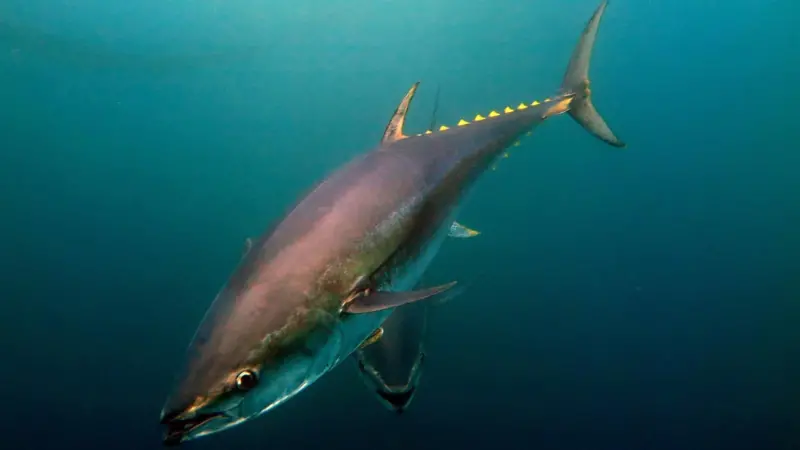
Atlantic bluefin tuna (Thunnus thynnus) were farmed in cages in four EU countries. Malta accounted for about 57% of EU farmed production of bluefin tuna, Spain about 33%, Croatia about 10%, with a small amount (less than 1%) also being produced in Portugal.
Ireland was the only EU country farming salmon in the EU in 2023, producing about of 9,300 tonnes. However, this quantity was far below the 1.5 million tonnes farmed in Norway. At world level, Atlantic salmon (Salmo salar) was the eighth most produced finfish species.
Eurostat noted that the production of farmed rainbow trout (Oncorhynchus mykis) in the EU is something of an exception to the general observation about country specialisation, with the species farmed in 20 EU countries. About 50% of the farmed live-weight of rainbow production in the EU in 2023 came from the combined output of France, Italy and Denmark. Fish were farmed either in inland freshwater (more than two-thirds of the total) or in the saltwater of the Atlantic, Northeast area, and mainly in tanks (about 50%).