



UK upholds sandeel fishing ban
The sandeel arbitration tribunal has published its final ruling in the UK-sandeel case. This relates to decisions taken in March 2024 by UK and Scottish governments to close North Sea waters to sandeel fishing with the intention to protect vulnerable seabird populations and support the wider marine environment.
A challenge to the ban has now been dismissed.
In April 2024, the EU launched dispute proceedings to challenge the closures. In October that year, the EU referred the challenge to an arbitration tribunal to rule on the dispute.
The report found that the UK successfully demonstrated that the measures taken to close English and Scottish waters were based on the best available science and had sufficient regard to the principle of non-discrimination. The tribunal also found the Scottish measures had sufficient regard to the principle of proportionality.
The tribunal found that during the decision-making process to close English waters to sandeel fishing, the UK did not have sufficient regard to the principle of proportionality, specifically in relation to EU rights during the adjustment period – a requirement under the UK-EU Trade and Cooperation Agreement (TCA).
UK government will now undertake a process to bring the country into compliance.
“We welcome the clarity provided by this decision, and we will undertake a process in good faith to bring the UK into compliance on the specific issues raised by the tribunal. The ruling does not mean the UK is legally obliged to reverse the closure of English waters, and the decision to close Scottish waters was fully upheld,” a UK government spokesperson said.
“We remain committed to protecting our seabirds and the wider marine environment, in accordance with our commitments to the TCA and other international agreements. Disputes and the use of resolution mechanisms are a normal part of a mature relationship with international partners. We will continue to act in the national interest as we work towards a strong and lasting partnership with our European neighbours.”
Scottish Cabinet Secretary for Rural Affairs, Land Reform and Islands Mairi Gougeon welcomed the decision.
“This is an extremely positive ruling, especially with respect to the closure in Scottish waters where all claims have been successfully defended. As such, the prohibition of sandeel fishing in Scottish waters will remain in place. Protecting our marine ecosystem is vital to Scotland’s environment, and to the people and communities who rely on it. The ruling reaffirms the appropriateness of the actions we took last year to do just that,” Gougeon said.
She continued: “The prohibition of sandeel fishing in Scottish waters has the potential to provide long term sustainability and resilience to the marine ecosystem, as well as bringing about potential benefits to sandeel, seabirds, marine mammals and other fish species. This outcome, with respect to Scottish waters, reflects the robust, evidence-based and transparent public consultation and processes that the Scottish Government has in place.”
Commenting on the outcome of the three-day hearing, Greenpeace UK Senior Oceans Campaigner Chris Thorne called the fishing ban “one of the few significant strides” made towards protecting and restoring the UK’s marine ecosystem since Brexit.
“The UK was right to bring the ban in and it’s very positive that the tribunal recognised the ecological case for this. Whilst the government has much to do to protect and restore 30% of oceans at home and globally by 2030, it would have been a travesty to reverse this vital step. It is disappointing that the government had to spend a lot of time and resources fighting to defend a vital conservation measure. Hopefully this ruling will mean the UK and the EU can now work together to make this ban permanent.”
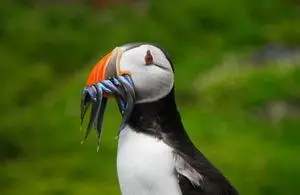
Thorne added: “Sandeels might not be our most famous or charismatic marine animals, but they are one of the foundations of the North Sea food web. They are vital to populations of seabirds like puffins and kittiwakes and marine mammals like grey seals, whales, dolphins and porpoises that are under threat. By attempting to block ocean conservation, the EU has shown itself to be a regressive force, prioritising profit over protection. This decision should embolden the government to make full use of its powers to ban destructive fishing across the UK’s marine protected areas.”
Related Articles
 SUSTAINABILITY
 FISHING TECHNOLOGY
 FISHERIES