




Twenty legal professionals complete FAO’s IUU fishing course
Another 20 legal professionals are now in a better position to assist their respective countries in developing and executing national plans and processes for the effective detection, investigation and the prosecution of fisheries offences and violations, after having completed a three-week course organised by the Food and Agriculture Organization of the United Nations (FAO).
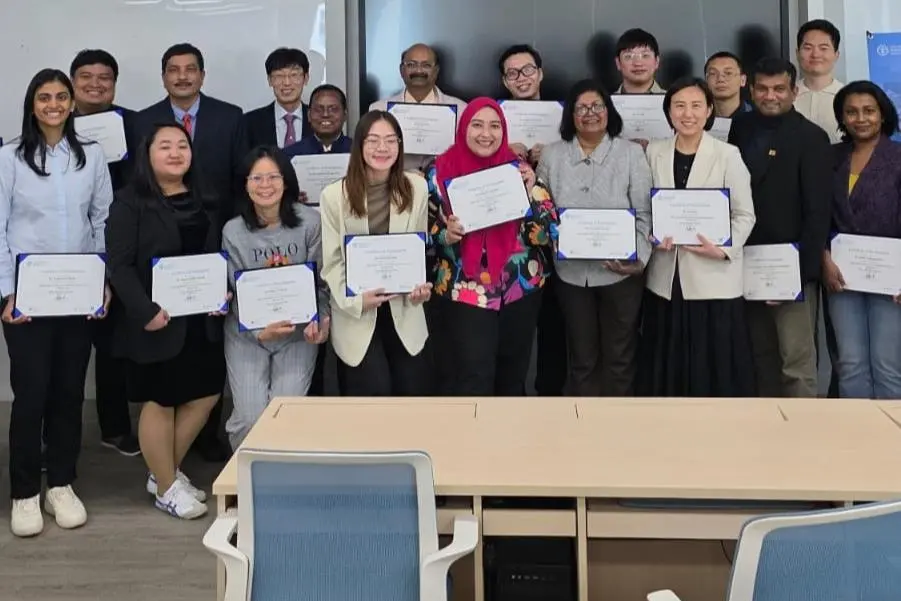
The eighth edition of the FAO international course on fisheries law, which forms part of the FAO fisheries training programme in support of the implementation of international instruments, was held 10–30 April 2025 at the Pukyong National University in Busan, Republic of Korea.
The legal professionals – from national institutions and authorities of China, India, Indonesia, Philippines, Sri Lanka, Thailand and Vietnam – followed an intensive course which comprised the Law of the Sea and ocean affairs, in particular fisheries governance, including fisheries law and policy, fisheries management, monitoring, control and surveillance (MCS), and compliance and enforcement.
This was the first time that this course was held at the FAO PSMA Busan training hub since its opening in October 2024.
Lectures for this course included FAO officials, staff from the International Maritime Organisation’s (IMO) specialised academic institution IMLI, and international legal, monitoring, control and surveillance (MCS) and enforcement experts, as well as representatives from the Korean Marine Institute and from the Ministry of Oceans and Fisheries of the Republic of Korea.
Funding for the course was provided by the Ministry of Oceans and Fisheries of the Republic of Korea and the European Union.
The ninth edition of this course will be delivered in October 2025, at the IMLI Malta training hub.
The FAO international course on fisheries law, developed under FAO’s global programme to support the implementation of the Agreement on Port State Measures (PSMA), complementary international instruments, and regional mechanisms and tools to combat illegal, unreported and unregulated (IUU) fishing, is deemed particularly beneficial for government officials, including legal practitioners working with fisheries legislation, magistrates and judges, fisheries MCS and enforcement officials, and senior managers.
The course is aligned with the FAO Strategic Framework 2022-31 and contributes to the achievement of the Four Betters and the United Nations’ Sustainable Development Goals, specifically SDG 14 (Conserve and sustainably use the oceans, seas and marine resources for sustainable development).
Related Articles
 SUSTAINABILITY
 FISHING TECHNOLOGY
 FISHERIES