





Advice updated for eating smoked fish
Food Standards Scotland (FSS) and the Food Standards Agency (FSA) are advising pregnant women and people with a weakened immune system, such as those with underlying conditions like cancer, diabetes, liver and kidney disease, to avoid eating ready-to-eat cold-smoked or cured fish.
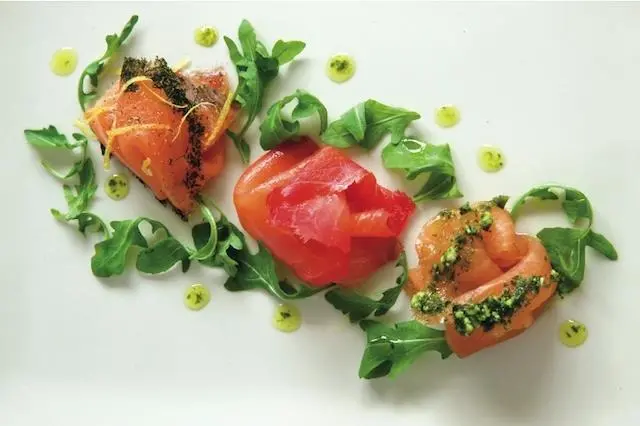
This follows the publication of a risk assessment that finds they are at higher risk of severe illness from listeriosis.
Highlighted products include smoked salmon, smoked trout and gravlax.
As the risk of serious illness from listeriosis increases with age, FSS and the FSA are also advising that older people should be aware of the risks associated with eating these products.
FSS and the FSA’s joint risk assessment, commissioned in response to an ongoing outbreak of Listeria monocytogenes linked to ready-to-eat cold smoked fish, found while the risk of contracting listeriosis in higher-risk individuals from cold-smoked fish is low, the severity of the illness is high.
They say this means there is the potential for severe illness, hospitalisation and death among higher risk groups.
FSS Head of Science Jacqui McElhiney said in light of the risk assessment, the advice is that pregnant women and individuals with impaired immunity should avoid ready-to-eat cold-smoked and cured fish products.
“If you are in the group of people more at risk of listeria infection, and you decide to consume these products, we strongly recommend that you first cook them until steaming hot all the way through. This will ensure that any listeria present in the product is killed before it is eaten,” she said.
FSS, FSA and UK Health Security Agency (UKHSA) have been investigating and taking steps to tackle an ongoing outbreak of Listeria monocytogenes linked to smoked fish since cases were first reported in 2020. There have been 19 linked cases of listeriosis dating back to 2020, with four people losing their lives.
UKHSA Consultant Microbiologist Dr Gauri Godbole explained that while smoked fish has a higher risk of carrying listeria, the overall risk to the population is very low.
“However, some people are more likely to get a serious infection including those who are pregnant and those with weakened immune systems. The risk also increases with age.
“Most people who are affected by listeriosis will have no symptoms or experience mild diarrhoea which subsides in a few days. Those who are more vulnerable can be at risk of severe illness such as meningitis and life-threatening sepsis. Listeriosis in pregnancy can cause very serious illness in mothers and their babies,” Godbole said.
FSS and FSA advise that once thoroughly cooked, smoked fish is safe to eat, and can be served immediately or after being chilled in the fridge.
Related Articles
 SUSTAINABILITY
 FISHERIES
 BUSINESS & FINANCE