



New research vessel for Chile’s coastal waters
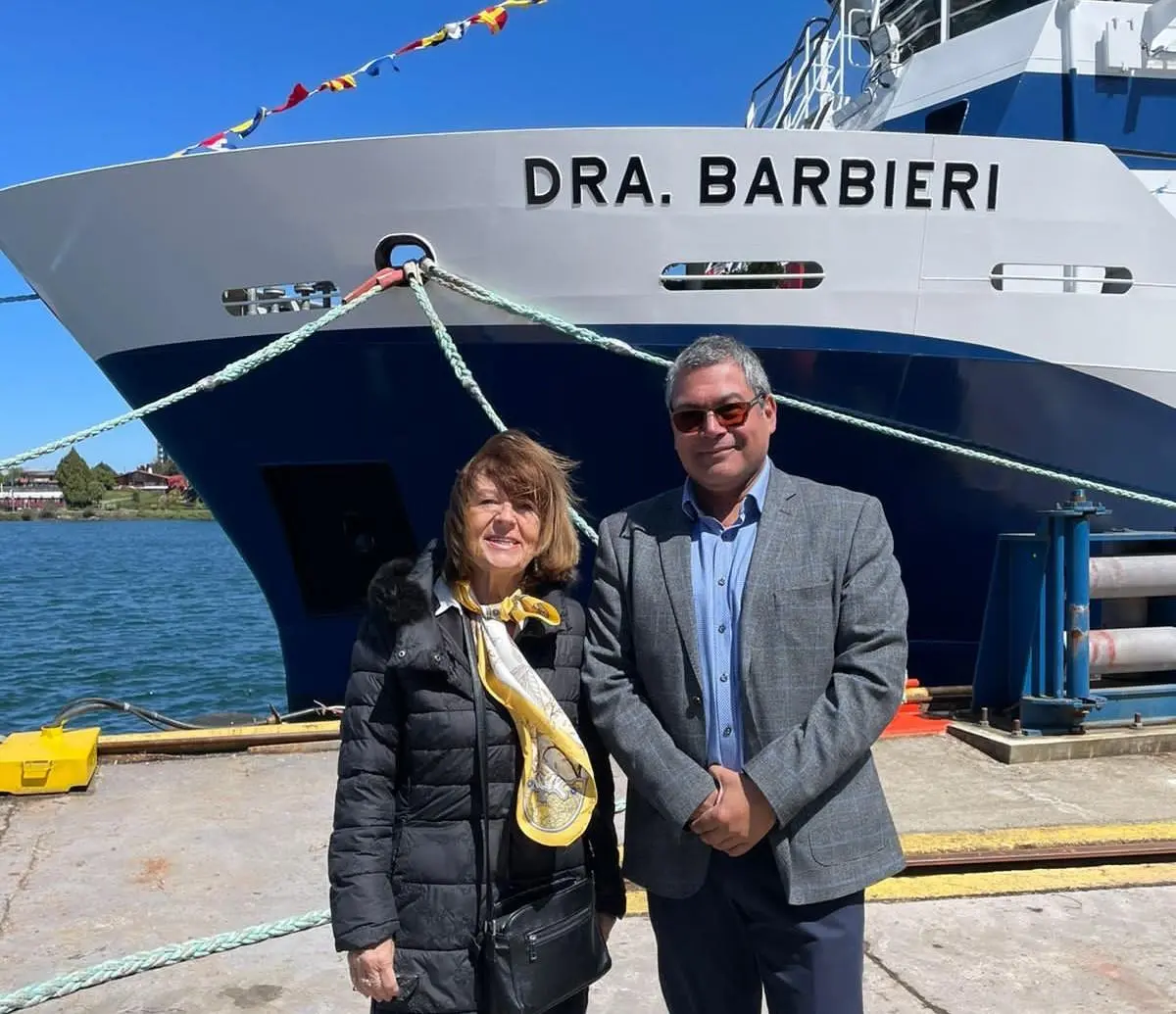
Dra. Barbieri has been built at the ASENAV shipyard, with its construction financed by the Undersecretariat of Fisheries and Aquaculture. It’s now being outfitted ready to begin operations.
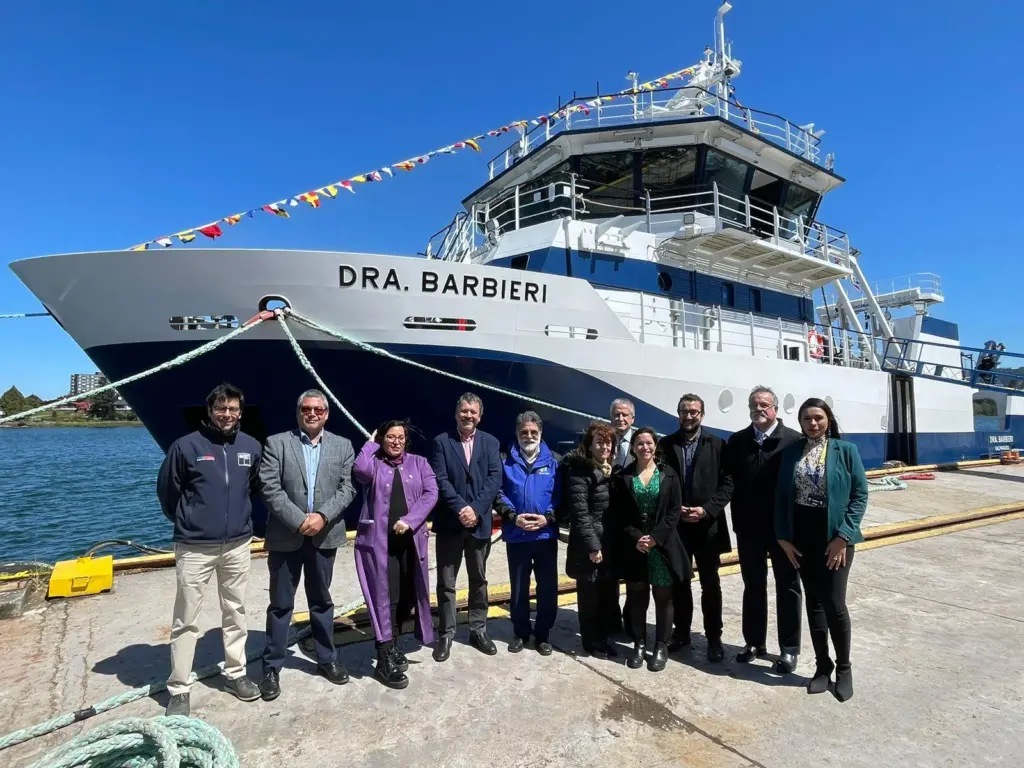
Dra. Barbieri will be operated by Chile’s Fisheries Development Institute (IFOP) and has been designed by IMC Naval Architects in Fremantle in conjunction with NavalPRO in Chile to have a shallow draft, enabling access to shallow and coastal waters to carry out surveys that have up to now been conducted from commercial fishing vessels.
Named in honour of pioneering fisheries scientist and Doctor of Oceanography María Ángela Barbieri Bellolio who headed acoustic sampling department during her 26 years at IFOPs, the 38-metre Dra. Barbieri is built to silent running class, has accommodation for eight scientists and eleven crew, including separated facilities for male and female crew.
Dra. Barbieri is outfitted with a suite of laboratory facilities. This includes an acoustic and data processing laboratory for operating scientific echo sounders, a dry laboratory for data processing with two workstations and systems to control the oceanographic winches, and a wet laboratory for processing water samples, a vacuum pump for chlorophyll extraction, and two scientific-level freezers for sample storage.
A measurement laboratory is for obtaining biological samples, fitted out with stainless steel counters, movement-compensated electronic scales and instrumentation for measuring fish samples.
“At IFOP, we are happy and proud of new research vessel Dra. Barbieri, which, together with scientific vessel Abate Molina, will allow us to expand research carried out in areas that Abate Molina cannot reach due to its size,” IFOP Director Gonzalo Pereira said.
“We are very happy that this ship has Dr. Barbieri’s name, in tribute to an outstanding professional who dedicated much of her career to our institution. María Ángela Barbieri has been a pioneer in developing the hydroacoustic assessment studies that are carried out. On the other hand, I have to highlight and thank IFOP’s officials who worked on the ship’s construction technical support.”
Informing decisions
Dra. Barbieri is expected to operate in waters between Arica and the Chacao Channel, also covering the coastal sector from the Chacao Channel to Golfo de Penas.
Its duties will include acoustic assessment of sardine and anchovy stocks in the Los Lagos Aysén and Magallanes coastal sectors, assessment of demersal crustacean (prawns and shrimp) biomass between Coquimbo and Biobío using sampling gear, and assessment of stock using pelagic trawl gear.
In addition, it will carry out seabed bathymetric surveys, physical, biological oceanographic and meteorological climatic change research, including factors related to the El Niño phenomenon, as well as plankton sampling, sampling of sea temperature, salinity, oxygen and fluorine levels and sea acidity, and studies relating to ocean currents.
For María Ángela Barbieri, having the coastal research vessel bear her name is a source of “great emotion and pride, especially for my generation. It was difficult for us to move forward, because the doors were closed, little by little times have changed, the locks have opened up and every day more women are joining research. In some way it compensates for quite large efforts that were made at one time.”
“Research is important because this allows us to make informed decisions,” she said.
“With this scientific and oceanographic research vessel we would like to compare ourselves with countries that are capable of doing high-level research and quickly and efficiently delivering the results to society so that good decisions can be made and, as the Undersecretary of Fisheries has said, thus improving public policies.”
Related Articles
 VESSELS & SHIPYARDS
 VESSELS & SHIPYARDS
 NEW VESSELS