




Center for Aquaculture Technologies appoints genetic services lead
Through its commitment to support innovative genetic improvement and strategic breeding programmes, the Center for Aquaculture Technologies (CAT) has named Samuel May as its new Genetic Services Lead for the US and Canada.
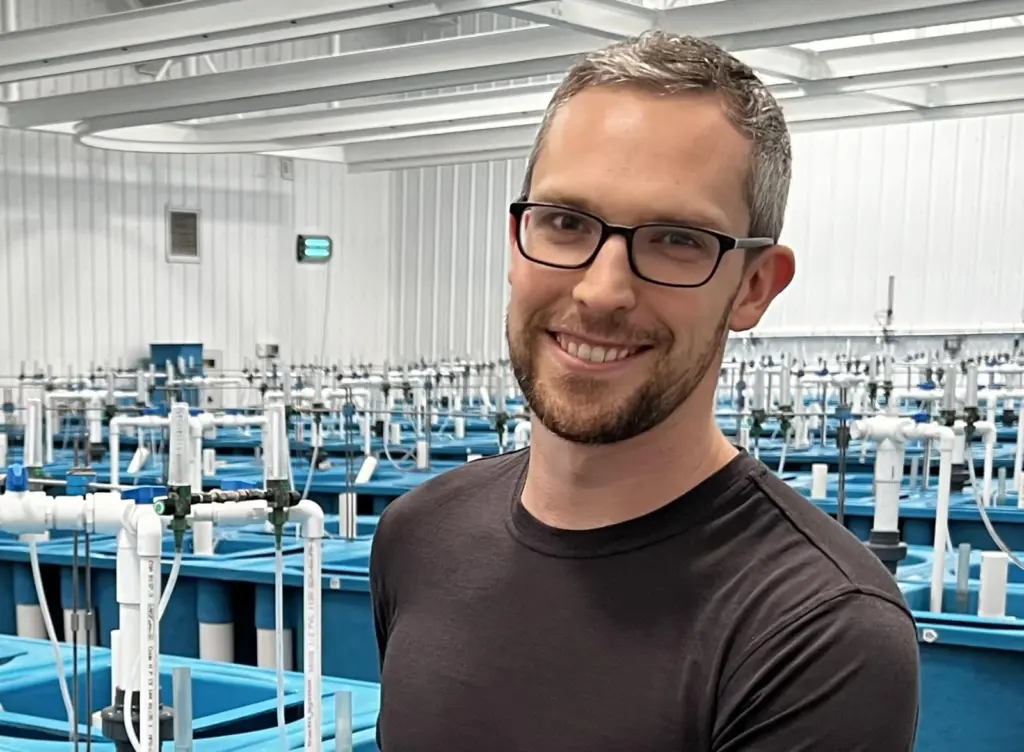
May brings plenty of scientific expertise and practical experience across coral research, salmon genetics and selective breeding in aquaculture. His journey into genetics began at university where a population genetics course sparked a passion that led to a PhD in genetics and a role managing the USDA salmon selective breeding programme in Maine. There, he focused on cryopreservation, trait optimisation and genetic diversity to improve breeding efficiency and sustainability.
“I wanted to move from academic theory to real-world impact,” May said. “CAT offered the opportunity to work across species, solve complex problems, and help clients make meaningful genetic gains.”
He was also drawn to CAT’s collaborative culture and its commitment to innovation in aquaculture. The organisation manages over 20 breeding programmes across more than a dozen aquatic species.
Leveraging a diverse portfolio of 50-plus genomic tools and deep expertise in genotyping, genome editing, advanced data analytics and quantitative breeding strategies, CAT delivers customised genetics solutions that drive measurable gains in performance, sustainability and profitability.
“Bringing Sam on board strengthens our support for clients across North America,” said Klara Verbyla, VP of Genetic Improvement. “His diverse experience enhances our ability to apply advanced genetic tools in practical settings, delivering real value to our clients.”
In his new role, May will manage selective breeding programmes for clients across the US and Canada, helping them implement new technologies, streamline operations, and make smarter data-driven breeding decisions.
“Genetics is one of the most powerful tools the industry has to tackle challenges like disease resistance, growth and sustainability,” he said. “By applying the right tools, we help producers raise healthier, more efficient fish that meet evolving market demands.”
Related Articles
 AQUACULTURE
 AQUACULTURE
 AQUACULTURE