


Traditional wisdom boosts marine sustainability
Traditional knowledge of coastal communities can play a vital role in ensuring the safety and sustainability of India’s marine fisheries, said marine experts at a recent workshop held at the ICAR-Central Marine Fisheries Research Institute (CMFRI).
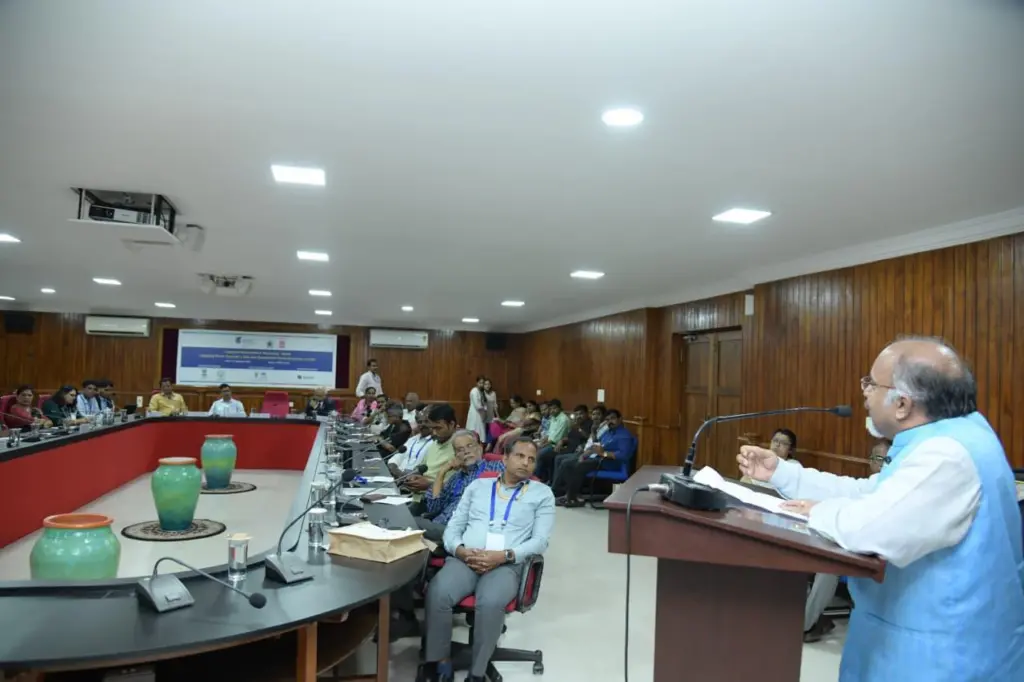
Jointly organised by Ocean Centres India, UN Global Compact Network India and CMFRI, the workshop featured panel discussions on ’Safety and Sustainability in Fisheries and Aquaculture’ and ’Impacts and Challenges of the Port and Shipping Sector’.
Experts said that integrating fishermen’s traditional knowledge with scientific tools like satellite modelling and remote sensing could enhance localised weather warnings and monsoon forecasting, improving safety and fishing outcomes.
“For generations, fishermen have relied on their deep understanding of the sea by observing wind direction, ocean currents and phenomena such as sea swell to predict weather and locate fish,” said Dr A Biju Kumar, Vice Chancellor of Kerala University of Fisheries and Ocean Studies, who inaugurated the workshop.
He added that Kerala’s traditional Khalasis, known for constructing ‘uru’ boats without modern machinery, offer valuable techniques that could be integrated with modern maritime engineering to develop hybrid solutions.
The panel flagged illegal, unreported, and unregulated fishing as a major threat, calling for technology-driven solutions to monitor fishing activity and preserve marine biodiversity.
Participants stressed the need for a participatory approach to address climate change impacts, which have disrupted monsoon patterns and marine ecosystems. They recommended nature-based solutions like bio-fencing and bio-shielding to protect coastlines.
Highlighting the issue of marine plastic, panellists proposed forming a ‘Blue Brigade’ of coastal women to lead anti-plastic efforts and promote awareness.
Experts from NIFPHATT, CMFRI and other institutions called for greater engagment in policy-making to ensure sustainable marine development.
Related Articles
 SUSTAINABILITY
 FISHERIES
 FISHERIES