


Survey: UK fishers heavily impacted by offshore wind farms
Preliminary results from a new survey on the impacts of offshore wind farms on commercial fishing in the UK have found widespread drops in catch levels and profitability.
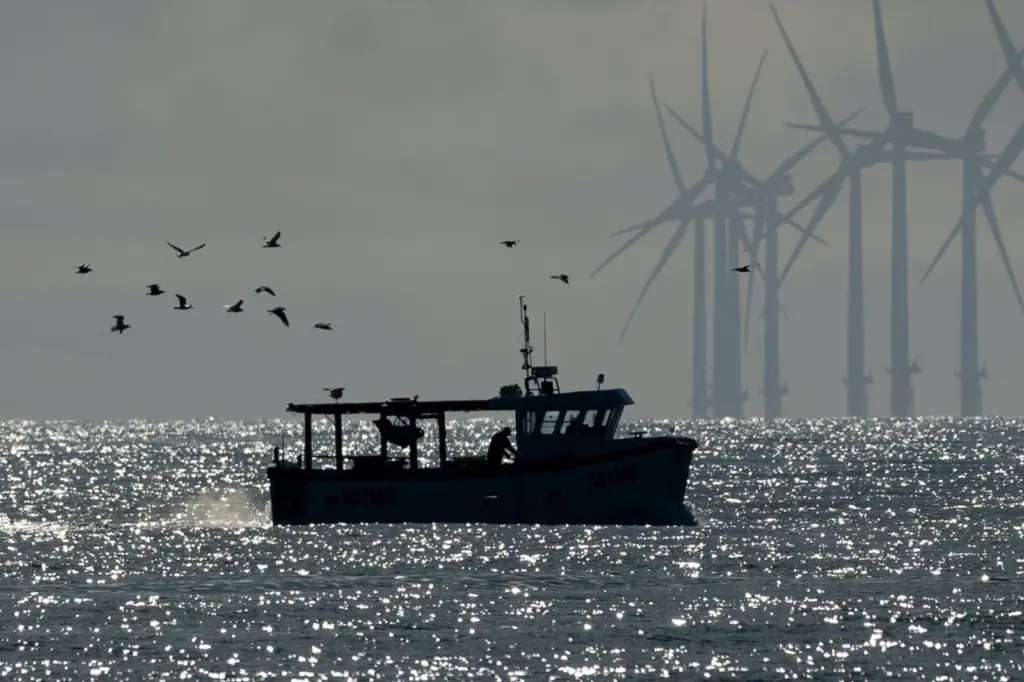
While the United Kingdom is committed to significantly increasing its offshore renewable capacity by 2030 and beyond, it’s also felt that scientists currently have a poor understanding of the full socio-economic implications and conflicting pressures on marine space of the rapid expansion of offshore wind farms. As such, scientists at the Plymouth Marine Laboratory (PML) have been conducting a survey to capture responses from those in the industry.
So far more than half of those fishers surveyed have cited a negative outcome on catches and profitability. Responses have come from fishermen all around the country, on vessels ranging from six to 42 metres in length using multiple types of trawls, dredges, creels, pots, jigging machines, handlines, trammel and gillnets.
Half the respondents were fishing within six nautical miles and three-quarters fish over 12 nautical miles from shore.
“Eighty percent of the 43 wind farms that are currently operational or under construction are viewed as impacting fishing activity. The majority of fishers have had to use different fishing grounds due to wind farms, with a few choosing to change gear and one fisher leaving the industry as a result. So far, 57% of respondents have cited a negative outcome on catches and profitability, and just one person has experienced a positive outcome on catches and profitability,” PML’s Dr Claire Szostek (project lead) said.
“Initial results indicate a significant increase in spatial competition due to ‘spatial squeeze’ from wind farms, likely due to the fact that many towed gears are unable to operate safely within turbine arrays and are therefore displaced to other grounds. Knock-on effects of this are having to steam further from home to fish as a result, with an impact on operating costs.
“Most fishermen state they have experienced financial and safety issues stemming from the construction and/or operation of offshore wind farms. There may be some benefits for pot fishermen, as one person commented that the lobster fishing opportunities increased around turbines. This is currently being investigated by researchers at Aberystwyth University,” she said.
Of the proposed UK offshore wind farms, all are expected to impact fishermen in the future, according to survey responses so far. Szostek said that more than half of respondents would consider leaving the industry as a result of the new developments, with others using different fishing grounds, or potentially changing gear or taking up other employment to supplement income.
Spatial competition, fisher safety, catches and profitability will all likely be impacted, she said.
“Additional concerns highlighted by respondents include, seafloor cables, decommissioning, damage to the seabed, particular impacts on inshore fishermen, disproportionate coverage of scallop and whelk fishing grounds, impacts on commercial vessel traffic patterns, electromagnetic effects from cables and impacts on specific fisheries and/or locations. We will be contacting respondents who indicated they are happy for us to do so for more detail on these issues.”
Related Articles
 SUSTAINABILITY
 FISHERIES
 FISHERIES