


Reaction as Ursula von der Leyen re-elected European Commission President
With 401 votes in favour, European Parliament elected Ursula von der Leyen as President of the European Commission in a secret ballot. This will be von der Leyen’s second term as Commission President. She was first elected by MEPs in July 2019.
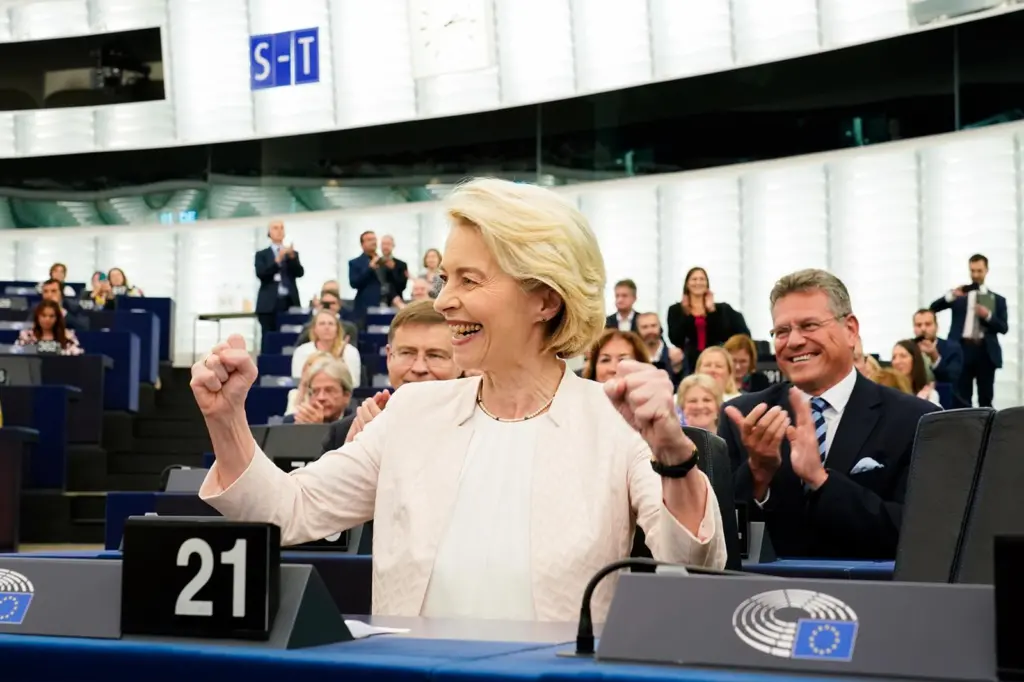
Parliament is currently composed of 719 MEPs, so the necessary majority was 360 votes. Some 284 MEPs voted against, and 22 cast blank or invalid votes.
Ahead of the vote, Ursula von der Leyen presented her political priorities for the next five years during a debate. She will now send official letters to member state heads of state or government inviting them to put forward their candidates for European Commissioner posts. Parliament will then organise nominee hearings in the relevant committees after the summer. The full college of Commissioners then needs to be endorsed by parliament.
Ahead of the vote, von der Leyen made the pre-election commitment to appoint a full-time Fisheries Commissioner. The promised was welcomed by EU fishing industry trade body Europêche, which said it hoped that such a move would bring a better balance between biodiversity conservation, the sustainable use of natural resources and food security.
Von der Leyen used part of her final appeal to MEPs to emphasise the need to implement existing EU green legislation. In response, the Environmental Justice Foundation (EJF) has highlighted key policy areas that the NGO says will define her second term.
EJF said its recent investigations into exploitation and illegal fishing on Chinese vessels in the Southwest Indian Ocean and the destruction of the Pantanal wetland in Brazil have brought to light “the alarming pace of global environmental degradation, often accompanied by egregious human rights violations”.
In the next term, it wants the EU to prioritise:
- Strong implementation of EU laws on the environment, oceans and human rights. This includes implementing strict measures on fisheries control, combatting illegal fishing, protecting nature and diversity, and enforcing human rights due diligence laws
- Sufficient resources for green policies, ensuring there is enough funding and staff to effectively implement and enforce green policies at EU and member state levels
- No rollback of EU green standards, ensuring no weakening of EU environmental and human rights laws or rollback on international commitments. Instead, key environmental standards should be strengthened
EJF CEO and Founder Steve Trent said the European Oceans Pact is a promising development, as long as it focuses not on rolling back ambitious EU rules on nature conservation and sustainable fisheries, but on identifying measures for their effective implementation.
“As part of this, it must do more to ensure illegally and unethically caught products, tainted with ocean destruction and human right abuses, are not entering the EU market, including to address the ‘unfair economic competition from China’ and its globally present distant-water fleet,” he said.
“Weakening EU environmental and human rights laws now, or rolling back on international commitments, would lead to similar rollbacks across the world. I urge the next Commission and Parliament to recognise this, and stand up for our shared natural world, recognising the EU’s leadership role in global ocean governance. For example, it’s vital that lawmakers take action to protect 30% of EU seas by 2030, improve compliance with existing legislation and prevent the most destructive forms of fishing, like bottom trawling, from taking place in Marine Protected Areas.”
Seas At Risk also welcomed the commitment to the Ocean Pact, explaining the initiative follows a clear demand from EU heads of state and government for the next Commission to further protect and restore marine ecosystems, and saying that it offers a significant opportunity to uphold the ambition for a healthy ocean, for the benefit of both people and the planet.
Rémi Cossetti, Marine Policy Officer at Seas At Risk said it marks a promising step forward. ”We urge the European Commission to ensure the Pact includes concrete and transformative measures to achieve the EU’s goals of climate neutrality, zero pollution, and protection and restoration of marine life, while guaranteeing a just and socially fair transition to environmentally friendly practices. To be impactful, it is crucial that the Pact embraces a holistic approach, ensuring coherence across marine sectors. Therefore, the portfolio of the new Fisheries and Ocean Commissioner must be expanded beyond a fisheries-centric focus to also put the delivery of the Pact front and centre, to guarantee the resilience of the ocean and the precious marine ecosystems it supports.”
According to the NGO, the challenge for the next Commission now lies in translating the Ocean Pact into ambitious and concrete legislative proposals that genuinely foster a low-impact blue economy in harmony with marine health. It said it will closely scrutinise the measures proposed by the next Commission, as the substance of these policies is crucial to their own success and insisted that only through detailed and ambitious proposals and adequate funding can the pressing issues faced by the ocean be truly addressed, achieving the long-term resilience for the ocean necessary for marine ecosystems, human communities and future generations.
To guide the next Commission in determining the priorities of the Ocean Pact, Seas At Risk, in collaboration with other Brussels-based marine NGOs, will launch a ”Blue Manifesto” on 1 October, during EU Ocean Week 2024. It said this roadmap, which is intended to inspire the Commission, will outline a series of milestones and their timeline to enable the EU to achieve a healthy ocean and seas by 2030.
According to WWF, while von der Leyen confirmed to stay the course on the goals set out in the European Green Deal, her flagship initiative has also been downgraded, “catering more to (agro-)industrial demands”. The NGO said her programme now starts by “copy-pasting” industry demands that are often at odds with environmental standards that protect people’s health and safety, and the importance of nature is mentioned “in passing only” and ambition for a fully renewable energy system is missing.
“The signs of environmental collapse are all around us: extreme weather events, loss of biodiversity, and deteriorating ecosystems. These are not abstract future scenarios; they are happening now. The dialogue between stakeholders emphasised by President von der Leyen should result in swift and meaningful action, otherwise this will only perpetuate the status quo, further increasing the costs of inaction on climate and nature,” WWF European Policy Office Director Ester Asin said.
“Our economy and industries need to fundamentally transform, but the excessive focus on simplifying existing legislation can open the door for climate denialists and anti-environmentalists to scrap essential environmental standards that protect citizens,” Asin warned.
WWF welcomed President von der Leyen’s commitment to strengthen enforcement and implementation, insisting that member states’ implementation of EU environmental laws has been lacking for decades.
It said after the adoption of many key initiatives on nature restoration, deforestation and climate, among others, national governments now need to deliver by implementing these into national legislation.
“It is evident that a majority of members of the European Parliament support the green and just transition, and this could have been stronger in the President’s programme. The parliament must now use the hearings of Commissioners to strengthen and clarify the often vague commitments set out by President von der Leyen,” Ester said.
WWF is also urging the European Parliament to meticulously evaluate the tasks and profiles of the incoming Commissioners after their publication in September. Any candidate or portfolio not meeting the required standards for sustainable development and environmental protection should be rejected, it said.
Related Articles
 SUSTAINABILITY
 FISHERIES
 FISHERIES