



EU issues new guidelines to boost small-scale fishers and bring transparency to quota allocation
The European Commission has released new guidelines aimed at helping EU countries strengthen support for small-scale fishers and improve transparency in how national fishing opportunities are allocated.
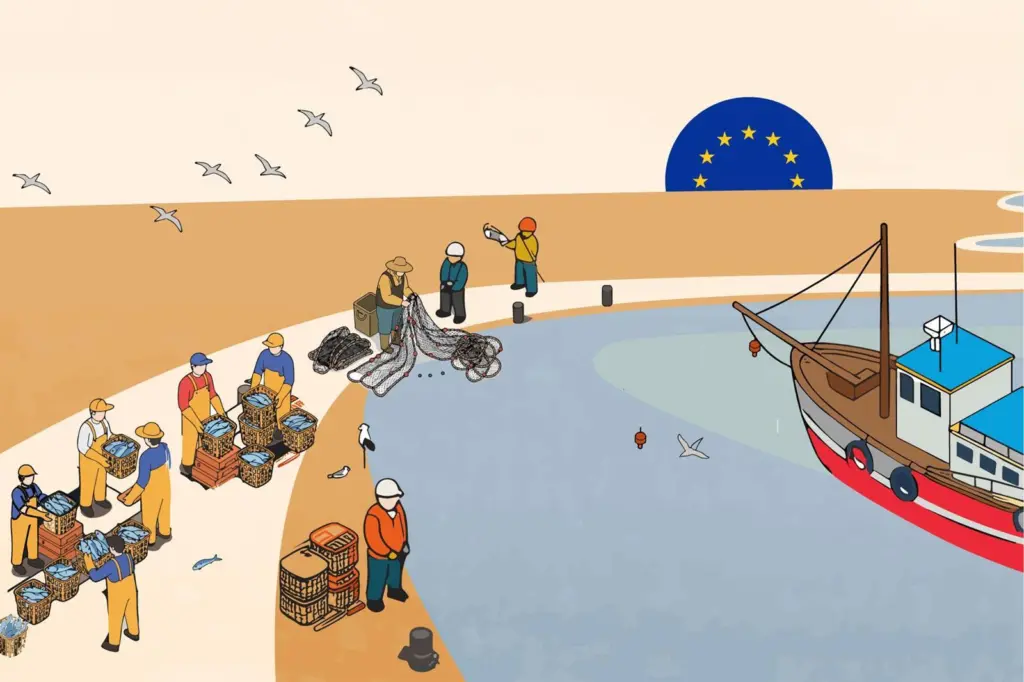
The guidance follows concerns that existing national allocation systems are not adequately addressing the mounting pressures facing EU fisheries – particularly for small-scale coastal vessels, which make up nearly 75% of the EU fleet and around half of all sector employment.
These fishers are disproportionately affected by rising energy costs, stock fluctuations, marine space competition, climate change, invasive species, environmental degradation and unfair competition from illegal, unreported and unregulated (IUU) fishing, the Commission said.
It is urging member states to reassess the criteria and methods they use when distributing their national shares of EU-agreed fishing quotas. The document includes several examples of good practice, particularly measures tailored to safeguard and support small-scale and coastal fishers.
“Small-scale fishers are the backbone of our coastal communities,” said Costas Kadis, EU Commissioner for Fisheries and Oceans. “We must recognise their role and provide them with the necessary support.”
The Commission is also pressing member states to improve transparency and communication around allocation systems – ensuring accuracy and clarity in how quota decisions are made and how criteria are applied. According to the Commission, better governance is essential to strengthen trust, ensure fair access, and encourage sustainable fishing behaviour.
The guidelines highlight that allocation decisions can be a powerful tool to incentivise selective fishing gears and more environmentally responsible practices, aligning economic opportunity with sustainability objectives.
The initiative follows commitments made in 2023—and reiterated under the European Ocean Pact adopted in June 2025 – to improve quota allocation systems across the EU. While total allowable catches (TACs) are agreed at EU level based on scientific advice, each member state determines how its national share is distributed among vessels and producer organisations.
Under the Common Fisheries Policy (CFP), these national allocations must be based on transparent, objective environmental, social and economic criteria, but implementation varies widely between countries.
The Commission developed the guidelines after consultations with scientific bodies and EU member states, with the aim of promoting consistency, sustainability and fairness throughout the allocation process.
The new guidance is expected to feed into ongoing national reforms and encourage member states to revisit systems that no longer reflect current challenges – or the central role that small-scale fishers play in coastal economies and marine stewardship.
Related Articles
 FISHERIES
 SEAFOOD
 SUSTAINABILITY