





Farmed cod breakthrough to light the way
Researchers from Norwegian research institute Møreforsking, in collaboration with cod farmer Ode, have made an important scientific breakthrough, with their recently concluded LuxCod project finding light use can effectively delay the early maturation of the fish beyond the production period.
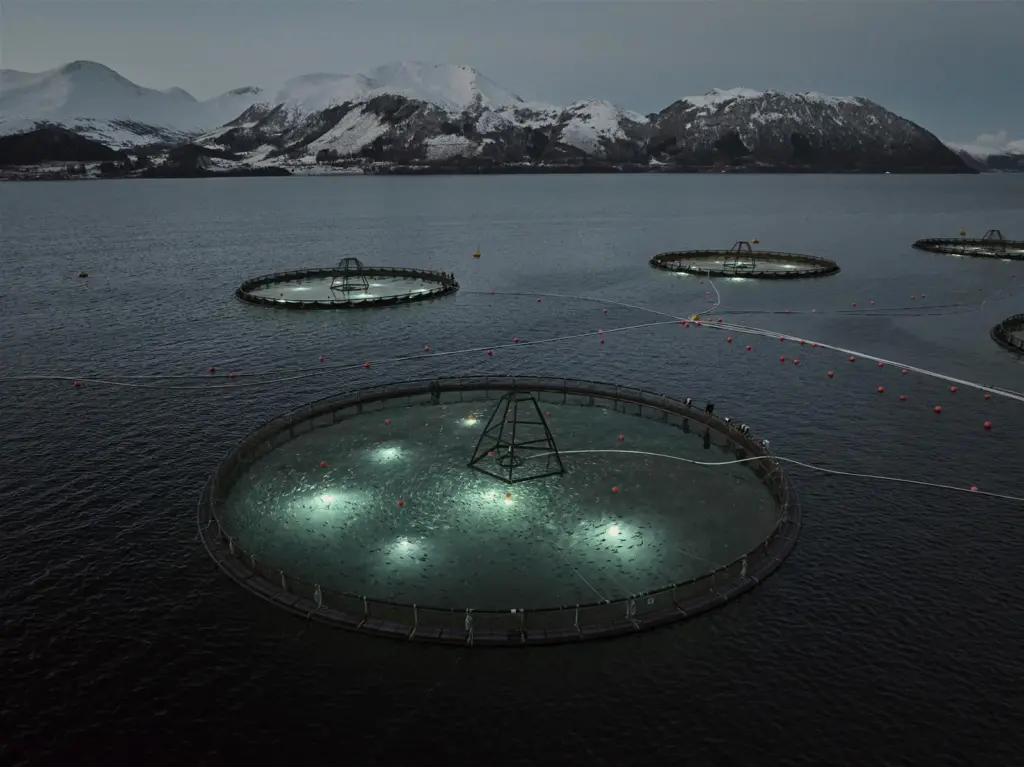
LuxCod, conducted by researchers from Møreforsking (Møre-research), focused on measuring the continuous light management in fish pens to understand its effects on cod maturation. The study utilised cod sourced from one of Ode’s fish farms, with excellent biological results. The primary objective was to document how light management influences cod maturation and whether it can successfully avoid early maturation during the farming period.
The results of the study demonstrate light management significantly delays sexual maturation in farmed cod. This delay enables the avoidance of maturation throughout the entire production period.
Early sexual maturation in farmed cod represents a significant economic and production disadvantage, resulting in increased mortality, lower growth rates and reduced quality. The Norwegian Institute of Marine Research has also highlighted the potential risks of sexually matured farmed fish spawning in pens and impacting wild cod in the surrounding area.

Together with the Institute of Marine Research and BioMarin, Ode has developed a comprehensive light management regime based on academic research and cod farming experiences. This technique ensures that fish do not reach sexual maturation in the pens, allowing for optimal production while avoiding genetic influences and ecological concerns.
The researchers closely monitored the production process over time, systematically sampling fish through the cycle with average weights up to 5kg after 21 months production. The study documented the effect of light management through gonad maturity.
These findings demonstrate that the correct use of light management enables control of sexual maturation in cod. This knowledge has the potential to significantly improve the aquaculture industry, ensuring enhanced fish welfare, high quality products and low ecological risks in open-pen farming.
“This is an important breakthrough for the entire cod farming community and proves our potential to grow to a large share of the seafood category. It has been important to document these findings through scientific studies. It gives both the authorities, the customers and the entire public domain the facts supporting our sustainable and important food production capabilities,” Ode Founder and CEO Ola Kvalheim said.
According to Kvalheim, cod farming can be an important contributor to the supply of sustainable, healthy proteins.
“The world is currently grappling with food inflation, heavily affecting households worldwide. Our current protein and food supply problems will be insignificant compared to a failure to deliver on the doubling of protein production by 2050. The forecast by the United Nations of a doubling in the protein demand by 2050 will require bold changes as we also know that our current protein production makes up 25% of total global Co2 footprint. Farmed seafood can answer both these challenges.”
Related Articles
 BUSINESS & FINANCE
 AQUACULTURE
 ICELANDIC FISHERIES EXHIBITION