


The Lawless Oceans
Pirate fishing is now big business, involving the collusion of countries offering flags of convenience and catches which drive down income for legal fishermen.
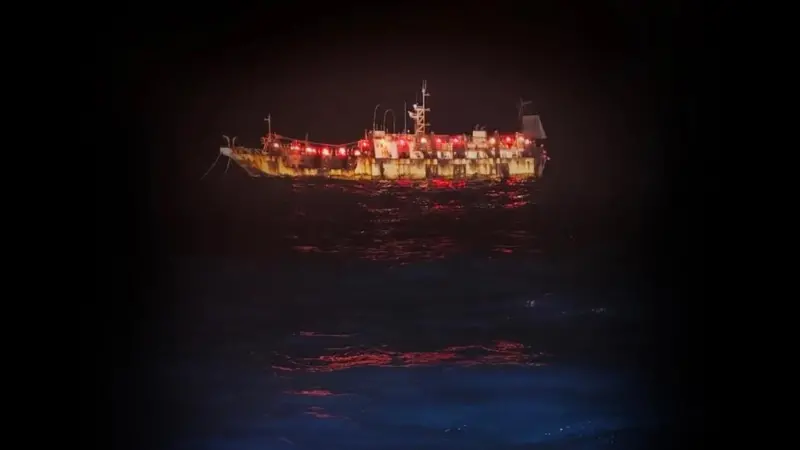
I still have to meet a fisherman who’s totally innocent of poaching. Some joke that there is a poaching strain in the genes of every fisherman (and hunter). Others say they must go poaching to make a living. But nowadays, illegal, unreported and unregulated fishing (IUUF), aka “pirate” fishing is often on the front pages.
The UN Food and Agriculture Organization (FAO), the UK, Australia and some other governments, national and international scientific and regulatory bodies and NGOs say IUUF is harming the world’s fishery industry and regulated fish stocks. They also argue that it threatens endangered fish species and other marine life. In some of the world’s poorest countries, coastal populations, dependent on fisheries for food and earning a livelihood, are evidently those who suffer most when IUUF takes their daily catch for export.
Two years ago, the Prince of Wales told a meeting of water bird watchers: “…the problem of illegal, unregulated and unreported fishing appears to be getting worse. There are believed to be more than a thousand of these substantial pirate vessels, operating under ‘flags of convenience’, recognizing no rules and – with few exceptions – evading every sort of sanction and penalty available under international law”. How right he was.
The figures
Here are some figures compiled from FAO, British, and other data sources that illustrate the extent of the problem.
• IUUF fishing is taking 30 percent of total catches in many important fisheries.
• The value of IUUF catches is estimated at between US$2.4 billion and $9bn per year.
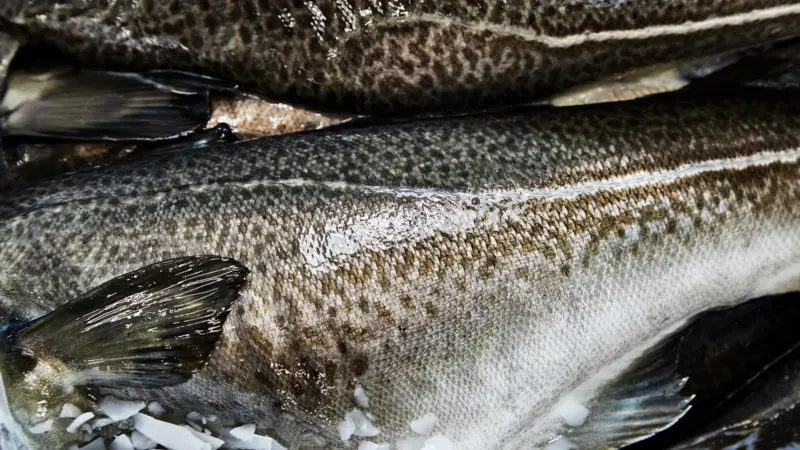
• It accounted for about 100,000 tonnes of cod and haddock annually between 2004 and 2006 in the Northern Atlantic and the Barents Sea, valued at $150mn.
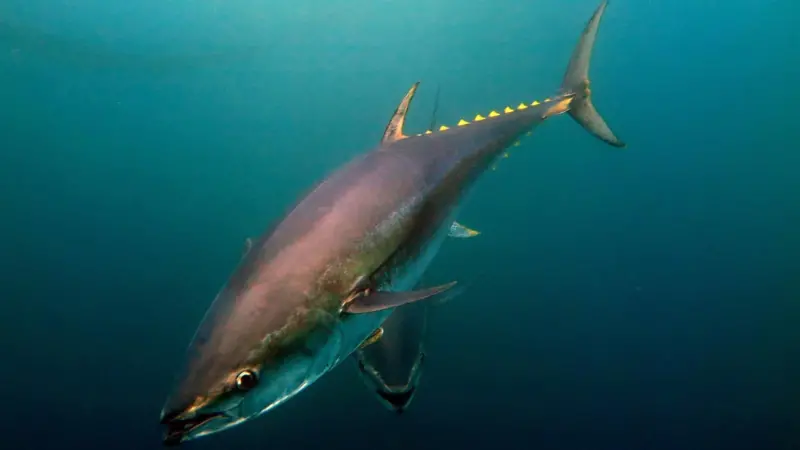
• Between 2000 and 2003 it took some 40 per cent of the cod catch in the Baltic Sea and 33 per cent of bluefin tuna in the southern oceans.
• IUUF accounts for half of the fish caught off sub-Saharan Africa, valued at over $880mn.
• Somalia loses fish worth $88mn a year to some 700 IUUF vessels and Guinea-Conakry loses more than 34,000t of fish worth $110mn.
FOCs
A report sponsored by the Australian Government, the International Transport Workers’ Federation (ITF) and World Wildlife Fund (WWF) reveals the link between IUUF and those countries which offer cheap flags of convenience (FOC), to poaching vessels owned by expatriates.
It says that altogether, approximately 15 per cent of the world’s large-scale fishing fleet (more than 1,000 vessels) fly either FOC or ‘unknown’ flags. Dr Franz Fischler, the EU’s former fisheries commissioner, called IUUF/FOC “…the scourge of today’s maritime world”.
Most FOC countries are not party
to regional fisheries’ management organizations (RFMO) or other international agreements. FOC vessels circumvent management and conservation measures while avoiding penalties, taxes, license costs and regulations which are put in place by coastal countries and international bodies.
They fish without onboard observers, monitoring or catch documentation. Their badly paid crews are often maltreated, including forced labour. Sometimes their crews are abandoned in foreign ports and even cheated out of their earnings. It’s extremely difficult to catch and punish unscrupulous owners of FOC ships.
“IUUF fishing continues to plague the high seas in the Southern Ocean,” said Senator Ian Macdonald, Australia’s minister in charge of fisheries. Australia boasts strong marine enforcement. “FOC countries and illegal fishermen reap the benefits and blatantly undermine the international rules designed to ensure conservation and management of high seas resources,” he said.
“We must make the war on illegal fishing a priority,” said Ben Bradshaw, the UK Marine and Fisheries Minister, at a recent meeting of the Conference on Oceans, Coasts and Islands.
Pirate landings
The majority of FOC vessels are owned by companies allegedly registered in the following states: Taiwan, Spain, Panama, Singapore, South Korea, Japan, China and Equatorial Guinea. Allegedly, FOCs are available in Vanuatu, Comoros, St. Vincent and Grenadines, Panama, Malta, Jamaica, Georgia, Dominica, Cyprus, Belize, Liberia, Bolivia, Cambodia, Cyprus, Equatorial Guinea, Honduras, Marshall Islands, Mauritius, Netherlands Antilles, St Vincent and the Grenadines, Sierra Leone, and even land-locked countries, such as Slovakia and Mongolia.
It’s easy to register under an FOC, reflag and change names (“flag hopping”) several times in a season to confuse management and surveillance authorities. Registration can even be done via the Internet.
The rising price of fish lures poachers. Fleets from Japan, Korea, Taiwan and Europe land illegally caught fish in Japan, the United States, Europe and southeast Asia. The Japanese sashimi market, which pays tens of thousands of dollars for single bluefin tuna, offers massive incentives for operations practising IUUF. Some of these also allegedly land tuna for the European market.
Many IUUF-vessels allegedly belong to commercial operations in EU-member countries such as: Belgium, Cyprus, Denmark, Estonia, France, Germany, Greece, Irish Republic, Lithuania, Malta, Netherlands, Portugal, Sweden, the UK and British Crown Dependencies such as Gibraltar. But, Spain’s Canary Islands, where Las Palmas is a notorious gateway for illegally caught fish for the EU market, are alleged to be the world “world champions”. There is also a significant amount of IUUF catch imported into the lucrative US market.
As IUUF-fish floods the market, law-abiding fishermen may suffer because it drives down the value of their legal catch. IUUF fishing causes excessive extraction of fish from regulated stocks and this forces regulators to limit effort and fish quotas even more. Some put the IUU catch at more than 30 per cent of (and in addition to) the total tonnage of legally landed catch.
However, establishing fisheries governance on the high seas, where access is open to all nations, is a tall order. In international waters, fishing is regulated by RFMOs. But as long as FOC-practising, RFMO members are not dealt with, FOCs themselves are not forbidden by international and national legislation. So offences are not appropriately punished and there’s very little that management-conscious countries can do.
The world’s fishing industry must recognize that it is paying an excessive cost because of IUUF. For once everyone should join forces in bringing down at least the most offensive and blatant IUUF.