


Recirculating aquaculture development in Finland
A new testing and learning environment for recirculating aquaculture has been opened at the Laukaa fish farm operated by the Natural Resources Institute of Finland (Luke).
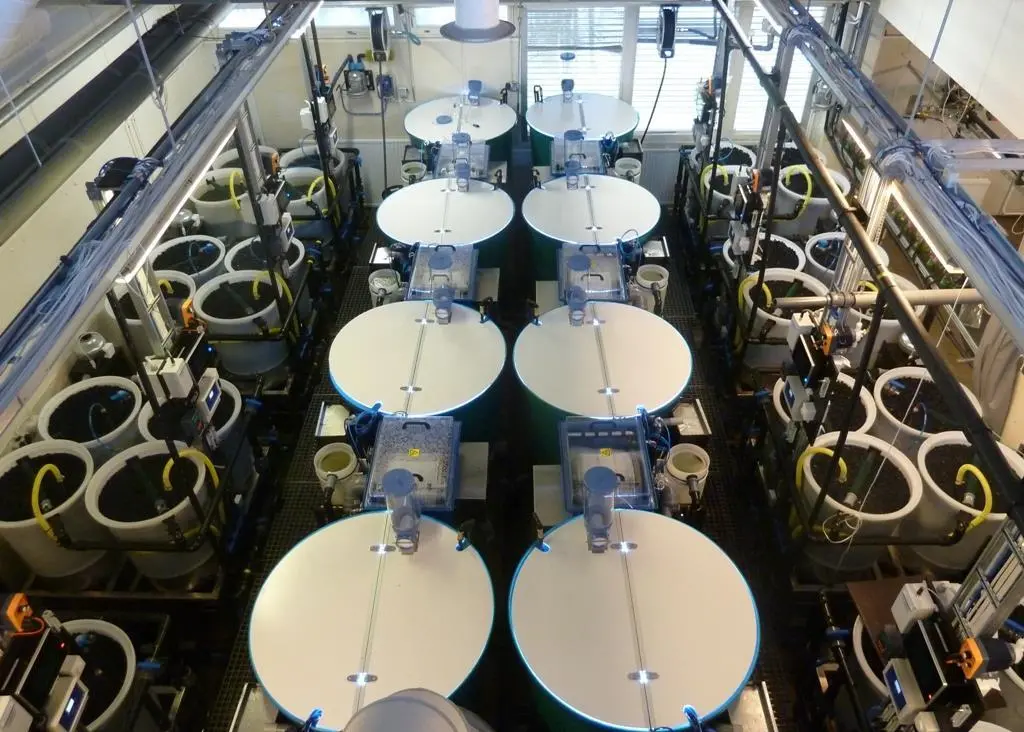
The Laukaa environment assists in testing technical solutions in fish farming development and examining the biological limits that are important in fish culture.
Recirculating aquaculture is a fish farming method in which water is circulated by pumping it from fish tanks into cleaning units and back again. The method helps in saving water, since the volume of new water required is only between 1% and 2% of the volume of the circulating water.
“So far, the volume of fish produced has remained small, because the high costs of the recirculating aquaculture method have enabled us to use it only for farming more valuable species. However, now there is a trend towards larger units and the production of mass species, such as the rainbow trout,” says Tapio Kiuru, senior aquaculture expert at Luke.
In Finland, one of the major limiting factors in fish farming has traditionally been environmental permit issues. Over the last few years, new production permits have been granted for recirculating aquaculture, thanks to the volume of nutrient emissions that is significantly smaller than in other methods.
Recirculating aquaculture is evolving rapidly in many Western countries, but the organisation says that Finland has a number of concrete competitive advantages in the field.
“In terms of availability and price of necessary inputs, such as energy and liquid oxygen, our position is excellent compared to that of many of our competitors. We have plenty of clean fresh water, suitable locations for farms and excellent logistics. We can draw on the Finnish expertise in biology and process industry,” Mr Kiuru says.
The new recirculating aquaculture testing and learning environment in Laukaa helps in modernising production methods. An example of this is fish feed for recirculating aquaculture and improving it with equipment that precisely measures the quality of water.
“It was the Finnish fish farms that first voiced their need for a testing and learning environment. The equipment has also attracted attention abroad. The environment, which is also suitable for research purposes, helps in attracting the international funding, networks and knowledge required by the companies in the field,” Mr Kiuru concludes.
Related Articles
 AQUACULTURE
 SEAFOOD
 AQUACULTURE