
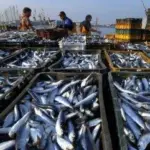





Precise chilling from Northstar
High quality clean flake ice increases value for export markets – When harvesting and processing seafood for discerning export markets, such as Japan, the European Union and the United States, it is particularly important to preserve product quality by chilling and holding the product with the right type of ice.
Not only should this ice be the most efficient at chilling seafood quickly, but food safety and export regulations also require that it be sanitary.
Seafood operations should begin with flake ice or liquid ice, as they are the most efficient types of ice for quick product cooling.
Flake ice provides more cooling surface per ton — 17,000 square feet — compared with other types of ice, which offer only 4,260 to 11,050 square feet per ton. Flake ice is also completely dry and free-flowing, making it easier to store and handle.
Liquid ice — a combination of ice and water in a slurry mixture, also provides a quick cooling option. Because of its liquid nature, it completely surrounds the fish leaving no voids, and should drain quickly to leave only ice in contact with the product. Liquid ice can also be pumped directly to multiple use points.
Whatever the type of ice, with export markets’ insistence on food safety regulations, it is essential that the South American seafood industry also ensure that their ice is sanitary.
Regulations governing exports to the U.S., Japan and the European Union all specify that the processor must guarantee the safety of the water and ice used in processing.
For ice, this generally means that the water must be pure, the ice machine must be clean, and all surfaces that come into contact with the ice should be sanitized.
Recent food scares due to dangerous pathogens have heightened importers’ concerns about processing practices in exporting countries. However, many seafood harvesters and processors in South America are currently making ice onto the plant floor and then shoveling it into totes for delivery around the plant.
This allows numerous opportunities for pathogens to be introduced to the ice and, by consequence, to the food product itself. Also, unless the floor, shovels, totes, boots of the workers, and anything that comes into contact with the ice are regularly sanitized, this practice would not be in compliance with sanitation regulations.
One plant in the center of Chile’s salmon farming region is addressing the sanitation issue directly. Built in Puerto Montt, the IceMarket, SA ice plant was designed to produce and deliver high quality flake ice to salmon farms, taking special care regarding sanitation.
Related Articles
 PROCESSING & REFRIGERATION
 SEAFOOD
 SEAFOOD