


Patch saves catch
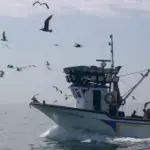
Miko patches came to the rescue earlier this year when the 60m stern trawler m/v Nybo was struck by trawler Kvannøy whilst at anchor at Vadsø in the Varanger Fjord, Norway.
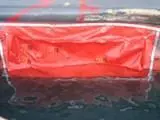
The early morning collision resulted in the Nybo sustaining a 3m by 40cm gash in its hull through which water began pouring into a hold containing 180 tons of freshly caught and frozen fish.
For a while the vessel looked in danger of sinking but it was successfully brought alongside a pier without injury. Crew from the Norwegian Coastguard vessel, KV Farm then used two Miko magnetic plasters from its emergency Tanker Kit to make a temporary repair. Measuring 2.5×2.25m and 0.90×1.25 the magnetic patches were quickly applied to seal the gash. This enabled the vessel’s onboard pumps to empty the cargo hold and for the catch to be unloaded and 120 tons of it to be saved.
At the request of the Norwegian Coastal Administration, Oslo-based Miko Marine AS was then commissioned to fit a Miko Hat-Shaped patch over the damage so that the boat could sail to a yard. A standard 3x1m Hat-Shaped Miko Plaster patch was fitted using an aluminium frame and an HD 200 underwater stapling tool.
Speaking on completion of the repair, Nicolai Michelsen, managing director of Miko Marine AS explained; “The Hat-shaped patches are used when a hole is torn into a hull and leaves a surface that is too uneven for magnetic patches to be applied.
“They are made from similar high strength materials as the magnetic patches but are further reinforced by Kevlar/Aramide fibres so they are similar to the fabrics used in bullet proof vests. Their shape enables them to fit over any dents or protrusions and they are fixed in place over the hole by a flexible aluminium frame that goes on top of the ‘Hat brim’. Divers will then use a combination of permanent magnets and special ‘staples’ that can penetrate the aluminium frame and the hull plating to secure the patch with a watertight seal. This can create a temporary repair of sufficient quality to satisfy a ship’s insurers so that it can make a substantial voyage to a dry dock.”
Some reinforcements to the web frames and stiffeners of the m/v Nybo and the installation of an internal cofferdam also proved necessary. Once these were completed the vessel was considered seaworthy and allowed to work until the end of the fishing season. This proved to be an important cash bonus for the boat’s owner who resumed trawling in Arctic waters for three weeks with the patch in place before going to a dry dock in Harstad for permanent repair when the season closed.
Related Articles
 FISHERIES
 FISHING TECHNOLOGY
 FISHING TECHNOLOGY