



Marine heatwaves threaten salmon gill health
Rising temperatures and jellyfish blooms can alter salmon gills before visible damage or disease appears in farmed fish, new research finds
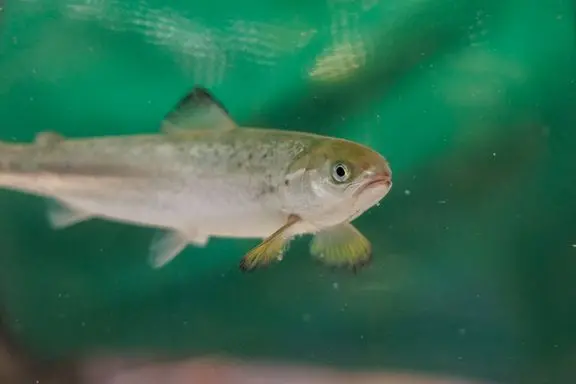
Marine heatwaves, low oxygen levels and jellyfish blooms can place increasing pressure on the gills of farmed Atlantic salmon, with biological changes occurring before visible signs of damage, according to research by Norwegian and Spanish scientists.
The study examined how a simulated marine heatwave affected the bacterial communities and gene activity in the gills of farmed salmon weighing about 100g. Water temperatures increased from 12°C to 17°C over five days and remained elevated for a further 10 days, while some fish were also exposed to reduced oxygen or minced moon jellyfish.
“Our study shows that, together, these stressors affect the bacterial flora on the gills and which genes the salmon switch on and off, long before anything can be seen on the gills,” said Nofima fish health scientist Carlo C. Lazado.
The gills are responsible for oxygen uptake and carbon dioxide release, while also providing an important barrier against pathogens and environmental stress. Researchers found that the heatwave increased bacterial diversity on the gills and substantially increased the presence of Streptococcus and Staphylococcus genera.
Although the salmon did not develop visible disease, the researchers said the changes could create conditions that allow some bacteria to multiply and potentially contribute to health problems in stressed fish.
More than 600 genes also changed expression, with temperature producing the strongest effect. Genes associated with mucus production became more active, while components of the innate immune system and several genes linked to collagen production became less active.
Exposure to jellyfish alone had limited effects at stable temperatures. However, when jellyfish exposure followed heat and low oxygen stress, greater changes occurred in the gills, suggesting combined environmental pressures can weaken their protective functions.
“Understanding how climate stress affects the gills of farmed salmon is important for the industry in order to deal efficiently with climate change,” said Nofima senior scientist Elisabeth Ytteborg.
The research involved Nofima and Spain’s IATS, with collaboration supported by the EU-funded EATFISH project. Lazado said continued international research would be important as climate-driven changes affect aquaculture and wild marine stocks.
Related Articles
 AQUACULTURE
 AQUACULTURE
 AQUACULTURE