





Faroes strike impacts Bakkafrost’s financial performance
Faroe Islands-headquartered salmon producer Bakkafrost Group delivered second-quarter operational earnings before interest and taxes (EBIT) of DKK 388 million, some DKK 35 million more than in the corresponding period of 2023.
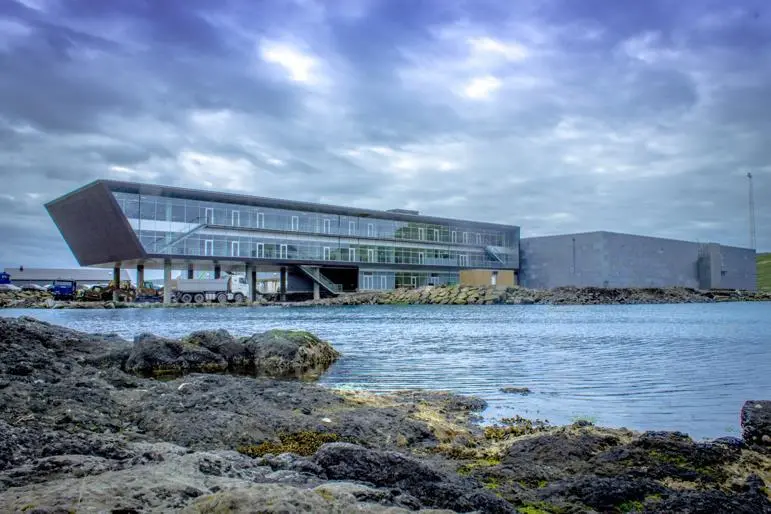
Its Faroese operations achieved revenues of DKK 1.2 billion (up from DKK 1.1 billion in Q2 2023) and an operational EBIT of DKK 275 million (DKK 282 million), while its Scottish operations reported revenues of DKK 880 million (DKK 587 million previously) and an operational EBIT of 113 million (DKK 71 million).
Commenting on the results, Bakkafrost CEO Regin Jacobsen said the group was not content with the financial performance in the quarter, which was largely due to the 28-day workers’ strike in the Faroes. This, he said, “significantly impacted quarterly results”, partly by delaying planned harvest to after the strike and past a substantial market price drop.
“As a result, we harvested 4,000 tonnes post-strike at much lower prices and lower than planned harvest volumes for the quarter.”
However, he said the group was “highly satisfied” with its current operational position, particularly within the Faroese freshwater division, where both efficiency and production volume of large high-quality smolt are steadily improving.
“We are also pleased with the condition of the biomass in the Faroes and Scotland. Growth is robust; there are no sea lice problems in either location, and gill health in Scotland is well managed,” he said.
According to Jacobsen, Bakkafrost’s de-risking strategy for marine farming operations in Scotland has been effective, resulting in significantly fewer biological issues and lower mortality than in previous years.
He also confirmed that on 26 May, ISA virus was detected in two pens at the A-19 farming site in the Faroes.
“Despite having to conduct an early and small harvest, we are very pleased with the effective containment of the outbreak, preventing further spread. This underscores the importance of robust farming practices and risk management procedures.
“Looking ahead, the market appears softer compared to H1. To maintain a strong competitive position, we are focused on managing costs and adjusting capacity to our needs. Accordingly, in Scotland, we have initiated several cost-saving measures and capacity adjustments, including the closure of the processing facility at Marybank in July 2024.”
The total combined harvest in Q2 2024 of the farming segments in the Faroe Islands and Scotland was 21,592 tonnes gutted weight (tgw) versus 16,001 tgw in Q2 2023, with the Faroes supplying 10,226 tgw (8,658 tgw) and Scotland 11,366 tgw (7,343 tgw).
For H1 2024, the farming segments have harvested a total of 43,149 tonnes gutted weight (35,099): with the Faroes supplying 24,520 tgw (19,663 tgw), and Scotland 18,629 tgw (15,436 tgw).
For the full-year 2024, Bakkafrost expects to harvest around 63,500 tgw in the Faroe Islands and 25,000 tgw in Scotland, giving a total of around 88,500 tonnes gutted weight.
Bakkafrost is the largest salmon farmer in the Faroe Islands and the second-largest salmon farmer in Scotland.
Related Articles
 AQUACULTURE
 AQUACULTURE
 AQUACULTURE