


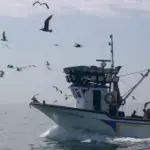



Latest Piscatus has worlds bathymetry built in
Seabed Mapping of New Zealand, is about to release Version 3 of their seafloor mapping package – Piscatus 3D. Version 3 includes a host of new features that greatly enhance Piscatus 3Ds effectiveness at putting fish in the hold.
The new package includes a new dataset that has the bathymetry of the world’s oceans included. The user can look at the whole planet and as he zooms in, more and more detail is shown.
This new database makes Piscatus 3D an invaluable tool for any vessel that works on the high seas or is often looking for new grounds. As well as an updated database, Piscatus 3D includes all the soundings and contour lines from hydrographic charts around the world. So for any user, the package has great bathymetry maps immediately.
Then, as a boat works an area, these maps get updated, and very quickly, the boat has detailed maps of its fishing grounds. This means the skipper can get his gear in the right place more often and more importantly, can fish an area a lot faster. This translates into more fish in the hold, faster.
There are many other new features with Version 3 also. Skippers can now look at much larger areas on their screens than before, while not losing any of the detail Piscatus 3D is famous for. Skippers can see anything from 2 mile scales for inshore vessels to 60 miles for offshore trawlers showing unprecedented detail of the bottom’s makeup. These new tools were directly asked for by skippers’, says Declan O’Toole, the company’s General Manager. “Feedback from the skippers is all positive, which tells us that we are giving skippers what they want. When a skipper tells you that he caught fish he wouldn’t have caught without Piscatus, then you know you’ve got a winning product”. Piscatus 3D also has a new range of tools available to the skipper, increasing the usefulness of the package. It includes a net trackline feature. Anybody using Simrad ITI or Geonet will find this useful.
The skipper can now record the trackline of his net in 3D. As the net descends and is put on the bottom and lifts off, the whole shot is recorded in 3D and can be shot along again, exactly, in the future.
“This feature alone, makes Piscatus a good investment for a boat. Other systems record the boat’s trackline, but it’s the net that catches the fish, so you want to know where the net has been when you have a good shot, not where the boat was. But connecting to the net’s electronics and displaying its track in 3D, a skipper can put his gear back in the water on exactly the same line again and again, if he needs to,” said Mr O’Toole. Piscatus now also includes a range and bearing tool that is linked to the net. Again, this is based on the premise that it is the net that catches the fish, not the boat. A skipper who is shooting for a particular mark can now get a range and bearing of this feature precisely, from the net. It is designed to help the skipper be sure he is getting his gear in the right place to maximise catch.
Related Articles
 FISHING TECHNOLOGY
 FISHING TECHNOLOGY
 COMMENT