The International Commission for the Conservation of Atlantic Tunas (ICCAT) concluded its annual meeting on the 19th November 2011 in Istanbul, Turkey.

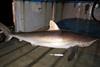
New measures aimed at protecting silky sharks were adopted. Credit: NOAA

New measures aimed at protecting silky sharks were adopted. Credit: NOAA

The Commission reviewed the status of tuna stocks and by-caught shark species in the Atlantic Ocean and Mediterranean Sea based on the findings of the Standing Committee for Research and Statistics Scientific (SCRS), as well as compliance with ICCAT conservation and management measures.

The following management measures were adopted during the meeting:

Tropical tuna: For the first time since 1993 ICCAT adopted a management measure specifically aimed at the population of Atlantic yellowfin tuna, in conjunction with the continued management plan for bigeye tuna. A TAC of 85,000t was set for bigeye tuna, with additional control measures comprising a closed time/area season and a Regional Observer Programme.

Swordfish: A new multi-year conservation and management plan was agreed for North Atlantic swordfish, with the objective of achieving BMSY. The Commission adopted the measure consistent with the Precautionary Approach that will ensure the long term sustainable exploitation of this fishery.

Albacore: Agreement was reached among the active fishers of the south Atlantic albacore fishery, with a new sharing arrangement being adopted by consensus, with a reduction in TAC to align it with scientific advice. Given the healthy state of the northern albacore stock, the existing conservation measures were continued into 2013.

Bluefin tuna: For bluefin tuna, long-term management plans remain in place for both the eastern and western stocks. The year 2012 will bring greater controls with the size limit for purse seiners required to carry an ICCAT observer dropping from 24m to 20m, as agreed in 2010.

The Atlantic-wide Research Programme for Bluefin Tuna (GBYP) in support of bluefin scientific research for better management continues under ICCAT coordination.

Other species: The Commission amended the current management plan for billfish to bring catchers into line with scientific advice and agreed to study additional measures in 2012. The protection of vulnerable shark species taken in association with ICCAT species continued to be a priority, with new measures aimed at protecting silky sharks being adopted, including the prohibition of taking onboard, retaining, transhipping or landing the species. Measures to mitigate the impact of longline tuna fisheries in the South Atlantic on seabirds were also adopted.

A thorough review of compliance by each Contracting Party was carried out, which saw a general improvement in overall compliance, with twelve Contracting Parties being in full compliance with all reporting requirements and deadlines. Additionally, the general improvement in compliance has led to the 15 of the 23 parties identified as having incurred a breach of ICCAT conservation and management measures in 2010 having the identification lifted in 2011. While some deficiencies still remain, all Parties undertook commitments to make further efforts to ensure full compliance in the future.

To improve compliance with the bluefin tuna catch document scheme, Japan led the way in refining the scheme and proposing improvements, while the European Union chaired a technical group to determine the steps to be taken to establish an electronic Bluefin Catch Document scheme. The pilot study to be carried out in 2012 will test the eBCD system which will be set up at a cost of around €400,000. A resolution on the evaluation of systems for tracing products of other tuna species was also adopted.

Masanori Miyahara of Japan was elected as Chairman of the Commission for the 2012-13 period, to substitute Fabio Hazin.