


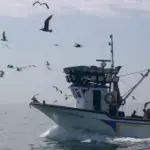



Flexibility key to discard regulations
The Discard Action Group (DAG) has written to the EU’s Commissioner for Fisheries, Maria Damanaki, to urge that new discards regulations should have the flexibility to adapt to changing circumstances.

The Group, a cross-industry group formed in 2007 and co-ordinated by Seafish, plays a pivotal role in mediating a common approach to discard issues affecting the whole seafood supply chain, and is concerned by the prescriptive nature of some of the EUs proposals on discards and is urging the EU to be more flexible in its approach.
Chair of DAG, Mike Park, who is the Executive Chairman of the Scottish White Fish Producer’s Association and a Seafish Board Member, said:
“Our group is dedicated to reducing discards and is supportive of initiatives to address this complex problem. However, perhaps because we are at the grass roots level, we have identified some regulations that are not flexible enough to be successful.
“The Group believes the problem of discards will be resolved only through a process of regional management, incentivised change, and regulatory flexibility that encourages fishers to innovate, develop and experiment with selective gear and techniques.”
DAG suggests that Long Term Management Plans (LTMP’s) should feature extensively and that they should take account of multi-species aspects of fisheries and be consistent with an ecosystems-based approach to fisheries management; they should include more than just harvest control rules.
Mr Park continued: “It is also important that LTMP’s take account of factors other than ecological and biological; understanding the social and economic demands is equally important.”
The letter also outlines the significance of obtaining a clearer picture of stock abundance for both quota and non-quota species and urges Commissioner Damanaki to couple discard reduction with data gathering.
Related Articles
 FISHERIES
 FISHERIES
 WORLD FISHING EVENTS