




Scallop breakthrough
Billed as a “world-first method for catching scallops”, an alternative to damaging dredging activities has been developed thanks to funding from the UK government’s Seafood Innovation Fund (SIF).
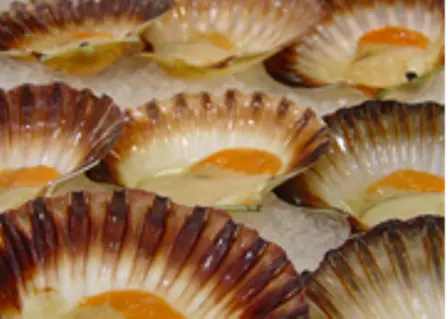
The new low-impact method, pioneered by scientists at Devon-based company Fishtek Marine, uses illuminated pots dubbed “scallop discos” to attract and catch scallops.
Due to having 200 eyes, scallops were found to be particularly receptive to the lights and naturally moved towards them, making the lights an effective means to catch large quantities without trawling the seabed. Findings indicate this could replace traditional dredging methods which can have a damaging effect on valuable marine habitats.
Dr Rob Enever of Fishtek Marine, and lead scientist on the study, said the support of the SIF was vital to the work.
“The research simply wouldn’t have happened without it. The discovery that scallops can be attracted into crab pots using light is a world first. Beyond the UK, the innovation of a new low-impact scallop fishery has application in scallop fisheries world-wide. With the continued support of Defra, we look forward to developing this exciting work and hope for ‘pot-caught scallops’ to be a consumer choice of the future,” he said.
Fishtek Marine received around £245,000 of SIF funding to collect data and trial several designs for the pots, which confirmed the illuminated light ‘scallop discos’ technique consistently attracts significant numbers of scallops.
Following these promising results, the next steps involve optimising the trap design and developing and manufacturing a new, low-cost light specific to the operational needs of crustacean fishers.
Further sea-trials will then be conducted with the new designs, focusing on crucial factors such as fishing region, light intensity, light colour, flashing rate and trap efficiency.
“It is great to see Fishtek Marine benefitting from our Seafood Innovation Fund and developing a world-first method for catching scallops in an environmentally sustainable way,” UK Fisheries Minister, Victoria Prentis, said.
SIF, a multi-million programme funded by Defra and delivered by the Centre for Environment, Fisheries and Aquaculture Science (Cefas), is supporting innovative projects across the fishing, aquaculture and seafood industries that use cutting edge technology or new techniques to limit the impact of fisheries on the marine environment.
The fund sits under the £100 million UK Seafood Fund, set up by the UK government to support the long-term future and sustainability of the UK fisheries and seafood sectors. It aims to ensure the industry is able to process more fish landed in the UK, create more job opportunities across the supply chain and upskill the workforce and train new entrants, to level up coastal communities across the country.
Suzanna Neville, SIF Programme Manager at Cefas, said, “This is an important project that has the potential to make a real difference to the sustainability of the scallop fishery. The opportunity to transform commercial scallop harvesting has been made possible by providing funding for the development of early-stage ideas. This is exactly the sort of innovative project that the SIF was set up to support, helping the UK lead the way in developing a sustainable seafood sector.”
Bids for the next round of the Fisheries Industry Science Partnerships scheme and SIF are due to open this summer.
Related Articles
 FISHERIES
 FISHERIES
 FISHERIES