




Fish food from corn and soy
Researchers at Iowa State University are turning the state’s agricultural commodities into fish food, an initiative that could help farmers find new revenue streams and provide a boost to US fish production.
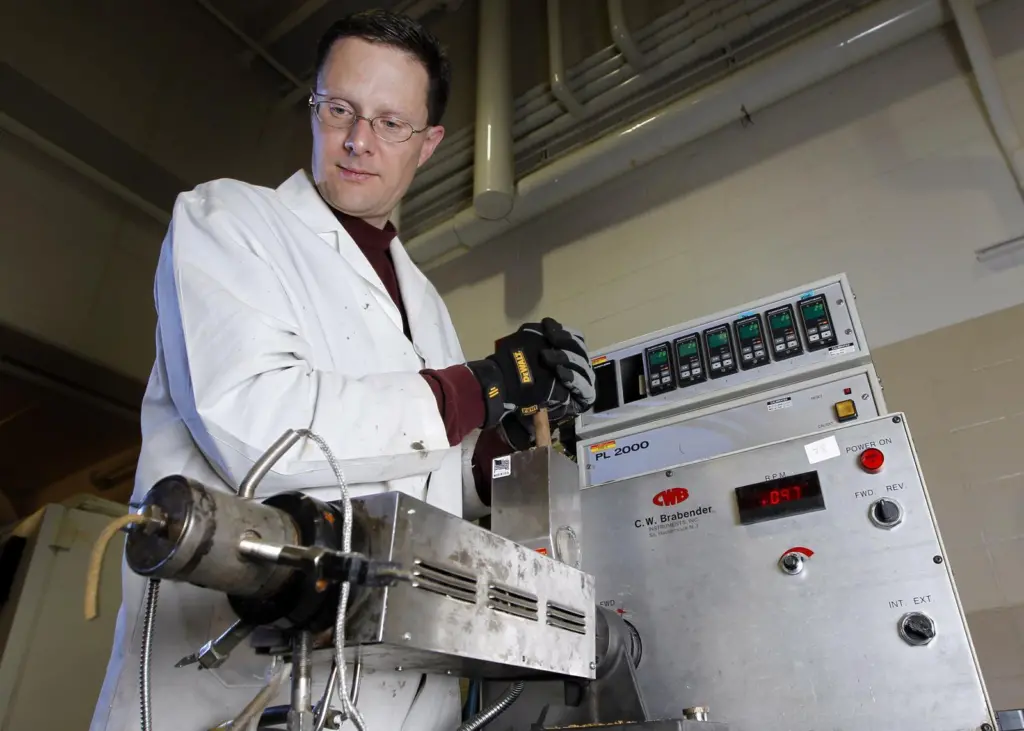
Kurt Rosentrater, an assistant professor of agricultural and biosystems engineering, is studying how food derived from corn and soy can be used in aquaculture, or the cultivation of aquatic species like fish.
“Humans are producing as much fish via aquaculture as they are catching fish in the wild,” Rosentrater said. “But the cost of feeding fish is holding back American aquaculture. So I’m trying to answer the question of how we can take agricultural ingredients and make something fish can use.”
Rosentrater uses a mechanical extruder at the Center for Crops Utilization Research in the Food Science Building on the ISU campus to produce the fish food. In one end, he pours a mixture of corn, soy, fish meal and other ingredients. The machine pressurises and heats the mixture, turning it into food pellets.
Last year, the lab produced about a ton of fish food that was sent to SeaWorld in San Diego, California, where it was used to feed sea bass and cobia fish, which are new to the United States.
The fish species that have had some of their diets replaced with soy-based food have fared extremely well, Rosentrater said. They continue to turn the food they consume into mass at a rapid rate.
Rosentrater said using corn and soy as a base for fish food could open new markets for Iowa agricultural commodities while also alleviating some of the cost concerns in the US aquaculture industry. While worldwide fish consumption has grown at an annual rate of 10-15% in recent years, the capture of the fish species commonly used to make fish meal and oil, the main ingredients of conventional fish food, has plateaued, Rosentrater said. That creates an opportunity for corn and soy to find new markets while at the same time providing American aquaculture with a more affordable and plentiful source of feed.
Related Articles
 AQUACULTURE
 AQUACULTURE
 AQUACULTURE