



Cheap tuna is a thing of the past, the conference was told. Stocks are declining in all oceans and tuna is becoming more expensive to catch. Rising fuel prices and environmental pressures are taking their toll; climate change with increased water temperatures and rising sea levels is having a serious impact. Illegal, unregulated and unreported (IUU) fishing is also adversely affecting tuna fisheries all over the world.
But, demand for tuna is increasing in a typical Catch 22 situation. However, catches are unlikely to increase, so sustainability is the key issue for regulating the overall fishery.
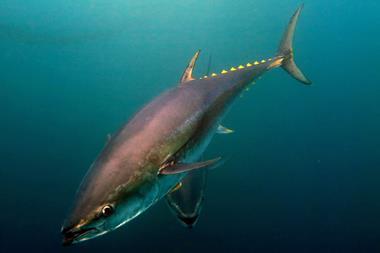
There are 19 tuna stocks in the world’s oceans and many are reaching, or have reached, their maximum sustainable yield. Tuna species are skipjack, albacore, yellowfin, bigeye and bluefin.
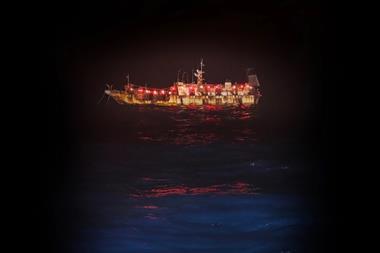
Phil Roberts, operations director of Tri Marine International in Singapore, one of the world’s largest tuna trading and processing companies with its own fleet of purse seiners, stated that the annual tuna catch has doubled during the past 20 years and now exceeds four million tonnes. (According to the FAO’s FISHSTAT service, total tuna landings reached 4.4 million tonnes in 2006.) This increase is largely attributable to purse seines, he says.
"Bigeye tunas in all oceans are being over-fished and quite probably yellowfin tunas too. Albacore tunas are in gradual decline."
However, it is not all bad news. Skipjack stocks, which comprise half the world catch at around 2.1 million tonnes (2.5 million tonnes in 2006) are generally in good condition, but management measures should be introduced before declines are seen.
However, skipjack is mostly canned and therefore at the bottom of the product pecking order in terms of price. Thailand is the world’s biggest supplier of canned tuna and, in 2007 exported 500,000 tonnes of tuna products. It is also the world’s top tuna buyer, importing 730,000 tonnes last year.
Bigeye, which is at the top of the list mostly supplying the lucrative Japanese sashimi market, is in serious trouble.
The emergence of tuna ‘farming’ has not come to the species rescue even though up to 20% of bigeye tuna now goes through a ranching system, according to Dr James Joseph, former director of the Inter-American Tropical Tuna Commission. Although it is now possible to rear tuna from eggs, the fish are ‘farmed’ by being caught as juveniles then reared in nets to market size.
Over capacity
Too much tuna catching capacity is becoming a serious problem in most oceans, particularly in the Indian Ocean, although there are no indications yet of overfishing, according to Alejandro Anganuzzi, executive secretary of the Indian Ocean Tuna Commission. Skipjack and albacore stocks are probably being under fished, he says, while bigeye and yellowfin are likely being fully fished.
In fact, although catches of skipjack continue to increase in the Indian Ocean, catches of bigeye are declining. It is essential to introduce new management measures for all tuna stocks in the ocean, Dr Anganuzzi argues, before it is too late.
This should be done by controlling fishing capacity, he says, a point taken up by Phil Roberts. "Effective capacity restraints are essential – not restraints on efficiency."
According to John Hampton, manager of the Oceanic Fisheries Programme for the Secretariat of the Pacific Community, the Western and Central Pacific Ocean is home to the largest of the world’s ocean tuna fisheries. In 2006, 2.2 million tonnes of tuna were landed – a near record – worth more than $3 billion.
There has been a large expansion in purse seining, which is the region’s major fishery, Dr Hampton said. Catches were worth $1.6 billion in 2006, but $2.5 billion at the present time. The region’s longline fishery is very important in value terms, he adds, and catches were worth $1.1 billion in 2006.
Skipjack accounts for three quarters of tuna landings in the region and the stock is very productive with no overfishing. There has been some expansion in the yellowfin fishery, but this has tailed off so the stock is fully exploited with a high risk of overfishing. The bigeye stock is being overfished.
Albacore landings have developed strongly during the last 10 years, according to Dr Hampton, but there is no overfishing.
The main challenge in the region is to reduce fishing mortality on bigeye and yellowfin, with minimal impact on skipjack. "The overfishing of bigeye and yellowfin is likely to continue and possibly worsen unless conservation measures are taken," Dr Hampton says.
Tuna catches in the Eastern Pacific Ocean increased dramatically between 1983 and 2003, from 200,000 tonnes to 800,000 tonnes. However, there has been a sharp decline since the early 2000s says Guillermo Compean Jimenez, director of the Inter-American Tropical Tuna Commission, and the total retained catch of tuna species by surface gear (purse seine and pole and line) was estimated at 449,677 tonnes.
Yellowfin, skipjack and bigeye are the three main species in this region. Catches of yellowfin look like being low again this year, while catches of skipjack and bigeye have been high so far in 2008 (to end May). The objective now is to reduce fishing capacity, Dr Jimenez says, but the countries in the commission have so far failed to reach agreement.
On this subject, Martin Tsamenyi, professor of law and director of the Australian National Centre for Ocean Resources and Security, points out that a regional fish management organisation is only as good as its members. There are two choices for the tuna industry, he says: "Take the pain now, or take it later."
Prof Tsamenyi drew attention to "the serious economic crime of IUU", which he said accounted for billions of dollars worth of tuna. "Long term sustainability will only be achieved by successfully combating IUU."
Many leading figures in the tuna industry are all in favour of eco-labelling; pole and line fishing, and dolphin and by-catch free are also crucial concerns. But the motives of environmental groups are shrouded in secrecy. "Environmental groups are not 'responsible'. The groups are not interested in working with the industry. They scare customers away from seafood. Their decisions should be science-based," says Chris Lischewski, president and CEO of Bumble Bee Foods, who gave the keynote address at the conference.
Eugène Lapointe, president of the IWMC World Conservation Trust, was even more forthright. "Environmental campaigners can devote more time and money to promoting their cause, than the industry can do to defending their position. Tuna in the eyes of the campaigners will never be caught in a sustainable way. Tuna stocks will never be safe until catching is stopped."