



Second batch of solar-grown oysters released
A second batch of solar-grown oysters has been released to help restore the reef in the Patapsco River, south of Baltimore, US.
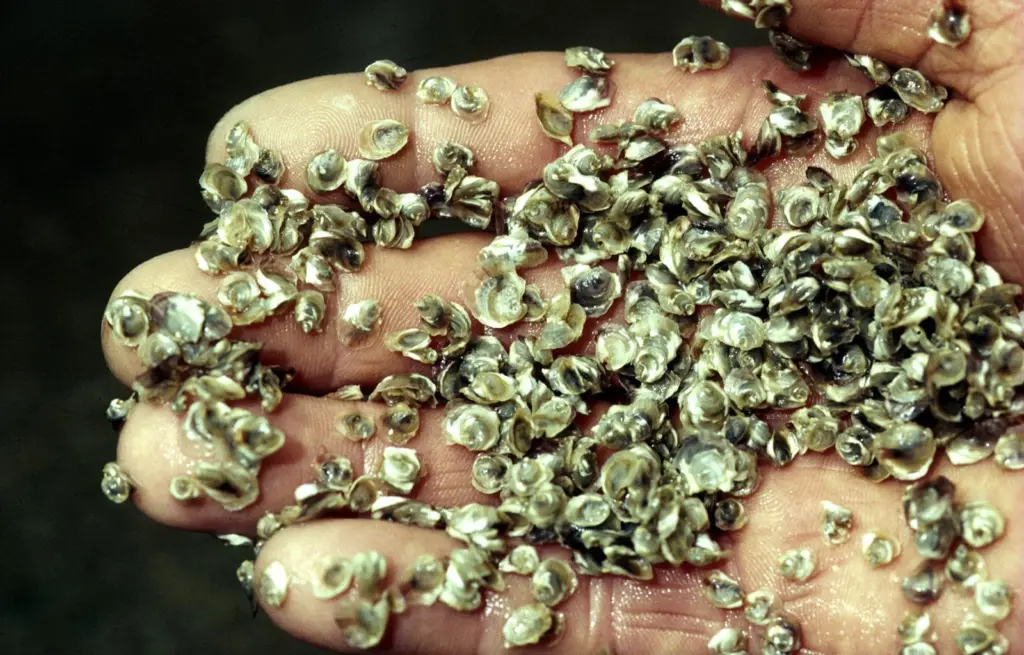
The oysters were released by Solar Oysters in partnership with the Chesapeake Bay Foundation with funding from the Abell Foundation.
Oysters improve water quality by filtering water as they feed and their reef systems create habitat for native fish species.
These tiny oysters, also known as spat, have been grown using a solar-powered platform located in Baltimore Harbour. The first batch of spat was placed on the Solar Oyster Production System (SOPS) in October 2021 and released on the Fort Carroll restoration reef in November 2022. This second batch began life eight months ago and over 90% has survived.
“The more oysters that can be grown, the faster we can improve the bay’s water quality, and oyster farmers will have more product to sell at market,” said SOPS platform manager Emily Caffrey.
The SOPS is an innovative technology that uses clean energy via roof-mounted solar panels to power rotation of oyster cages. By rotating vertically through the water column, oysters have access to more abundant food sources and exposure to sunlight when out of the water to reduce fouling.
The current compact design can produce up to 250,000 oysters in a 0.02 acre (81 sqm) space compared to multiple acres used in traditional oyster farming on the Chesapeake Bay.
“This technology has the potential to shift the oyster aquaculture industry by reducing labour while producing healthy oysters for both restoration and consumption,” continued Caffrey.
“The Solar Oyster Production System’s automatic oyster cage rotation system dramatically increased oyster survival versus oysters sitting stationary,” she said.
More than 356,600 oysters grown on the SOPS platform have been planted at Fort Carroll in this latest release and the numbers of oysters grown in Baltimore Harbour has increased by more than 60% in the past two years.
The Chesapeake Bay Foundation and the Chesapeake Oyster Alliance have an ambitious goal of adding 10 billion oysters to the bay by 2025.
Related Articles
 SEAFOOD
 AQUACULTURE
 SEAFOOD