

New guidance and training for shellfish production
Changes to shellfish water quality sampling requirements could help streamline the application of Official Control Regulations for UK shellfish producers and local authorities, according to non-departmental public body (NDPB) Seafish.
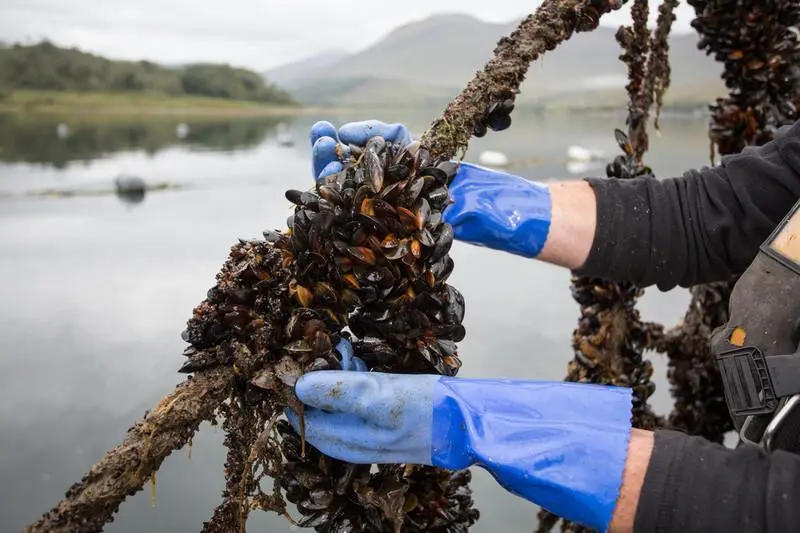
Guidance and training on how to carry out water quality sampling for shellfish production has been produced by Seafish as part of these industry changes.
Following a shift in approach by the Food Standards Agency (FSA) in September 2022, local authorities can now permit shellfish producers to collect shellfish and water samples provided they are fully trained. The changes were implemented as part of a wider work programme initiated by the Shellfish Stakeholder Working Group following a study by Seafish that identified differences in how EU member states met the Official Control Regulations
Historically, FSA has delegated responsibility for the collection of water samples to local authorities. Industry involvement in sample collection has only been permitted in exceptional circumstances and with explicit FSA permission on a case-by-case basis. The decision on who collects the samples still rests with local authorities, but they are now able to delegate the sampling to a shellfish producer without approval from the FSA.
“Bivalve shellfish, such as mussels and oysters, provide an important economic growth area for UK aquaculture, but the sustainability of the industry depends on clean and healthy coastal waters. If water quality is poor, it has a detrimental impact on shellfish production and can compromise market potential. The Official Control Regulations are there to help ensure our shellfish are produced to the highest standards,” Seafish Director of Operations Aoife Martin said.
“Our report into the Official Control Regulations in 2021 highlighted the feasibility of the regulations delivering a responsive, adaptive and risk-based approach for bivalve production and suggested a package of proposals for how such an approach could be applied in the UK. Subsequently, Seafish has been working with the FSA, local authorities and shellfish producers to implement these improvements.”
Seafish’s guidance outlines the processes and considerations required to enable local authorities to permit shellfish producers to collect official samples, including the functions that will be delegated and the level of supervision or oversight that will be required.
The guidance also includes an agreement template that outlines the respective roles of the shellfish producer and the local authority for the collection, processing and transport of live bivalve mollusc samples. These samples are then used in the microbiological and biotoxin monitoring programmes.
An Official Control Sampling Training course has been developed to ensure all official control sampling meets the standards required, regardless of who is doing the sampling. The course will be delivered online by approved external trainers.
Shellfish aquaculture producers and local authorities in the UK are being encouraged to read the guidance which is available on the Seafish website.
Related Articles
 SEAFOOD
 AQUACULTURE
 SEAFOOD