

From fish waste to future wealth: Namibia’s fisheries collaborate on sustainable innovation
Seafood is essential to food and nutrition security, supplying nearly 20% of animal protein to over 3 billion people. As the global population grows, seafood consumption is likely to double by 2050, increasing the demand for efficient protein sources. Yet 90% of fisheries are fully or over-exploited, and almost 15% of fish, seafood and other aquatic food goes to waste. In many regions, this occurs during processing, where by-products – skin, bones and heads – are discarded, even though they can account for up to 70% of the fish. In this sense, using the entire fish is key to maximising nutrition and value.
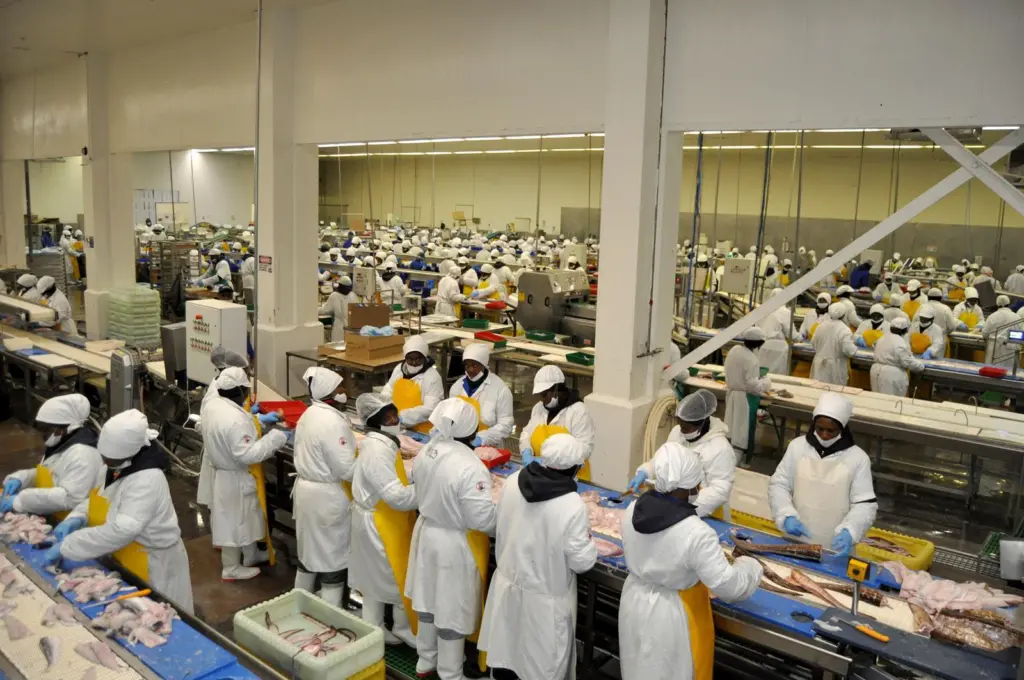
In Namibia, the MSC-certified hake fishery is the country’s leading fishery, employing most of the 18,000 people in the fishing industry. It specialises in value-added products that are tailored to individual international clients, but with value addition comes offcuts. Because hake vessels are built to only bring ashore headed and gutted fish ready for processing, the heads, guts and viscera – about a third of the fish’s weight – are left at sea, raising concerns over waste. Meanwhile, onshore processing creates further by-products: skins and bones that are sent to fishmeal facilities, even though they contain high quality components, such as collagen. This is also concerning given that 30% of Namibians face food insecurity.
Following a three-year investigation into the opportunities, six fishing companies came together to form the Namibia Ocean Cluster, which was launched in April 2024 as a legally registered non-profit in Namibia. It emerged from efforts to foster pre-competitive collaboration to address seafood loss and waste, supported by the World Economic Forum’s Ocean Action Agenda, and aligning with the goals of the multi-country High-Level Panel for a Sustainable Ocean Economy, of which Namibia is a member. The cluster’s aim is to maximise the use of seafood by-products, reframing them as resources rather than waste, to capture economic value and nutrition.
“The World Economic Forum, funded by the UK Government’s Department of Environment, Food and Rural Affairs (Defra)’ Blue Fund, first approached the Namibian fishing industry in 2019,” Pierre Le Roux, Director and Chair of the Namibia Ocean Cluster, told WF. “This followed a scientific journal article by lead author Dr Victoria Erasmus of the Namibia Fisheries Observer Agency on seafood loss and waste in the Namibian fishing industry and opportunities to reduce it. Defra wanted to create replicable models for full utilisation, addressing loss and waste in the sector. The Namibia hake fishery is also Marine Stewardship Council certified, which gave further support to approaching the Namibian fisheries sector.”
Low hanging fruit
The cluster involves six large, vertically integrated fishing and processing companies as core members, representing around 70% of the hake fishery. Associate members include the government-controlled Fisheries Observer Agency; the Namibia Nature Foundation (NGO) that deals with environmental and social issues; academic representatives, particularly scientists, from the University of Namibia and the International University of Management; and Seanam Fishing, a fishmeal processor.
“Through the early years, the cluster received advice from the Iceland Ocean Cluster,” said Le Roux. “The IOC advised us to focus first on low hanging fruit, in other words that which was easier to accomplish while being economically viable. We all know about cod liver oil, so we thought we would experiment with producing hake liver oil. It’s still early days, but the products are very similar, and we’re finding real health benefits. At the same time, consumer preference for skinless hake fillets is rising, so skins have mostly ended up in fishmeal. However, the skin of several fish species, including hake, can produce type 1 collagen, so we are now exploring and developing collagen and gelatin products from hake skins.”
Until now, hake heads had been mostly thrown overboard because of their low commercial value – bringing them ashore was uneconomic, despite them representing a significant share of the fish. However, hake heads contain marine collagen peptides, essential amino acids, bioactive compounds and fish oil, while the intestines, which were also left at sea, are rich in enzymes with potential medicinal benefits. The cluster is aiming to research these opportunities while looking at ways to bring ashore heads and intestines, which means a change to operations. The cluster is now developing a portfolio of projects, each starting with assessing the volume of available material and then researching their nutritional profiles to determine market potential.
“There are many opportunities to maximise usage across Namibia’s fisheries value chain, from high-value extraction for pharmaceuticals, nutraceuticals, and cosmetics, such as collagen and supplements such as fish oil, to producing fishmeal or oil ingredients that are in high demand for aqua and animal feeds,” said Le Roux. “Fish heads are also sought after in food-insecure regions, and it may be possible to sell some parts of the heads at higher prices to make landing them for human consumption viable.”
“Thanks to the cluster’s activities, we’ve seen greater trust and open communication between industry, regulators and NGOs, as well as networking on research with scientific institutions like universities,” Le Roux continued. “People’s mindsets are shifting away from ‘waste.’ Reducing losses and promoting the circular blue economy is about innovation and networking. We were initially funded by donors and see the cluster development as an exciting area for continued donor involvement.”
Next steps
Responses towards the cluster have evolved from caution to commitment. Early workshops identified barriers, but later meetings drew 90% of integrated fishing and processing companies. By the end of the development phase, top C-suite executives from the founding companies were willing to sign a Charter, commit financial resources to a Secretariat, and formally launch the cluster. Fishers still need to be educated, as much of their pay onboard the vessels is bonus-based, and collecting items like fish liver, which is difficult to extract, requires extra effort, said Le Roux, therefore renumeration will need to be worked out once secure markets are established.
Meanwhile, with time and good strategic research, there is also an opportunity to develop a significant sector within the Namibian fishing industry, focused on producing high-value products from parts of the fish that have traditionally been considered waste and of no value.
“Namibia drew key lessons from the Iceland Ocean Cluster, particularly its ‘Whole Fish Thinking’ model,” said Le Roux. “One major takeaway is that collaboration can unlock enormous value; in Iceland, the cluster raised the value of cod skin products from US$1 million to $110 million through innovation. Fishing is typically individualistic – captains don’t share information about shoals – but clusters require a mindset shift towards pre-competitive networking and collaboration in order to innovate.
“At the same time, international antitrust laws must be respected to avoid any perception of price collusion. The Namibia Ocean Cluster works strictly in pre-competitive collaboration, conducting generic-level research, and leveraging what an individual company could never do on its own. When large parts of the industry work together, new opportunities emerge.”
The cluster aims to promote new models, research methods, and markets to maximise seafood utilisation. While currently focused on wild-capture fisheries, the long-term strategy could extend to other blue economy sectors, boosting socio-economic benefits such as job creation and nutrition security.
“We hope to expand membership to non-fishing sectors like aquaculture and connect with regional stakeholders operating in the same fisheries,” said Le Roux. “We also plan to move from data collection to developing specific market products, and meeting new players in this space of innovation as momentum builds. This will bring new contacts with real expertise and creative thinking, significantly accelerating progress and creating an exciting, dynamic new environment to work in. We are looking forward to seeing what the future holds.”
Related Articles
 PROCESSING & REFRIGERATION
 SEAFOOD
 SEAFOOD