



Bryan Gibson looks into the issue of fish waste and alternative uses for fish by-products.
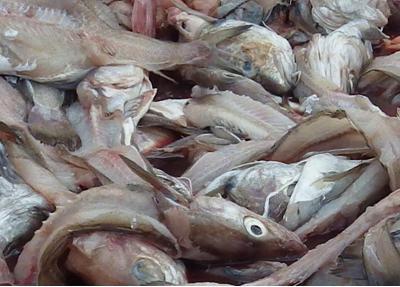
The best way of disposing of an organic waste source is to convince as many creatures as possible that what you intend discarding is also good to eat. There’s nothing new in the concept, it’s not that clever, and it’s what the universe has been doing in partnership with nature for billions of years. But humanity doesn’t have the same luxury of time to resolve all the environmental problems it is capable of creating for itself within just a handful of decades.
At face value, in terms of percentage body weight discarded against tonnage landed, the fishing industry could be regarded as one the most wasteful food production methods on earth. And just as the senseless rules surrounding EU by-catch legislation are finally being addressed to ensure every caught fish is a landed fish, this is not the end of a fascinating and scientifically complicated story.
Only about 36-43% of the total body weight of a pelagic fish ends up being consumed by humans, leaving around 60% as a high volume, rapidly de-composing and unpleasantly smelling waste. But the International Fish meal and Fish Oil Organisation (IFFO) prefers to call what it describes as a valuable source of protein, fats, food flavourings and additives, a by-product.
Taking such figures into account one step further, considering how we eat so many unnatural and unhealthy food products, we’d probably be serving our dietary needs much better by pouring such so-called ‘food’ down the drain and eating the packaging. And where shellfish waste is concerned, the analogy may be closer to the truth than one may think.
Crab, shrimp, lobster and shellfish shells are brim full of the most basic chemical elements and nutrients. All we have to do is co-ordinate timely collection and speedily process the bounty.
What used to be wastefully buried within landfill sites contains a huge potential for profit. Chitin makes up 20% of shells, another 60% is calcium carbonate and 20% is protein. Chitin is a polymer, a large molecule composed of repeating units of simple sugar molecules. Next to cellulose, Chitin is the most abundant and one of the most useful polymers on earth.
Crab, lobster and mollusc shells also assist in the production of many valuable caritinoid substances which are utilised in pigmentation products and the cosmetics industry. Glucosamine and chondroitin sulphate is extracted from crab shells and used in the pharmaceutical industry as an anti-arthritis food supplement.
The legal options for storing, utilising or disposing of fish wastes are limited to the following: (depending on whether they are Category 2 or 3)
| Purpose | Technique |
| Storage | Freezing: storage of material for use in pet food manufacture etc. Ensiling (making into silage): essentially a storage technique for subsequent disposal or utilisation Rendering with other material: reduction of material to fish oil and bone meal |
| Utilisation | Reduction to fish meal and fish oil: conversion to a marketable commodity Direct consumption: utilisation by zoo and circus animals, hounds, maggot and worm (for use as bait) farming |
| Disposal | Incineration: burning of de-watered material Landfill: restricted to remote areas where no alternative solutions are available |
Established in 2001, IFFO is a non-profit organisation representing manufacturers of meal for fish feed, fertilisers and oil producers and related trades. IFFO’s vision as a non-profit organisation is to promote and enhance human and livestock health and welfare via superior nutrition.
Mike Hryckowian (pronounced Hariscovian), production manager for Norwegian/Irish owned United Fish Industries (UFI) at Grimsby told WF&A, “Processing fish waste has become a highly competitive business with a strong dependence upon local access to raw materials and speed of processing is the essence for success. We can process 300 tons of fish by-products a day, though our total weekly intake is nearer to 700 tonnes a week. We run several weekly collections from fish processors to make sure the fish by-products are processed as fresh as possible. There’s huge competition for several species of fish by-products. Our competitors export cod heads to Nigeria, salmon frames (skeletons) to Eastern Europe and salmon heads are exported as far away as South East Asia. Mink farming in Denmark is now very big business for fish by-products. The Danish fur industry consumes 700 tons of fish-based dry feed per day as it attempts to satisfy an insatiable Russian and Chinese market for genuine animal fur.”
Newlyn, UK, based pig farmer, Vivian Cox is now working in close co-operation with UFI, having turned agricultural disaster into commercial success, when the 2001 UK foot and mouth outbreak prevented him from transporting livestock. Government vets slaughtered his entire herd, despite Mr Cox’s pigs being completely healthy. He was instantly put out of business, but has become a vital link in the Newlyn fishing chain, capable of freezing huge amounts of pelagic and shellfish waste and re-distributing surplus scallop shells to the gift and souvenir trade in UK and Spain.
UFI hopes to resolve waste disposal problems for smaller fish processing businesses by establishing regular collections from newly established freeze-storage centres throughout the south of England.
Ocean-Fish processors near St Austell sends its waste to Vivian Cox via the refrigerated transport it dispatches to collect new fish supplies from Newlyn harbour, where it is frozen and collected and taken to Grimsby by United Fish Industries. Ensilaging, composting and fertilizer production are simpler methods of processing fish waste and better suited to smaller-scale operations in remote regions.
Aquatic Water Services at Indian Queens, St Columb, Cornwall, was commissioned by the Newlyn Fish Industry Forum and the South West Regional Development Agency in 2006 to explore treatment and disposal of fish/shellfish waste by feeding waste fish to commercially farmed shrimps. AQS received a £40,000 grant, but when the funds ran dry the project foundered, despite initially encouraging results.
One man’s waste is another’s vital life stream, and it’s going to take time and a great deal of money to find the correct answer to a very complicated issue.