




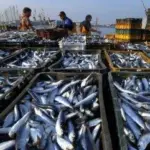

Ocean management strategies needed
A more tailored approach to ocean management is needed in the North Atlantic to avoid depletion of valuable commercial fish stocks, according to new research led by the UK’s University of Salford.
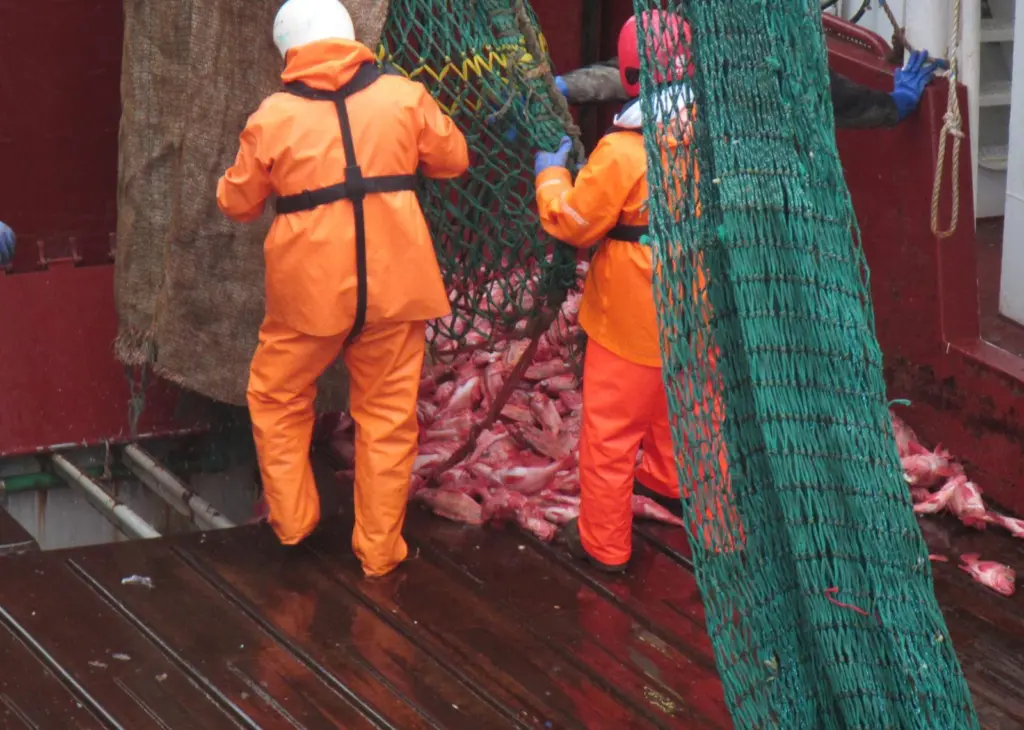
The research, Three-dimensional post-glacial expansion and diversification of an exploited Oceanic fish, looked at the effects of ‘depth variation’ in marine animals in the North Atlantic Ocean and focused on the ‘Oceanic Redfish’, a fish species which has rapidly increased as a commercial fishing target following the depletion of traditional fish stocks in the North Atlantic.
The results support the existence of separated stocks in oceanic redfish, and identify patterns and levels of differentiation in several gene regions which are consistent with isolation by depth i.e. fish dwelling below 500m are more sedentary, whilst fish dwelling at less than 500m are more active and disperse across wider areas of the North Atlantic.
Professor Stefano Mariani, chair of Conversation Genetics and Head of Research and Innovation, and who led the project, said: “These results clearly indicate that fisheries management must step up a gear and embrace fully the new molecular approaches: these fish are virtually undistinguishable to visual inspection, but their genes tell us a completely different story”.
In addition to explaining the evolution of fish species in the North Atlantic, these findings suggest that a more tailored approach to the future assessment and management of Oceanic Redfish stocks is required, if we are to avert the permanent loss of a unique biodiversity component and an increasingly valuable commercial fish stock in the North Atlantic.
“The findings are very exciting because they allow us to study the very mechanisms that eventually lead to the formation of new species,” added GTS PhD student Peter Shum, who helped lead the project.
The team will continue to investigate this study system with the aim of devising a reliable method to unambiguously identify specimens from the two stocks that can be routinely implemented in monitoring and enforcement. They will also look at much larger portions of the genome, to better understand the evolutionary trajectory of “deep” and “shallow” oceanic redfish. Current research in Professor Mariani’s lab is finding that oceanic redfish is often marketed in the UK under various, inaccurate labels.
This research is the result of a three-year joint research partnership between the Ecosystems and Environment Research Centre at the University of Salford and the Icelandic Marine Research Institute.
Related Articles
 FISHERIES
 FISHERIES
 WORLD FISHING EVENTS