




Tuna meeting outcome
Member states and organisers of five regional tuna management bodies agreed to share lists of illegal fishing fleets and to implement catch-tracking programmes in an action plan adopted in Kobe, Japan, at the end of the five-day international meeting.
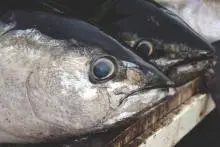
They also agreed to share information on the amount of fish caught in an area as well as the area’s potential for further fishing.
The meeting ended with the following measures being agreed:
• Establishment of a global list of tuna vessels registered on the respective lists of the five organisations concerned
• A global black list of vessels registered as engaging in illegal fishing activities
• Setting up a system to monitor catches from the vessels to the markets – a unified catch-tracking or catch documentation system, which stipulates that fishing nations certify that tuna has been caught in accordance with regulations and requires the tagging of fish for easier tracking from ship to market
• Tightening measures regulating the transhipment of tuna at sea
The presentation of scientific advice will be standardised throughout the tuna RFMOs on the line recently agreed by the International Commission for the Conservation of Atlantic Tunas (ICCAT).
The RFMOs will undertake a performance review in the next 12-18 months by RFMO members and external experts, and the next joint meeting of the tuna RFMOs will be held in January 2009 in Spain.
In identifying the priorities, the European Commission stressed the need to develop measures to combat illegal, unreported and unregulated (IUU) activities. These include identifying and quantifying IUU activities based on trade and other data, effective control over nationals engaged in these activities and speedy exchange of information between RFMOs, port states, flag states and market states on IUU activities.
Although the European Commission has welcomed these measures, environmental organisation WWF has said that those responsible have failed to agree on an action plan to help reverse the decline in tuna stocks and to stop the plundering of these valuable species and that “their only agreement was to gather more data and talk more often.”
“Tax payers should hold these officials responsible for failing to do their duty to protect the tuna we eat and the environment we are dependent on,” said Dr Simon Cripps, Director of WWF’s Global Marine Programme.
“More than 200 officials have travelled to Japan with little achieved except a plan to hold more meetings. We hold government representatives personally responsible for reversing the decline in tuna populations.”
Related Articles
 ICELANDIC FISHERIES EXHIBITION
 FISHERIES
 FISHERIES