



Japan targets greater self sufficiency
David Hayes finds government plans to promote Japan’s fisheries industry focus on efforts to increase self sufficiency in seafood supply through greater efficiency in fishing practices and processing technology.
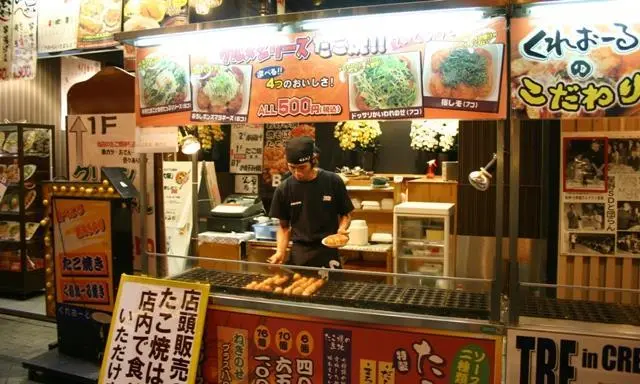
Fish is still an important part of the typical Japanese daily diet, but in recent years meat and Western-style food have become increasingly affordable and available, sparking concerns about the long-term impact on fish consumption and the fishing industry.
“The Japan Fishery Association is concerned our industry is less competitive and that we are importing more fish. Self sufficiency is our concern but during the past five years fishery imports have slowed and self sufficiency has started to increase,” commented Masashi Nishimura, publicity manager in Japan Fisheries Association’s (JFA) operations division. “Previously, Japanese fish buyers and traders used to offer the highest price for fish in the international market but now countries like China are buying fish that we cannot afford.”
Japan is the world’s third largest fishery producer with a total annual output of around 5.6 million tonnes after China and second placed Peru. Japan also is a major fisheries importer following the decline of its offshore fisheries sector in the 1990s. Today it annually imports around 3 million tonnes of fishery products.
According to government figures, offshore fisheries production totalling about 2.5 million tonnes accounts for 45% of Japan’s total fishing catch, followed by coastal fisheries production of about 1.4 million tonnes which represents a further 25% of production.
Marine aquaculture totalling 1.2 million tonnes accounts for about one-fifth of production while Japan’s 500,000 tonnes distant water fisheries catch make up most of the balance.
Eco-label promotion
To promote consumption of domestic fishery products JFA operates an eco-labelling scheme which in addition supports the government’s wider ‘Food Action Nippon’ programme, aimed at increasing Japan’s overall food self sufficiency.
JFA’s eco-labelling scheme certifies fisheries operating in a responsible, sustainable manner in delivering high quality products to the consumer.
“Our association acts as the secretariat for the eco-labelling scheme,” Nishimura noted. “Eco-labelling promotes sustainable fisheries but still only a small proportion of Japanese fisheries is certified. Soon our first big fishery will apply for certification.
“Our eco-labelling scheme is based on FAO 2005 guidelines. We are still undergoing changes. Up to now we operate this in Japanese and we do not have English language documents.”
Four fisheries have been certified in Japan for complying with internationally-recognised eco-labelling practices since the JFA scheme was established in December 2007. These include snow crab and red halibut fisheries. More fisheries are planned for certification under the ‘Eco Label’ system in future.
“Our target is to certify as many fisheries as possible; also, to make this Eco Label scheme credible in Japan,” Nishimura said. “We want to expand this scheme to Asia as Asian countries’ fishing cultures are similar to ours.”
Japan’s fishing industry is characterised by the multiplicity of small fisheries, Nishimura pointed out, which has slowed the adoption of eco-labelling while fisheries in Norway, another important fishing nation, are differently constituted, making the Eco Label system easier to adopt.
In Norway, herring, blue whiting and saithe account for about 70% of total fisheries while the top eight species account for 90% of Norwegian fisheries,” Nishimura said. “Here in Japan some 28 species account for 90% of our fisheries. We have to deal with multiple fisheries and this is part of our culture.”
Import reliant
According to Ministry of Agriculture, Forestry and Fisheries statistics, Japan is around 60% self sufficient in fishery production for human consumption and relies on imports for 40% of supplies. The situation has changed markedly over the past half century – from 1964 when Japan reached a peak of 113% self-sufficiency in seafood production with the surplus 13% share of production available for export.
Major species caught include common mackerel with about 250,000 tonnes landed annually along with about 200,000 tonnes of saury, 215,000 tonnes of skipjack tuna, 230,000 tonnes of Japanese anchovy, 125,000 tonnes of Jack mackerel and 145,000 tonnes of Alaska pollock.
Currently the only species in which Japan is self sufficient is yellowtail of which 68% is produced by mariculture, while among other major species Japan is 81% self sufficient in horse mackerel production, 68% self sufficient in cod, 65% self sufficient in squid, 51% in octopus, 43% in tuna, and 41% in salmon and trout,.
Species for which Japan is highly reliant on imports include shrimp for which 95% of supplies are imported from worldwide and crab for which 72% are imported, some 54% from Russia. In addition, 67% of freshwater eels consumed are imported with 59% being brought in from China.
Meanwhile, Japan continues to export fresh and processed fishery products though competition from processors in other countries, notably China, has increased in recent years. However, with domestic fishery consumption expected to shrink in Japan due to the declining population and changing diet among the young, the government is encouraging fishery exports to maintain employment and traditional culture in Japan’s coastal communities.
China, in fact, is an important market for Japanese fishery exports importing over 130,000 tonnes of seafood in 2009. Salmon is the largest fishery export to China with 47,000 tonnes shipped last year followed by 35,000 tonnes of pollock and 12,000 tonnes of mackerel.
Ageing fleet, fishermen
One consequence of the decline in Japanese fisheries production during the past two decades has been reduced investment in fishing boats and equipment, along with a growing lack of interest among younger Japanese in following a career in the fishing industry.
According to the government’s Fisheries Agency, more than 40% of offshore trawlers are more than 20 years old with many owners delaying the replacement of their vessels which previously had been renewed every 15 years.
Currently about 215,000 fishing vessels are in use of which around 90,000 are fitted with outboard motors, and 95,000 are less than 5 tonnes. The number of vessels in the range of 5-20 tonnes is around 24,000 while among larger vessels the fishing fleet includes 1,230 vessels from 100-500 tonnes and 13 vessels sized 500 tonnes and over.
About 210,000 people are involved in full- and part-time fishery activities in Japan with women making up about 10% of the total, many of them older women with husbands also employed in fishing.
Currently 37.4% of men employed in fishing are aged 65 and over, while only 14.2% of male fishermen are aged 40 years or under.
“Japan has a lot of small coastal fishermen. There is a problem with recruitment as Japan’s fisheries are not as profitable as some other countries,” Nishimura commented. “Recruitment really is a problem. Fishermen’s income is unstable and recruitment is hard.”
In addition to high fuel prices, the Japanese fishing industry also is suffering from low fishery stocks in seas near Japan with stocks of Japanese mackerel and Japanese squid at a medium level while common mackerel, true sardine and Alaska poll-ck stocks are at a low level.
The loss of former fishing grounds also has affected the nation’s catch along with limited access to fish stocks in nearby territorial waters including Russia’s.
“Japanese aquaculture is stable but has its own problems – pollution and feed issues in terms of efficiency,” Nishimura said. “Aquaculture is not the solution anywhere and has to be combined with the capture fisheries.”
As part of plans to increase the profitability of fishing activities and to prepare the industry for a downsizing of the workforce as older fishermen retire, the government is encouraging efforts to increase cooperation among regional fisheries and add value to their activities.
In the Hachinohe area, for example, efforts are being made to increase added-value for fishery products by downsizing large- and medium-size purse seiner fleets, and slashing production costs through rationalising fishing operations.
Instead of using a conventional fleet of four fishing boats and a total of 52 crew, a streamlined fleet of two vessels with a total of 33 crew is being used by some Hachinohe fishing boat owners.
The functions of one of the two previous net-fishing vessels and one fish carrier boat have been combined into one improved vessel while the previous search vessel and the other fish carrier have been combined into another improved vessel.
The Hachinohe scheme also involves increasing the efficiency and lowering costs in fish sorting and distribution. The scheme involves raising the average price of fish by introducing automatic multilevel sorting machines, introducing transport by sealed containers, improved hygiene control at packaging plants and the planned consolidation of three fish markets in 2011.
Elsewhere, a project to add value to red snow crab production is underway in the Kasumi area where live, fresh crabs caught in fishing baskets are being produced for sale instead of cooked crabs.
A new 19-tonne crabbing vessel has been built equipped with live tanks for shipping live red snow crab to market. In addition to obtaining food certification for crab, the project involves developing a brand image for the red snow crab which are produced by crab fishermen in several cooperating regions.
Recession struggle
Meanwhile, the Fisheries Agency recently identified a number of key issues affecting future development and sustainability of the nation’s fisheries industry. In common with JFA, the agency regards raising Japan’s self sufficiency in fishery supplies as a major issue as fish imports have risen over the past decade while the volume of fish consumed that are caught by Japanese fishermen has declined due to the lower cost of imported fish.
“We are in recession and this has led to a number of things like restaurants having problems and fewer people eating at sushi bars where they eat less expensive imported fish,” Nishimura said. “However, installing conveyor belts to serve food cuts staff costs and then restaurants can use more expensive domestic fish. Families like inexpensive sushi restaurants as they have children to feed, but they are not satisfied with poor quality so restaurants have to cut costs.
“This does not affect only sushi restaurants as all restaurants have to cut costs. Also, more people are taking lunch boxes to work which is cheaper than eating out for lunch.”
Household spending trends are another issue for the fishing industry.
“Household budgets are affected by the economic recession. Household expenditure on fish has dropped 20% during the past decade as people are eating cheaper imported fish. Household expenditure on rice also has dropped,” Nishimura observed. “The price of bread is stable now after declining during the past five years. Meat prices are quite stable except beef on which household spending has dropped 30%.”
To encourage children and young people to continue eating a traditional high fish protein diet, the government and fishing industry are promoting sushi and boneless processed fish products preferred by children as well as young housewives who are less familiar with preparing fish dishes than their mothers.
“People say younger people eat less fish. Kids love sushi but they don’t like fish with bones,” Nishimura pointed out. “Also, younger mothers do not know how to cut up fish to prepare fish dishes at home. They have to buy fish prepared in the market.”
Underutilised fish species also are of concern to the Fisheries Agency along with the use of off cuts from processed fish. Species categorised as underutilised often are not distributed widely because the volume of catch usually is unreliable while most fish dealers want regular supplies of each fish species they handle.
Underutilised species typically are consumed in the locality where fishing boats catching them are based because they are considered to be of lower value.
Nishimura explained: “Some of these underutilised fish are sold in fishing villages and eaten by fishermen while some villages decide to promote these fish as a local seasonal delicacy, but this is not the way fish traditionally have been sold in Japan. The government wants these underutilised fish promoted as well as unused parts of processed fish.”