






Spain sanctions 25 fishing vessels for disabling tracking
Spanish government has sanctioned 25 Spanish-flagged fishing vessels for turning off their tracking devices while fishing off the coast of Argentina.
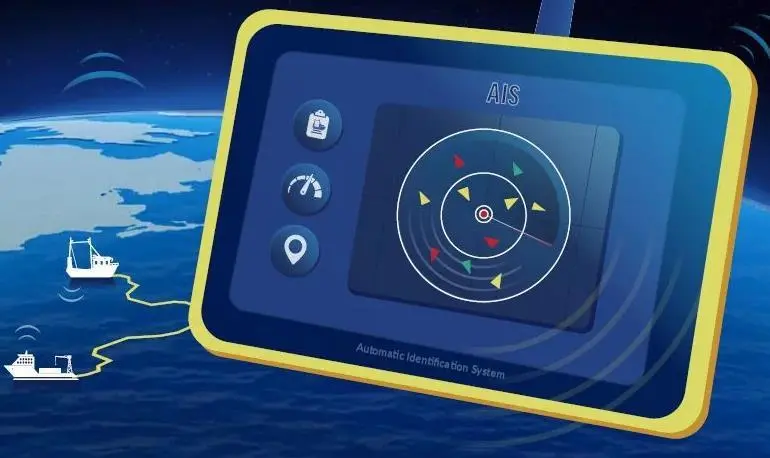
According to ocean conservation organisation Oceana, the measure is directly based on its analysis that the organisation shared with both the Spanish Secretary-General for Fisheries and its Directorate-General for Merchant Shipping. Its report found these vessels repeatedly turned off their automatic identification systems (AIS) while fishing.
AIS is mandatory in Spain and the European Union to promote transparency in fishing activity and ensure safety at sea. Despite this rule, few EU countries have imposed sanctions for these types of violations.
“We welcome the decision of the Spanish administration to take another step in favour of transparency in the fishing sector,” said the advisor of Oceana’s illegal fishing and transparency campaign in Europe, Ignacio Fresco Vanzini. “Those who do not respect the rules should know that their actions have consequences, and in this case, it is in the form of sanctions. The use of Automatic Identification Systems is key to the safety of fishers, for states to know what is happening in their waters, and to ensure that fishing activities are carried out within the law.”
According to Oceana’s analysis, 90% of the 30 Spanish vessels flagged between 2018 and 2021 had deactivated their AIS and spent twice as much time with the device switched off than on. Some of the penalties Spain has now imposed run up to €60,000.
Over the course of the investigation, the organisation analysed the activity of fishing vessels along the border of Argentina’s national waters using data from Global Fishing Watch (GFW), the independent non-profit founded by Oceana in partnership with Google and SkyTruth.
Oceana is urging the other identified countries in its analysis, including China, South Korea and Taiwan, to enforce existing rules, prioritise transparency in the fishing sector and ensure the safety of fishers on board.
The Spanish vessels sanctioned repeatedly turned off their AIS without legitimate reasons more than 1,200 times during at least 24 hours. According to Oceana, this should not only constitute an offence against maritime safety but should also be subject to fines by fisheries authorities, particularly under the new Fisheries Control Regulation. This regulation, which enters into force in January 2024, will require all vessels to notify the competent authorities in advance of any AIS switch-off.
Any fishing vessel flagged to an EU country that is greater than 15 metres in length must be equipped with an AIS device that transmits the location, direction, and speed of the vessel at sea. Navigating without AIS is considered an infringement of EU and Spanish law, as vessels are only allowed to legitimately turn off AIS in exceptional situations and while following certain rules, like when navigating in areas where piracy could be a problem.
Related Articles
 FISHERIES
 FISHERIES
 FISHERIES