


Cuba
Cuba has many foreign investment opportunities for fishing companies around the world
The over-exploitation of natural fishing resources in the sea has gone beyond control in the international arena given the prevailing open access conditions governing many fishing policies throughout the world.
n addition to this, there are other elements contributing to this situation such as the high levels of utilisation of fish for the manufacturing of products not destined to human consumption: flour and fish oil, and on the other hand, the world population growth rate.
Aquaculture has become a key alternative to meet the deficit in animal-based foodstuffs supply which poses a threat on the next century’s food security. This has been proven by the growth rates aquaculture has reached (almost 10%), whereas fishing and cattle-raising sectors have only had 1.6% and 3% growth rates, respectively.
The development of advanced technologies has facilitated the introduction of intensive fish farming practices, with growth rates increasing in the last five years from 5% to 14%. Contrasting with this trend, fish catch reports show negative or zero growth rates in most species, thus making aquaculture an emerging industry to be regarded as a strategic and top-priority area.
Cuba is an archipelago (a system of isles and keys) with a 5,500 Km coast line. The southern coast faces the Caribbean Sea, northwestern coast faces the Gulf of Mexico and the north and northeastern coasts face the Northern Atlantic Sea and are under the influence of the Northern Equatorial Stream. In a subtropical climate, there exist lots of possibilities for Cuba to have a year-round production from direct fishing or from fish-farming. There are four regions (protected areas), with an extensive shelf and variable depths of up to 20 mts.
In these areas, even under the worst weather conditions, there is always top protection. Fish farming can also be carried out even in areas where the marine shelf is not extensive, especially in the central and eastern part of the country where temperatures range from 23-27 °C and waters from the Gulf (Gulf Stream) guarantee a continuous non-polluted, high quality water flow.
The Caribbean region has in recent years experienced a significant growth in the tourism industry. Cuba has taken part in this process for which quick and continuous development is necessary and it all implies a larger availability of foodstuffs where fish products are among the preferences for this fast-growing industry.
The country has road and electric infrastructures that facilitate the development of these activities. Cuba also has a satisfactory network of airports and sea ports to guarantee exports of fresh and frozen fish products to Europe and the Americans. These areas will continue growing in the future.
The Cuban Ministry of Fisheries is the governing agency that stipulates the guidelines for its Fishing Associations. The Association is a State-run economic organisation with its own independent legal personality and assets, which is joined by other companies and/or economic organisations under the same conditions. Its general functions include: coordinating the policies laid down by the Ministry of Fisheries and other governing agencies of the National Economy; studying the feasibility of new projects aimed at widening markets and obtaining new businesses, and developing other activities common interest.
The Associations are established on the basis of their productive or service activities, and include: Fishing of fish-farming Associations spread along the 14 provinces of the country and the Isle of Youth Special Municipality; Deep sea fishing and port running Association (PESPORT) and Shrimp farming Association (CULTICAM); special Association for industrial fish processing (INDIPES), which is also responsible for distribution and marketing of fish products at national level and at the borders; Ship-building and technical services (ARGUS) Association.
A new commercial enterprise-PESCAVANTE S.A, with 100% Cuban capital, was established in 2000 with the purpose of promoting, managing and implementing the financial, investment and development policy on new International Economic Associations under the corporate system of the Ministry of Fisheries. Currently, some 150 species from Cuban territorial waters are subject to catches. Specialised fishing covers only a few species (lobster, shrimp, tuna fish, crabs, sponges, turtles). Traditional fishing is still in used for all other species.
Foreign investment opportunities:
l Development of sea and land aquaculture by using top-of-the-line fish farming technologies and introducing highly nutritional and tradable species: sea-bass, sea-bream and others to be considered.
l Development of Processing Industry through the introduction of state-of-the-art technologies with a view to increasing value added in finished products.
l Development of the fish processing industry with top-of-the-line technology and increased value added to finished product
l Development of the artificial food producing industry (feed) for farming of selected species.
l Increased offshore fishing operations with Cuban ships and crews.
l Development of shellfish farming.
l Development of live lobster production.
l Ship building
Aquaculture
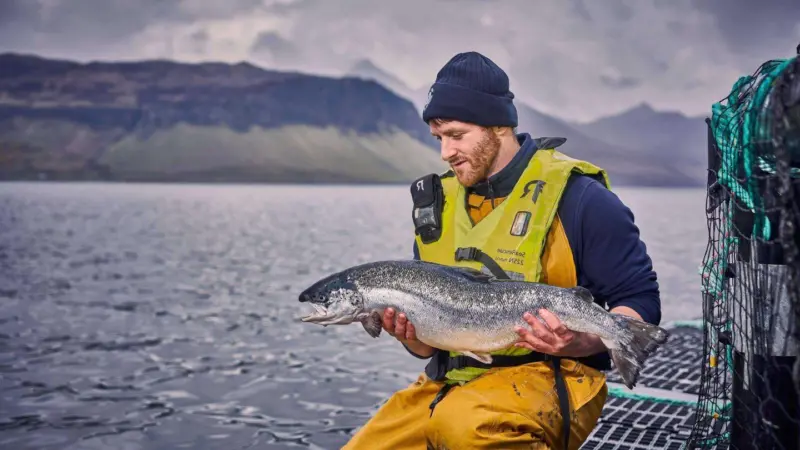
The main target of sea aquaculture development in Cuba is the introduction of new farming biotechniques for highly commercial species such as sea bass and sea bream, which are foreign species with chances for adaptation to Cuba’s climatic conditions. Guarantees for this development include:
l High levels of water purity, as well as high temperatures throughout the year allowing for a shorter period of growth in such species which could be marketable according to demands.
l Large number of bays and inlets favoured by geographic protection lines required in this activity. This facilitates the construction of intensive farming centers at lower costs given the natural protection that the ecosystem renders.
l Availability of hatcheries for fingerlings production. Facilities are presently being utilised in similar activities and have available capacities.
l Industrial Fish Processing Plants which comply with the EU requirements for fish processing. Availability of land and maritime cold-storage facilities.
Foreign investment opportunities
l The proposed model can reach its maximum production capacity of 300 tons a year. It can be adapted for lower productions. Small-scale production is required for foreign species in order to demonstrate the technological feasibility of the project, in which case risk contracts are entered into.
l Economic and financial estimates are based on a fish farming center with a 300-ton capacity. Fingerlings will be purchased in available markets with species of interest and will be taken to Cuba for their farming. A 70 % survival rate and a 500-gram average weight are estimated in this project. Commercialisation will take place in whole, fresh units.
l Requirements: New technology, financing (working capital), access to markets. Different business modalities could be negotiated with the foreign partner including the establishment of International Economic Associations (Joint Ventures, etc.)
Land aquaculture
This activity has gained momentum in Cuba in the last few years, with levels of up to 70,000 tons of tilapia and Chinese carp per annum for domestic consumption. This production comes from dams and 1,000 ha of ponds located in 62 farming centers, out of which 12 have high-quality fish processing plants. However, the main focus is on diversified cultivation through natural feeding or organic matter added to the country’s dams and ponds. This technique, known as extensive farming, curtails the fishing industry’s export potential because of the very low yields obtained.
l Cuba’s Fishing Industry has:
l Water networks and facilities for water management.
l High genetic quality reproduction banks.
l Know-how for fish farming, from fingerlings production to fattening techniques.
l Processing, packing and transportation technology.
l Marketing channels.
l Markets with high demand and expansion potential.
Foreign investment opportunities:
l Development of intensive and superintensive farming of these species allowing for an increased production and export.
l Development of specialised farming centers for production of tilapia for exports.
l The foreign partner would contribute financing for working capital.
Oyster farming
The steady development of this activity in Cuba has been triggered by the experience gained throughout the years together with the dynamic and continuous adaptation to the new conditions in this area. A farming biotechnique at commercial-level has been developed since 1986 for increased production of Crassotrea rhizophorae (mangrove oyster).
Foreign investment opportunities:
l Increase and diversify shellfish production, through the introduction of new species.
l Improve quality in current presentation of products.
l Export to the Caribbean and other areas.
l The foreign partner is expected to contribute technologies, financing and market.
Offshore Fishing operations
Existing limitations as to the sustainable maximum catch levels of fish in our exclusive economic zone have led to the search for new fishing areas.
Foreign investment opportunities:
l Enhancement of environment-friendly fishing activities with large vessels in Africa and other areas of interest.
l Expansion of operations with small vessels in Central America, the Americas and the Caribbean.
l Creation of cold-storage facilities in Cuba for distribution to the Americas and the Caribbean.
l Foreign partners should secure financing, access to markets, and fishing licenses to operate in third countries. Different business modalities may be considered, including the establishment of International Economic Associations. The Cuban partner would contribute the vessels and highly qualified personnel.
Processing sector
Infrastructure development is a top-priority task for Cuban Fishing Industry, as also is the search for advanced technologies which help increase value added to raw materials from natural resources obtained in fishing operations or aquaculture.
There are more than 30 facilities in the country and the necessary infrastructure to guarantee the processing and preservation of products. The development of lobster and shrimp processing plants to meet EU export requirements has been a top-priority in this area. Fresh, frozen, mixed and smoked foodstuff manufacturing and processing plants are among Cuba’s installed capacities.
The development of this industry implies the introduction of new presentation and packing designs for lobster and shrimp, new technologies for processing of sea and fresh water species, and obtaining high value added products for external and domestic markets.
Foreign investment opportunities:
l Investment in Industrial Processing Facilities nearby fishing areas.
l Increased raw materials availability.
l New technologies, financing and access to markets are required to develop this industry. Different business modalities, including the establishment of International Economic Associations, can be considered with the foreign partner.
Production of live lobster
The quality of Cuban lobster is recognised in all markets worldwide and enjoys a high prestige within marketing networks. The Ministry of Fisheries is, therefore, focused on increasing the volume of this product in the world market.
Commercialisation of live lobster in the international market would result in an 18% increase in income as compared to income from commercialisation of frozen lobster.
Foreign investment opportunities:
l To develop this type of production, investments are required in order to secure adequate treatment for a product that will have to endure 48-56 hours of transportation to Asia and Europe mainly.
l An increased catch of live lobster is envisaged for a second stage, and this implies more investment to enhance and transform fishing techniques.
Ship building
Argus Association comprises 15 enterprises and 7 shipyards. Its main activities include: ship building and repairs; ship electronics and services.