


Canada
The Canadian fishing industry — one of the oldest in the world — is entering a new era, since the crisis in Atlantic ground fish in the 1990s. Shirley Kumar reports
The collapse of cod off the east coast of Newfoundland and Labrador in the 1990s leading to the loss of 40,000 jobs and the closure of a few cod fisheries for over 10 years — sent shock waves around the world.
The Fisheries and Oceans (DFO) could no longer rely on its supposedly sophisticated scientifically-based fishing management programmes.
It had to balance environmental needs with economic growth to preserve the livelihoods of thousands of Canadians employed in the commercial fishing industry.
The Canadian government was warned by scientists and environmentalists that the cod stocks were overexploited and that fleets were employing destructive fishing practices. But it refused to reduce the quotas sighting the loss of jobs as too great a concern.
This refusal to act has led to communities still struggling to recover and the marine system still in a state of collapse. Cod stocks today are estimated at just 50,000 tonnes (t).
Regulations
With the knowledge that other species were under attack, the DFO responded by amending the Fisheries Act of 1868 to acknowledge environmental considerations.
Foreign vessels not wishing to tow the line and adhere to Canada’s Coastal Fisheries Protection Act’s environmental policy were also banished outside of its 200-mile exclusive economic zone (EEZ). This led to no foreign vessels allowed in the EEZ.
The DFO also quickly reduced the quota for other ground fish species also under threat. In 1998, the DFO downsized the Atlantic ground fish fishery.
In the last 10 years, the DFO has introduced various initiatives including the Canadian Code of Conduct for Responsible Fishing Operations. The Code contributes directly to the conservation of stocks and the protection of the aquatic environment.
Other initiatives included the use of specific fishing equipment to ensure the protection of the whole environment. These include: selection of fish sizes; limiting catches; survival of fish escapements; protection of marine mammals and birds and fuel efficiency and air pollution. It also offered training to commercial fisheries regarding responsible fishing.
Licenses are also subject to species, quotas depending on state of the stock and seasons for fishing.
The introduction of the Species at Risk Act (SARA) also affects commercial fishery. Restrictions include: bycatch; fishing gear modifications; fishing area closures; fishing season closures and closures or reductions in traditional fisheries.
There are currently 37 aquatic species listed under SARA. In addition, a further 28 could be added, a move that could lead to further fisheries shutting down.
Salmon Crisis
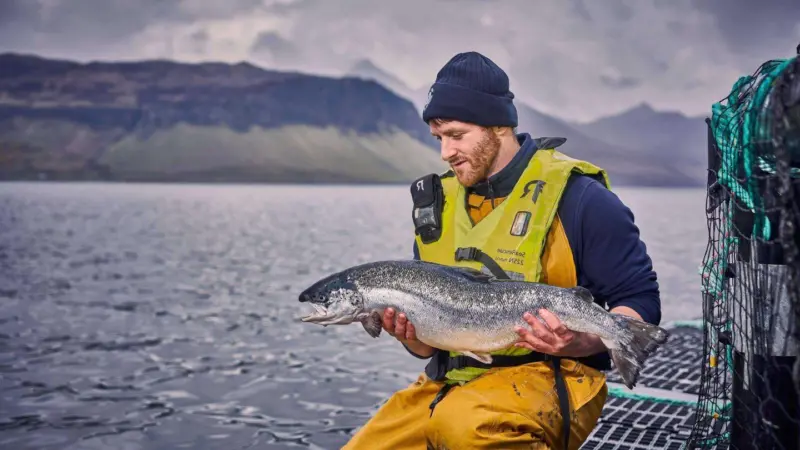
Salmon stocks are on the verge of collapse, despite a Pacific Salmon Treaty signed with the U.S.A in the late 1990s to control stocks.
A third of the Fraser River sockeye salmon are missing in action, as is 56 per cent of the Chinook salmon.
The left-wing David Suzuki Foundation said: “The Canadian government’s efforts to ‘manage’ the declining salmon fisheries have made matters worse. Citing ‘too many boats chasing too few fish,’ the government has spent almost $200 million since 1996 to buy back more than 1,500 fishing licences.
“This strategy has primarily removed the older, smaller, less efficient boats from the fleet leaving new, ‘catch efficient’ vessels that can catch more fish in one day than a smaller boat might catch in a year.”
Late last year, Commissioner of the Environment and Sustainable Development, Johanne Gélinas also urged the DFO to act in order to protect Salmon. Her report to the House of Commons, said, since 2001 four salmon populations have either been designated or listed as endangered, and more may follow.
“This is the fourth time since 1997 that we have reported on salmon-related issues and we continue to see little progress in managing key risks,” she said. “I am concerned that some salmon populations are in trouble.”
The Minister of Fisheries and Oceans, Geoff Regan, responded by saying: “The Salmon fishery, after a decade of steady decline in values and abundance, is an obvious concern.”
“The DFO is undertaking a number of initiatives to address this challenge including a Wild Salmon Policy for the West Coast. In Atlantic Canada, snow crab is expected to decline and it is hoped that the rebuilding of the cod fishery will continue.”
Snow crabs
Snow crab is the foundation of Canada’s crab fishery which, in turn, represents the country’s second-most valuable fish export.
In May 2003 the DFO announced a 20 per cent reduction in the allowable snow crab catch for the southern Gulf of St. Lawrence. Fifteen per cent of the new quota would be given to lobster fishers.
It was estimated the cuts would reduce the average crab fisher’s income by $20,000, or one-fifth of the average income.
The reaction to this was fury. The fishing community in New Brunswick destroyed a warehouse, a fish processing plant and the local Department of Fisheries and Oceans office.
Success
Despite this, as a result of balancing conservation with economic development the commercial fisheries rebounded in 2003.
In 2003, Wild harvest and aquaculture production totalled over $20.9 billion, a slight increase over 2002.
Commercial marine fishery made up the largest portion of the total at £2.26 billion.
In 2003, the fishing industry provided jobs for an estimated 60,300 fishers and full-time equivalent employment to 29,909 Canadians in the processing sector. In addition, there were 7,200 jobs in the aquaculture industry, with a further 7,200 jobs in support industries.
In 2004 approximately 75,000 commercial licences were issued for different species on the Atlantic coast and 7,500 on the Pacific.
Exports
Canada remains one of the top five exporters of fish and seafood products in the world. Exports worth $4.5 billion were shipped to more than 120 countries in 2004. The U.S. remains the top market for Canadian products at $2.8 billion, down slightly from $3 billion in 2003. Other major markets include Japan ($497 million in 2004, up one per cent from the previous year), the European Union ($474 million, up 6.3 per cent) and China and Hong Kong (a 13-per-cent increase to $366 million).
The top four fish and seafood exports in 2004 by value were lobster ($952 million, 44,000 tonnes), crab ($925.6 million, 80,000 tonnes), salmon ($573.5 million, 91,500 tonnes) and shrimp ($438 million, 92,500 tonnes). Overall, shellfish ($2.7 billion) represented 60 per cent of the value of Canada’s fish and seafood exports in 2004, pelagic species ($912 million) accounted for 20 per cent, ground fish ($481 million) took 11 per cent, and freshwater fish three per cent ($131 million). Fishery imports during 2004 totalled $2.1 billion, leaving a trade surplus in the sector of $2.4 billion.
Over fishing
With regulations in place to protect stocks fished within the EEZ, the DFO has increased its presence in international waters. Under the guise of the Northwest Atlantic Fisheries Organisation (NAFO) to protect its regulatory area, the DFO in 2004, committed $45 million to a federal strategy against over fishing against foreign vessels and Canadians fishing outside their EEZ.
The funds are used to maintain vigilant monitoring and surveillance to curb incidents of non-compliance to set quotas by NAFO on the high seas.
Inspectors, boarding vessels, look for such things as improper mesh size, evidence of fishing for moratoria species, miss-recording of catches.
“As a result of monitoring and surveillance efforts, there were fewer incidents of non-compliance and the number of vessels fishing in the NRA also decreased,” confirmed a DFO spokesperson.
However, some members have repeatedly used the ‘opt out’ clause to object to the NAFO decision. Once an objection has been filed, the member no longer is bound by that decision. This poses a problem for Canada’s Grand Bank in the North Atlantic, which is ecologically fragile with half in the EEZ zone and half outside.
Canada and the EU, particularly Spain and Portugal, have fought for years over Canadian allegations that those two countries were over fishing endangered species off the nose and tail of the Grand Banks.
Canada arrested Spanish and Portuguese trawlers in the late 1990s for alleged illegal fishing, though outside of Canada’s 200-mile exclusive economic zone. Japanese and Taiwanese fleets have also been accused.
However, Canada came under attack last month for not supporting The International Union for the Conservation of Nature’s (IUCN) resolution urging the United Nations Organisation (UN) to declare a moratorium on trawling in international waters.
Around 62 countries voted in favour but 35 against, including Canada, Spain and Japan.
With so many regulations and squeezes on commercial fishing, one vessel has been sighted fishing off the coast of Brazil, according to DFO. Could Canada be looking at fishing in other country’s waters? Only time will tell.
Canada at a glance:
Canada — surrounded by the Arctic, Atlantic and Pacific Oceans and home to the Great Lakes – is one of the foremost maritime nations on the planet.
The country boasts the world’s longest coastline (243,792 km), which amounts to 25 per cent of the world’s.
When stretched as a continuous line, this will circle the equator more than six times.
Canada also has the largest offshore economic zone (200 nautical miles) – 3.7 million square km, equivalent to 37 per cent of Canada’s total landmass.
It also has the largest freshwater system. Canada’s two million lakes and rivers cover 7.6 per cent of its landmass (755,000 square km).
It also has the longest inland waterway (3,700 km) – from the Gulf of St. Lawrence to Lake Superior and the largest archipelago.
Canada’s Arctic islands, including six of the world’s 30 largest islands, cover 1.4 million square km. And it also enjoys the world’s greatest tidal range, 16 metres in the Bay of Fundy.