





To equip or not to equip?
Transas looks at the AIS Class B issue debate – can a compromise be found?
“AIS is the most recent example of a major globally-introduced maritime navigation system. During its evolution, introduction and early in-service life, it has aroused a lot of negative comment. The basis for this negativity is examined, particularly in the light of the real experience that is now being gained by users of the system.” – Andy Norris, University of Nottingham (Journal of Navigation, January 2007).
Automated Identification System or AIS Class B as it’s more commonly known, is creating waves within the fishing community. To equip or not to equip…this is the question on the lips of many owner/operators at the moment. Many are split on this decision; one side who see only benefits to safety with a minimal cost involved, the other side considering this as yet another system which monitors and tracks the whereabouts of fishing vessels and their crew at work.
Strong arguments from both sides have therefore fuelled the debate further. A compromise on the Class B issue is needed but can one be found?
What we do know is that there probably always will be a lot of support for the merits of class B AIS systems as they contribute to minimising the possibility of collisions, damage to nets and, as a result, allow crew to maintain their working hours at sea. These are very honorable reasons to equip, but what is less clear to owners is a raft of other advantages.
Most AIS units on the market use simple chart plotter software, but wise to the information that the system processes, some companies are offering to upgrade this software to more sophisticated and user-friendly navigation packages. Once equipped, Electronic Chart Systems (ECS) allow the navigator to perform all kinds of operations with charts (automatic loading, scaling, turning on/off different information layers etc) and to a certain degree, passage planning. Efficiency and safety at sea is the main winner here.
But what of the doubters? Skeptics within the fishing community don’t want to be tracked and monitored at all times. A lively debate can be had by mentioning the words ‘EU commission’ and ‘legislation’ as many see the strangle hold of these bureaucratic organisations as more of a hindrance than a help. However, compromise can be had within the AIS Class B debate as various systems come with both a Receive Only and Transmit and Receive function allowing busy fisherman to communicate on their terms. Not all systems have this manual function but it certainly makes the system more desirable when users can see the traffic around them without constantly transmitting their own position.
For those that feel that Class B is a smaller and version of the more expensive Class A systems used on large SOLAS vessels, it should be pointed out that Class B can see these systems as well.
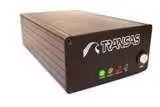
Searching the web for AIS providers can bring up a whole list of companies from small distributors to large global companies offering AIS with service and support. One such company is Transas, who has been working with AIS technology since 1995. The company officially launched its AIS Class B Transponder solution in 2007 and has committed to providing its customers with a ‘one stop’ AIS solution for all vessels which could benefit from a Class B transponder.
Transas was responsible for the first type-approved ECDIS system in 1999 and now AIS users gain this experience free of charge. Transas is giving away its chart viewer software called Navigator free in the AIS package compete with the cables needed to connect the system.
Carl-Olof Carlsson, Managing Director for Transas Ltd commented on the launch of the new system:
“Transas AIS Class B is enabling us to offer a well proven product to a customer group that will instantly gain benefit from it. The advantages are plain to see and with the silent mode built-in it enables all users of the Transas system to communicate on their terms. Many smaller vessels operate in areas of heavy traffic and the AIS Class B solution from Transas helps them to stay in control at all times. We are also offering customers the opportunity to upgrade from our Navigator software to the Transas Electronic Chart Software (ECS) which gives yet more benefits both in terms of safety and economy”.
In summary, Transas says that it looks like a compromise solution to the AIS Class B debate can be found and that equipping a vessel with such a system can prove cost effective.
Related Articles
 FISHING TECHNOLOGY
 FISHING TECHNOLOGY
 COMMENT