



A study has found that sea lice infestation is unlikely to be a significant factor influencing the conservation status of salmon stocks.
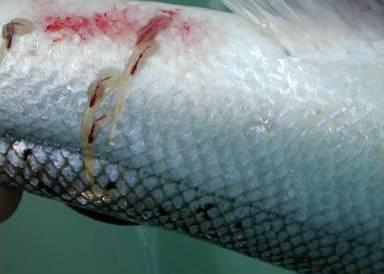
The research, carried out by the Marine Institute and NUIG Galway, investigated the impact of sea lice on the marine mortality of Irish salmon smolts and assessed the extent of sea lice-induced mortality in Irish Atlantic salmon stocks.
The study was carried out over nine years and involved more than 350,000 fish, released into eight different rivers in 28 separate experiments.
In the study, one group of salmon smolts were treated with a commercial agent which protects them against sea lice infestation for eight weeks after going to sea. The return rates of control or unprotected mirror groups of fish were compared with the ‘protected’ fish to see if they suffered any additional sea lice induced mortality following release into the sea.
Because the study involved the repeated release of hundreds of thousands of fish over the course of a decade across eight locations in Ireland, its results are highly accurate and very reliable. It found the level of marine mortality attributable to sea lice infestation to be very small – approximately 1% in absolute terms.
“At these levels, it is unlikely to influence the conservation status of stocks and is not a significant driver of marine mortality”, the article states. The paper also offers an explanation as to why some researchers in this area have reached different conclusions and demonstrates serious flaws in the experimental design employed by these research groups.
The article concludes by noting the strong and significant trend in increasing marine mortality up to 2008 and finds that “there is no evidence to suggest that this trend is influenced by sea lice infestation levels of outwardly migrating smolts as treated and control fish are equally affected.” These findings agree closely with the outcome of a similar long term study carried out in Norway.
The research paper was published in the latest edition of the Journal of Fish Diseases.